Haudenosaunee Invent Lacrosse
Interactive passage with audio narration, comprehension questions, and printable PDF.
By completing this purchase you agree to our Terms of Use and Privacy Policy. Your subscription renews automatically until you cancel. You can cancel anytime from your account settings. All sales are final and non-refundable. Digital content is available for download in your account immediately upon purchase.
What's included
Haudenosaunee Invent Lacrosse preview and details
About this printable Haudenosaunee Invent Lacrosse reading passage (Grades 5-8)
Sample passage and quiz from Haudenosaunee Invent Lacrosse
Reading passage and comprehension quiz preview
Haudenosaunee Invent Lacrosse
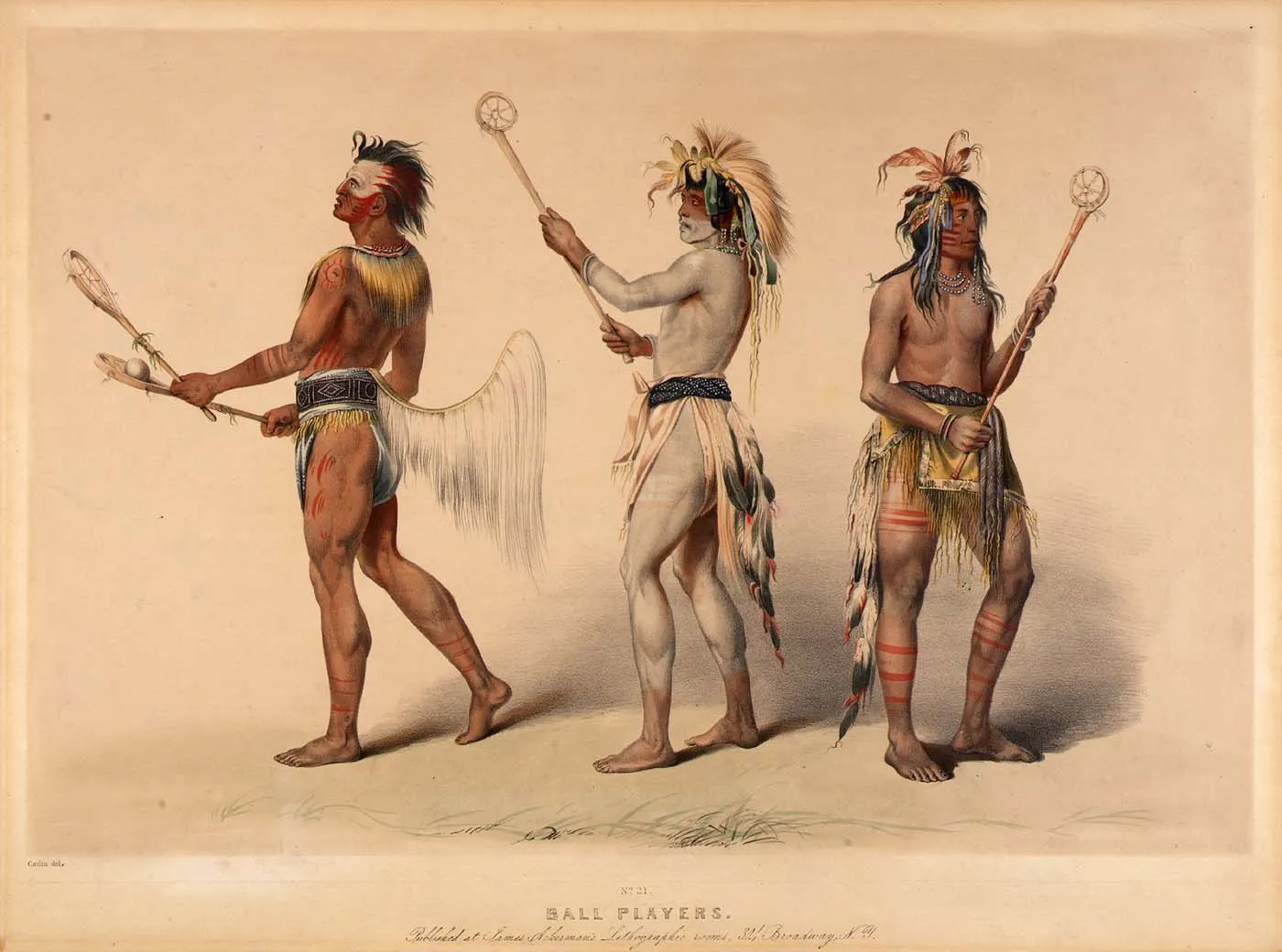
"Ball players" by George Catlin / Wikimedia Commons
Lacrosse, one of the oldest team sports in North America, was invented by the Haudenosaunee, also known as the Iroquois Confederacy. The game was originally called the Creator's Game and held deep spiritual meaning. For centuries before European contact, Indigenous nations including the Haudenosaunee, Cherokee, and Ojibwe played lacrosse across the woodlands and grasslands of the continent.
The Haudenosaunee viewed lacrosse as far more than entertainment. It was a sacred activity used to resolve conflicts, strengthen alliances, and honor the Creator. Games could last for days and sometimes involved hundreds of players. Early European missionaries, such as Father Jean de Brébeuf, observed and recorded lacrosse matches in the 1630s near what is now Ontario, Canada. Archaeological discoveries of traditional wooden lacrosse sticks and carved balls provide further evidence of the game's ancient roots. Unlike the modern version, early games were played on huge fields, sometimes stretching over miles of land. Each nation had its own rules, but the primary goal was to send the ball through a goalpost using a stick with a woven net.
Lacrosse had important diplomatic and social functions. Leaders would use the game to settle disputes without violence or to build unity between different villages. Young men trained for physical strength, courage, and teamwork—skills necessary for survival and leadership. The game also served as a public celebration, with entire communities gathering to watch and participate. In some cases, matches marked seasonal changes or honored ancestors. The geography of the region influenced how lacrosse developed. Forests provided materials for sticks, and open fields made large games possible.
Over time, contact with Europeans led to changes in how lacrosse was played. By the 1800s, non-Indigenous communities in Canada and the United States began adopting and modifying the game. Rules became standardized, and lacrosse was introduced in schools and clubs. However, for the Haudenosaunee, the game remains a living tradition with spiritual and cultural importance. Today, the Iroquois Nationals lacrosse team competes internationally, representing the sovereign identity of the Haudenosaunee people. The continuity of lacrosse shows the resilience of Indigenous cultures and their ability to adapt while maintaining traditions.
Lacrosse’s invention by the Haudenosaunee is a powerful example of how sports can be connected to deeper cultural and social values. The game's legacy is visible not only in its modern popularity but also in the pride and unity it brings to Indigenous communities.
This story connects to broader themes of invention, cultural exchange, and the role of geography in shaping societies throughout world history.
Interesting Fact: Early lacrosse balls were often made from deerskin stuffed with hair, while sticks were crafted from hickory wood and hand-carved by skilled artisans.
Comprehension quiz (8 questions)
1. Who invented lacrosse?
2. What was lacrosse originally called?
3. Which nation did NOT play early lacrosse?
4. Why did leaders use lacrosse?
5. What did the geography provide for lacrosse?
6. What is a result of European contact?
7. Lacrosse is only played by Indigenous people today. True or false?
8. What does 'diplomatic' mean?
Perfect for the way you teach
- Build comprehension skills
- Auto-graded quiz
- Differentiated reading
- Read together at home
- Improve fluency
- Quiet reading time
- Reading curriculum support
- Independent practice
- Track Lexile growth