Reading PassagePremium

Pemmican Indigenous Food

Interactive passage with audio narration, comprehension questions, and printable PDF.

No ratings yet
Grades 5–8ReadingElaSocial-studiesHistoryEnglish · SpanishInteractive · Printable
Aligned to6.1.16.1.2CCSS.RI.6.1CCSS.RI.6.4CCSS.W.6.2
Just this resource
$1.50
One-time purchase
Best value
Unlock everything
$49.99$29.99/yr
40% off until Aug 1 — 10,000+ resources
Renews at $49.99/year.
Unlock above to use these actions

What's included

Reading passage
Audio narration
Comprehension quiz
Writing activity
Glossary & flashcards
Differentiated version
Spanish translation

Pemmican Indigenous Food preview and details

About this printable Pemmican Indigenous Food reading passage (Grades 5-8)

This engaging history reading passage explores the invention and significance of pemmican, a high-energy preserved food created by the Plains Native American nations. The passage examines how pemmican, made from dried meat, rendered fat, and berries, enabled survival and mobility across the vast, challenging geography of the Plains. Students will learn about the process of making pemmican, its use in daily life and trade, and how it was adopted by fur traders and Arctic explorers. The resource includes a glossary, timeline, multiple-choice quiz, writing prompts, and graphic organizers to support critical thinking and historical analysis. The passage and activities align with CA HSS Framework and ELA Common Core standards. Read aloud audio and Spanish translation are included for accessibility. This resource is ideal for exploring themes of innovation, adaptation, and cross-cultural exchange in world and US history.
Written by Workybooks TeamPublished by Workybooks
Preview

Sample passage and quiz from Pemmican Indigenous Food

Reading passage and comprehension quiz preview

Pemmican Indigenous Food
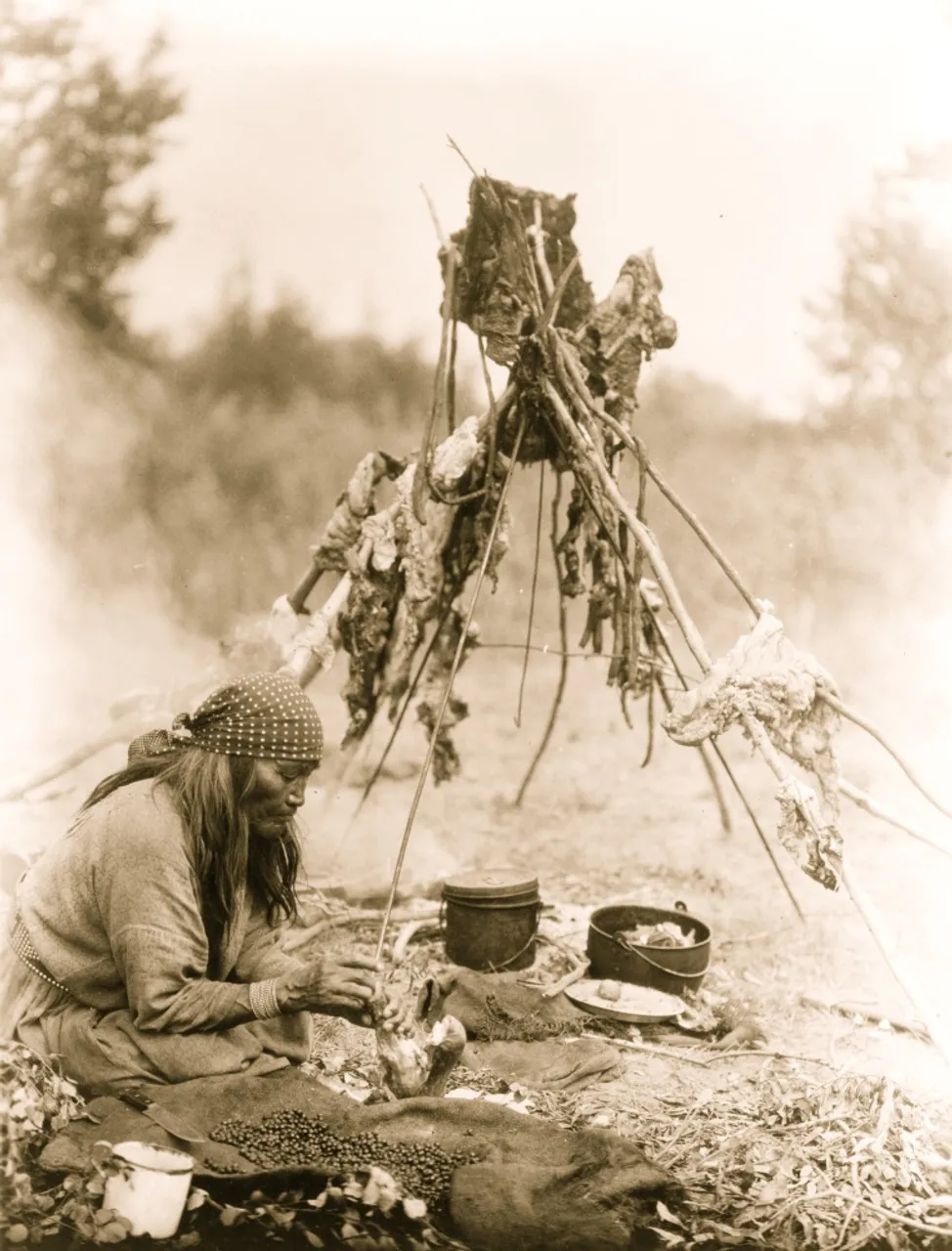
Making Pemmican

"Making Pemmican" / Wikimedia Commons (Public domain).

Pemmican is a traditional food developed by the Plains nations of North America, including the Cree, Blackfoot, and Ojibwe peoples. It is made by mixing dried meat, rendered fat, and berries. This combination created a highly nutritious and portable food that could last for months or even years without spoiling. The invention of pemmican was a direct response to the challenging environment of the Great Plains, where food was not always easy to find during harsh winters or long journeys.

The process of making pemmican required several steps. First, hunters such as the Lakota or Assiniboine would use bows and arrows or later rifles to hunt bison, elk, or deer. The meat was cut into thin strips and dried over fire or in the sun, removing moisture to prevent spoilage. Next, the dried meat was pounded into a fine powder using stones. Fat from the animal was melted and poured over the meat powder. Adding wild berries like Saskatoon or chokecherries not only gave flavor but also provided extra vitamins. The mixture was then packed into animal hide bags or containers called parfleches.

Archaeological evidence, such as 19th-century parfleche containers and oral histories, shows that pemmican was vital for survival and played a key role in the daily life of Plains communities. It allowed people to travel long distances for hunting, trading, or moving to new camps. The food's portability helped support complex trade networks stretching from what is now Canada into the United States. European fur traders and explorers, like Alexander Mackenzie in 1793, quickly recognized pemmican's value. The Hudson's Bay Company and North West Company began purchasing pemmican in large quantities, and it became the main food source for fur brigades and even Arctic expeditions.

Over time, pemmican became a symbol of adaptation and innovation. Its invention was a direct response to the geographic realities of the Plains—few trees, extreme weather, and vast distances. Pemmican's long shelf life, high-calorie content, and ease of transport made it one of the world's first "energy bars." The food also reflected social organization: women often prepared pemmican, demonstrating their crucial role in family and economic life. Some historians debate exactly which nation first invented pemmican, but most agree it was a shared creation among several Plains cultures.

Today, pemmican remains a symbol of Indigenous ingenuity and resilience. It shows how Native American nations used local resources and knowledge to solve the challenges posed by their environment. The story of pemmican connects to broader themes in world history, such as human adaptation, technological change, and cultural exchange.

Interesting Fact: Arctic explorers in the 19th and early 20th centuries relied on pemmican as their main food during long polar expeditions, because it could last for years and provided essential calories in extreme conditions.

Comprehension quiz (8 questions)

1. What is pemmican made of?

Dried meat, fat, berries
Fish, rice, beans
Corn, squash, beans
Milk, eggs, bread

2. Which group invented pemmican?

Plains nations
Vikings
Romans
Chinese dynasties

3. Why was pemmican important?

Long-lasting, easy to carry
Tasted sweet
Used for ceremonies
Made from plants only

4. Who used pemmican in the 1800s?

Arctic explorers
Greek philosophers
Roman soldiers
Egyptian pharaohs

5. How did pemmican help trade?

It could be carried far
It was used as money
It melted in the sun
Only women ate it

6. What was the role of women?

They prepared pemmican
They led armies
They built canoes
They made tools

7. Pemmican lasts for years.

True
False

8. What does 'innovation' mean?

A new idea or method
A type of berry
A leather bag
A hunting tool
Who it's for

Perfect for the way you teach

Teachers
  • Build comprehension skills
  • Auto-graded quiz
  • Differentiated reading
Parents
  • Read together at home
  • Improve fluency
  • Quiet reading time
Homeschoolers
  • Reading curriculum support
  • Independent practice
  • Track Lexile growth
Topics

Reviews & Ratings

No reviews yet. Be the first to share your experience!

More reading you might love

19 more
Passage
Prehistoric Cave Art - reading educational content
Grades 5–8

Prehistoric Cave Art

ancient history · 6.1.1

$1.50
Passage
Haudenosaunee Invent Lacrosse - reading educational content
Grades 5–8

Haudenosaunee Invent Lacrosse

us history · 6.1.1

$1.50
Passage
Native American Moccasins - reading educational content
Grades 5–8

Native American Moccasins

us history · 6.1.1

$1.50
Passage
Indigenous Dugout Canoes - reading educational content
Grades 5–8

Indigenous Dugout Canoes

us history · 6.1.1

$1.50
Passage
Early Human Cognition - reading educational content
Grades 6–8

Early Human Cognition

ancient history · CA HSS 6.1

$1.50
Passage
Aristophanes Greek Comedy Writer - reading educational content
Grades 6–8

Aristophanes Greek Comedy Writer

ancient history · 6.4.1

$1.50
Passage
Confucius and His Teachings - reading educational content
Grades 6–8

Confucius and His Teachings

ancient history · CA HSS 6.6.7

$1.50
Passage
Lao Tzu and Daoism - reading educational content
Grades 6–8

Lao Tzu and Daoism

ancient history · CA HSS 6.6.3

$1.50
Passage
Dead Sea Scrolls Discovery - reading educational content
Grades 6–8

Dead Sea Scrolls Discovery

ancient history · CA HSS 6.1

$1.50
Passage
Theocracy in the Ancient World - reading educational content
Grades 6–8

Theocracy in the Ancient World

ancient history · CA HSS 6.2.4

$1.50
Passage
Democracy in Ancient Athens - reading educational content
Grades 6–8

Democracy in Ancient Athens

ancient history · CA HSS 6.4

$1.50
Passage
Rosetta Stone Decoded - reading educational content
Grades 6–8

Rosetta Stone Decoded

ancient history · CA HSS 6.2

$1.50
Passage
Ancestral Puebloan Cliff Dwellings - reading educational content
Grades 5–8

Ancestral Puebloan Cliff Dwellings

us history · CA.HSS.6.2

$1.50
Passage
Ancient Taxes and Tribute - reading educational content
Grades 6–8

Ancient Taxes and Tribute

ancient history · CA HSS 6.2

$1.50
Passage
First Farming Villages - reading educational content
Grades 6–8

First Farming Villages

ancient history · CA HSS 6.1.1

$1.50
Passage
King Solomon and the First Temple - reading educational content
Grades 6–8

King Solomon and the First Temple

ancient history · CA HSS 6.2

$1.50
Passage
King David of Israel - reading educational content
Grades 6–8

King David of Israel

ancient history · CA HSS 6.2

$1.50
Passage
Livy the Roman Historian - reading educational content
Grades 6–8

Livy the Roman Historian

ancient history · CA HSS 6.7

$1.50
Passage
Core Beliefs of Daoism - reading educational content
Grades 6–8

Core Beliefs of Daoism

ancient history · CA HSS 6.6

$1.50
Copyright © 2026 Workybooks. Made with ♥ in California.