This learning resource is available in interactive and printable formats. The interactive worksheet can be played online and assigned to students. The Printable PDF version can be downloaded and printed for completion by hand.
This engaging passage explores what life was like during a typical day in the Neolithic Age, a pivotal era in ancient history when early humans transitioned from hunting and gathering to farming and settled village life. Students will learn about the development of agriculture, technological advances such as pottery and weaving, social structures, and the impact of geographic context on human communities. The passage incorporates evidence from archaeological finds like Çatalhöyük and the use of primary sources, and encourages students to analyze cause-and-effect relationships and change over time. The resource includes a glossary, multiple-choice quiz, writing prompts, graphic organizers, and a timeline, along with a Spanish translation and read aloud audio. This lesson aligns with CA HSS 6.1 and CCSS RH.6-8.2 standards, making it a comprehensive tool for history classrooms.
CONTENT PREVIEW
Expand content preview
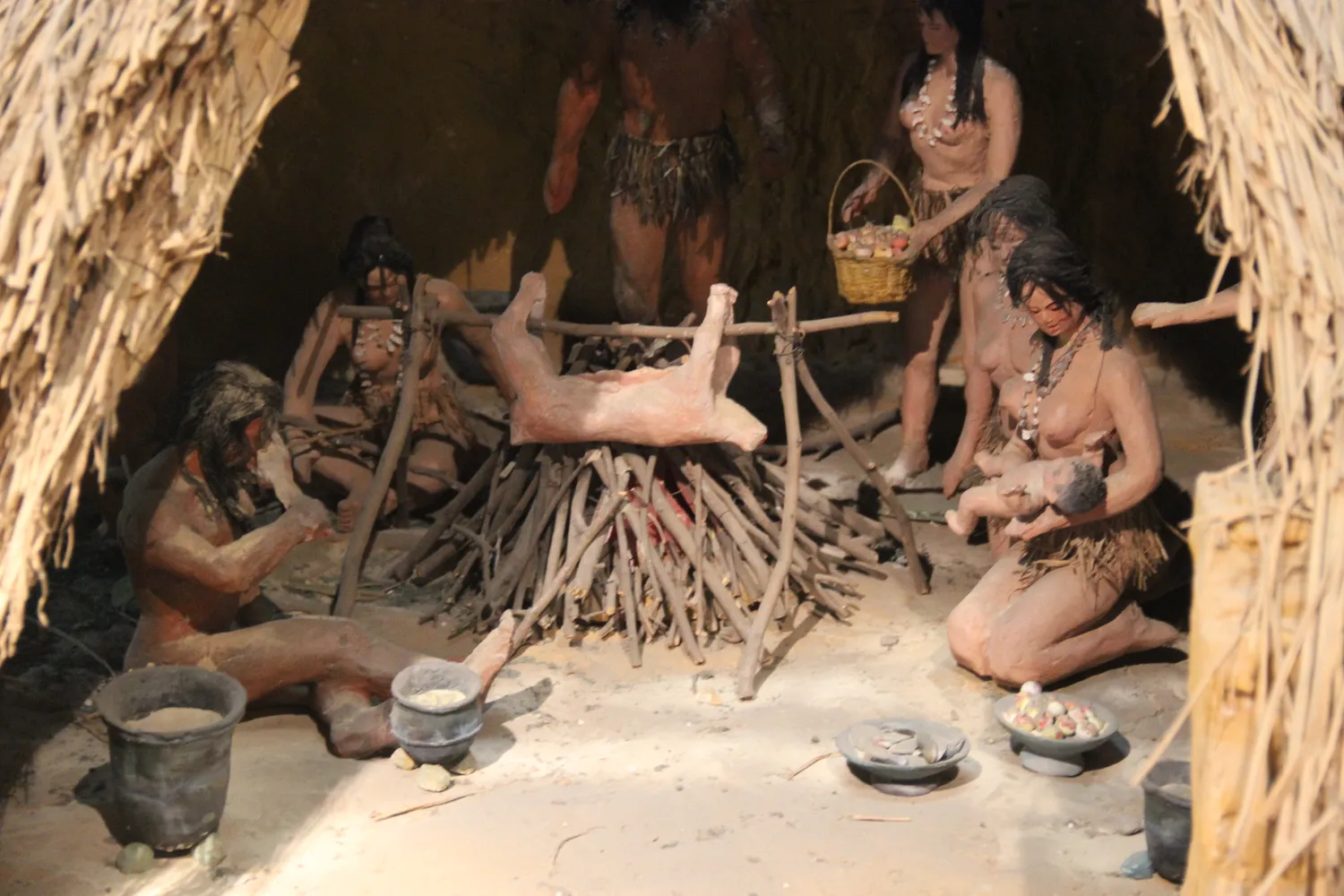
"Neolithic Diorama (10146375796)" by Gary Todd from Xinzheng, China / Wikimedia Commons (CC0).
The Neolithic Age, also known as the New Stone Age, began around 10,000 BCE and marked a turning point in human history. During this era, early humans shifted from a nomadic lifestyle of hunting and gathering to one centered on farming and settled communities. This transformation occurred in various regions, including the Fertile Crescent, a region in Southwest Asia where some of the earliest villages appeared.
Daily life in a Neolithic village was shaped by the innovation of agriculture. People began planting crops like wheat and barley, and domesticating animals such as sheep, goats, and cattle. Archaeological evidence from sites like Çatalhöyük in present-day Turkey, which dates back to around 7500 BCE, reveals that families lived in mud-brick houses clustered together. These homes had flat roofs, and entry was often from the rooftop, demonstrating adaptation to the environment and concerns for safety.
With a steady food supply, Neolithic people developed new tools and crafts. Pottery became common, allowing for better food storage and cooking. The use of the plow and irrigation systems improved farming efficiency. Artisans in these villages wove textiles and crafted ornaments, showing increased specialization of labor. Larger communities required forms of governance to organize shared work, distribute resources, and resolve conflicts. Archaeologists have found wall paintings and figurines, suggesting spiritual beliefs and the development of a shared culture.
Social structure in Neolithic villages was more complex than in earlier periods. Some people became leaders or religious specialists, while others focused on farming or crafts. Trade networks expanded, connecting distant communities and spreading new ideas and technologies. The shift to settled life also brought challenges, such as the spread of disease and conflicts over land. Despite these issues, the Neolithic Age laid the foundation for future civilizations by fostering permanent settlements, technological progress, and social organization.
The Neolithic Age is significant because it represents a major change in how humans interacted with their environment and with each other. This era set the stage for the rise of cities, writing, and complex societies in later periods.
Interesting Fact: Archaeologists at Çatalhöyük discovered over 40 decorated wall paintings, providing a window into the beliefs and daily life of Neolithic people.
When did the Neolithic Age begin?
Around 10,000 BCE5,000 BCE500 CE2,000 BCE
Where is Çatalhöyük located?
TurkeyEgyptChinaGreece
Which crop was grown in Neolithic villages?
WheatCornRicePotato
Why did people build flat-roofed houses?
Adaptation and safetyFor decorationTo store waterTo keep animals
How did agriculture change Neolithic life?
Created permanent settlementsMade people move moreEnded tradeReduced food supply
What is an example of specialization?
Artisans making potteryEveryone farmingLiving aloneMoving villages
Neolithic people were always nomadic. True or false?
TrueFalse
What does 'governance' best mean?
Organizing rules and decisionsPlanting cropsMaking potteryTrading goods
Perfect For:
👩🏫 Teachers
• Reading comprehension practice
• Auto-graded assessments
• Literacy skill development
👨👩👧👦 Parents
• Reading practice at home
• Comprehension improvement
• Educational reading time
🏠 Homeschoolers
• Reading curriculum support
• Independent reading practice
• Progress monitoring
Reading Features:
📖
Reading Passage
Engaging fiction or nonfiction text
❓
Comprehension Quiz
Auto-graded questions
📊
Instant Feedback
Immediate results and scoring
📄
Printable Version
Download for offline reading
🔊
Read Aloud
Voice-over with word highlighting
Reviews & Ratings
No reviews yet. Be the first to share your experience!
Related Content
First Humans
This engaging history reading passage explores the evolution of early humans, tracing the journey from the earliest homi...
CA HSS 6.1RH.6-8.1RH.6-8.2W.6.2
Cognitive Revolution
This engaging reading passage explores the Cognitive Revolution, a major turning point in human history that occurred ar...
CA HSS 6.1CCSS.RI.6.1CCSS.RI.6.2CCSS.RI.6.4
Invention of Paper
This passage examines the revolutionary invention of paper making during the Han Dynasty in ancient China, highlighting ...
CA HSS 6.6.7CCSS RH.6-8.2CCSS RH.6-8.4
Han Dynasty: Suspension Bridges
This passage explores the invention and impact of suspension bridges during the Han Dynasty in Ancient China, covering h...
CA HSS 6.6CCSS RH.6-8.1CCSS RH.6-8.4CCSS RH.6-8.7
Paleolithic Shelters
Explore how early humans in the Paleolithic Era built shelters such as caves and huts to survive harsh climates. This pa...
CA HSS 6.1CCSS.RI.6.3CCSS.RI.7.1CCSS.RI.8.2
Neolithic Pottery
This engaging history reading passage explores how early humans invented pottery to solve the problem of long-term food ...
CA HSS 6.1.1CCSS RH.6-8.1CCSS RH.6-8.4
Neolithic Revolution
This comprehensive history reading passage explores the Neolithic Revolution, focusing on how early humans transitioned ...
CA HSS 6.1CCSS RH.6-8.2CCSS RH.6-8.4CCSS RH.6-8.7
Introduction to the Paleolithic Age
This engaging passage explores the lives and achievements of ancient humans during the Paleolithic Age, focusing on thei...
CA HSS 6.1.1CCSS RH.6-8.1CCSS RH.6-8.2CCSS RH.6-8.4
Early Humans Reach Australia
This reading passage explores the journey of early humans who reached Australia by crossing the ocean over 60,000 years ...
CA HSS 6.1CCSS RH.6-8.1CCSS RH.6-8.4CCSS RH.6-8.7
Early Humans in Europe and Asia
This passage explores the arrival of early humans in Europe and Asia around 40,000 BCE, highlighting their migration, ad...
CA HSS 6.1.1CCSS RH.6-8.1CCSS RH.6-8.2CCSS RH.6-8.4
Renaissance Art
This reading passage examines the enduring legacy of Renaissance art in world history, focusing on key techniques such a...
CA HSS 7.8.3CCSS RH.6-8.2CCSS W.6.2
First Americans
This comprehensive history reading passage explores how the first humans migrated to the Americas over 12,000 years ago,...
CA HSS 6.1CCSS RH.6-8.1CCSS RH.6-8.2CCSS RH.6-8.4
Paleolithic Clothing
This passage explores the fascinating world of Paleolithic clothing, focusing on how early humans used animal skins and ...
CA HSS 6.1CCSS.ELA-LITERACY.RH.6-8.1CCSS.ELA-LITERACY.RH.6-8.4
Nomads to Farmers
This engaging passage explores the two major ways of life practiced by early humans: nomadic hunter-gathering and settle...
CA HSS 6.1.1CCSS RH.6-8.2
Rise of Early Civilizations
This reading passage explores the critical transformation from early human hunter-gatherer societies to the development ...