This learning resource is available in interactive and printable formats. The interactive worksheet can be played online and assigned to students. The Printable PDF version can be downloaded and printed for completion by hand.
This comprehensive history reading passage explores how the first humans migrated to the Americas over 12,000 years ago, crossing the land bridge known as Beringia during the last Ice Age. Students will examine archaeological evidence, primary sources, and theories about early migration routes, as well as the impact of geography on migration and settlement. The passage addresses key vocabulary, cause-and-effect relationships, and the significance of these events in world history. Activities include a quiz, writing prompts, graphic organizers, and a Spanish translation. This resource aligns with CA HSS 6.1 and CCSS RH.6-8.1 standards, and includes a read aloud audio option for accessibility. Ideal for use in ancient history units focusing on early humans and the peopling of the Americas.
CONTENT PREVIEW
Expand content preview
The first humans arrived in the Americas over 12,000 years ago, marking one of history’s most significant migrations. These early hunter-gatherers traveled from northeastern Asia to North America, crossing a land bridge called Beringia that once connected Siberia and Alaska. Their journey was shaped by dramatic changes in Earth's climate and geography during the last Ice Age.
During the last Ice Age, vast sheets of ice covered much of the northern world. Sea levels dropped, exposing land that connected continents. Around 18,000 to 12,000 years ago, Beringia emerged as a wide, grassy plain. Archaeological evidence, such as stone tools found at sites like Bluefish Caves in Canada, suggests that people may have used this route to move east. Some scientists believe these early migrants followed herds of large animals like mammoths and bison, using their knowledge of the environment for survival. Others suggest coastal routes were possible, with people traveling by boat along the Pacific shoreline. Although exact migration paths are still debated, most experts agree that people reached the Americas by at least 12,000 years ago.
Life for these early Americans was challenging. As nomads, they moved often to find food, water, and shelter. They used stone artifacts for hunting and daily tasks. Sites like Monte Verde in Chile, dated to about 14,500 years ago, provide evidence of human settlement far south in the Americas. The spread of people across North and South America happened over thousands of years, leading to the development of diverse cultures. Each group adapted to their local environment, from cold Arctic regions to warm forests and grasslands.
This migration changed the course of human history. The peopling of the Americas led to new ways of life, technologies, and social organizations. Over time, these early settlers became the ancestors of Native American peoples, each with unique languages, traditions, and beliefs. The journey across Beringia shows how humans adapt to their surroundings and shape the world through migration and discovery.
Understanding the arrival of the first Americans connects to larger themes in history, such as human adaptation, the significance of migration, and the relationship between people and their environment.
Interesting Fact: Ancient footprints discovered in White Sands, New Mexico, show humans lived in North America at least 23,000 years ago—much earlier than previously believed.
What is Beringia?
A land bridge between Asia and AmericaA large river in SiberiaA mountain in AlaskaA type of ancient tool
Where is Monte Verde located?
CanadaAlaskaChileRussia
How did early humans survive?
By farming cropsBy hunting and gatheringBy raising cattleBy building cities
What caused Beringia to appear?
EarthquakesLow sea levels during Ice AgeVolcanoesRainfall
Why did early Americans move often?
To find food and shelterTo trade goodsTo escape warTo explore space
What is the significance of White Sands footprints?
Show early farming methodsShow humans lived in Americas earlierShow animal migration patternsShow tools were made
The Ice Age helped expose Beringia.
TrueFalse
What does 'artifacts' mean in the passage?
Ancient objects made by peopleA type of animalA large mountainA weather event
Perfect For:
👩🏫 Teachers
• Reading comprehension practice
• Auto-graded assessments
• Literacy skill development
👨👩👧👦 Parents
• Reading practice at home
• Comprehension improvement
• Educational reading time
🏠 Homeschoolers
• Reading curriculum support
• Independent reading practice
• Progress monitoring
Reading Features:
📖
Reading Passage
Engaging fiction or nonfiction text
❓
Comprehension Quiz
Auto-graded questions
📊
Instant Feedback
Immediate results and scoring
📄
Printable Version
Download for offline reading
🔊
Read Aloud
Voice-over with word highlighting
Reviews & Ratings
No reviews yet. Be the first to share your experience!
Related Content
First Humans
This engaging history reading passage explores the evolution of early humans, tracing the journey from the earliest homi...
CA HSS 6.1RH.6-8.1RH.6-8.2W.6.2
Cognitive Revolution
This engaging reading passage explores the Cognitive Revolution, a major turning point in human history that occurred ar...
CA HSS 6.1CCSS.RI.6.1CCSS.RI.6.2CCSS.RI.6.4
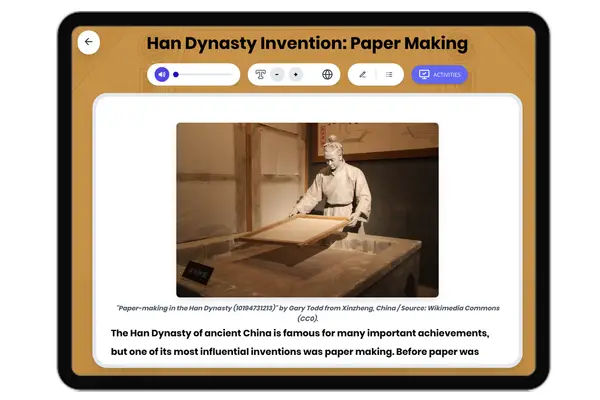
Invention of Paper
This passage examines the revolutionary invention of paper making during the Han Dynasty in ancient China, highlighting ...
CA HSS 6.6.7CCSS RH.6-8.2CCSS RH.6-8.4
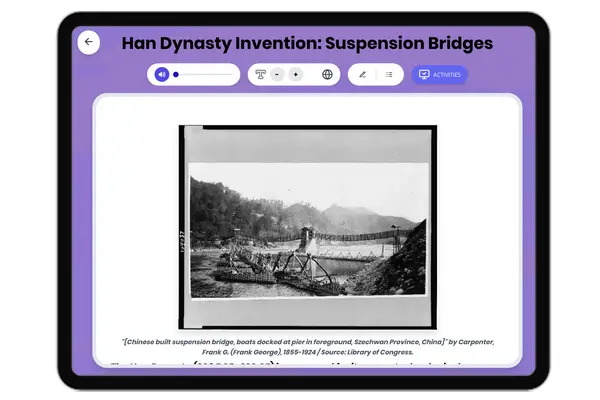
Han Dynasty: Suspension Bridges
This passage explores the invention and impact of suspension bridges during the Han Dynasty in Ancient China, covering h...
CA HSS 6.6CCSS RH.6-8.1CCSS RH.6-8.4CCSS RH.6-8.7
Han Dynasty: Wheelbarrow
This passage explores the invention and historical significance of the wheelbarrow during the Han dynasty in ancient Chi...
CA HSS 6.6CCSS RH.6-8.1RH.6-8.2RH.6-8.4
Early Human Migration
This comprehensive history reading passage explores the Out of Africa movement and how early humans migrated across cont...
CA HSS 6.1.1CCSS RH.6-8.1RH.6-8.2RH.6-8.4
Paleolithic Shelters
Explore how early humans in the Paleolithic Era built shelters such as caves and huts to survive harsh climates. This pa...
CA HSS 6.1CCSS.RI.6.3CCSS.RI.7.1CCSS.RI.8.2
Neolithic Pottery
This engaging history reading passage explores how early humans invented pottery to solve the problem of long-term food ...
CA HSS 6.1.1CCSS RH.6-8.1CCSS RH.6-8.4
Life in the Neolithic Age
This engaging passage explores what life was like during a typical day in the Neolithic Age, a pivotal era in ancient hi...
CA HSS 6.1CCSS RH.6-8.2CCSS RH.6-8.4
Neolithic Revolution
This comprehensive history reading passage explores the Neolithic Revolution, focusing on how early humans transitioned ...
CA HSS 6.1CCSS RH.6-8.2CCSS RH.6-8.4CCSS RH.6-8.7
Introduction to the Paleolithic Age
This engaging passage explores the lives and achievements of ancient humans during the Paleolithic Age, focusing on thei...
CA HSS 6.1.1CCSS RH.6-8.1CCSS RH.6-8.2CCSS RH.6-8.4
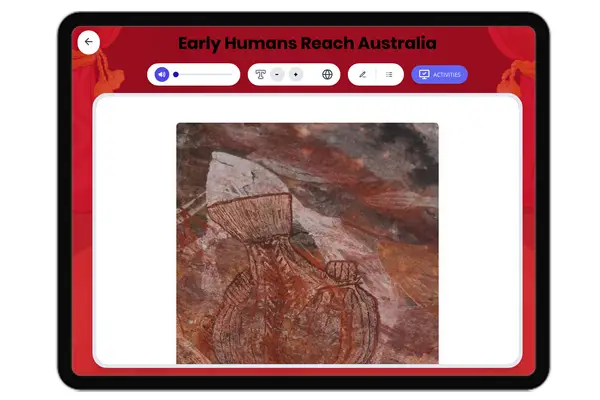
Early Humans Reach Australia
This reading passage explores the journey of early humans who reached Australia by crossing the ocean over 60,000 years ...
CA HSS 6.1CCSS RH.6-8.1CCSS RH.6-8.4CCSS RH.6-8.7
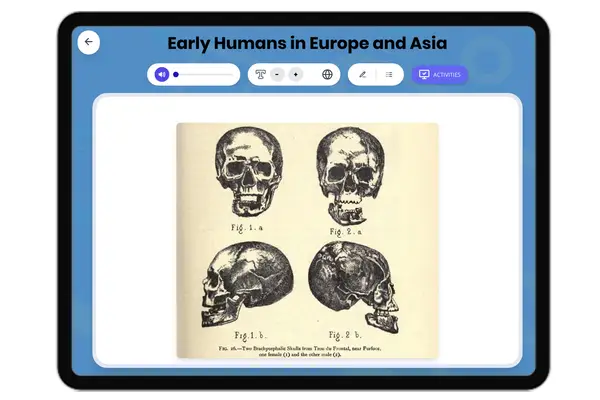
Early Humans in Europe and Asia
This passage explores the arrival of early humans in Europe and Asia around 40,000 BCE, highlighting their migration, ad...
CA HSS 6.1.1CCSS RH.6-8.1CCSS RH.6-8.2CCSS RH.6-8.4
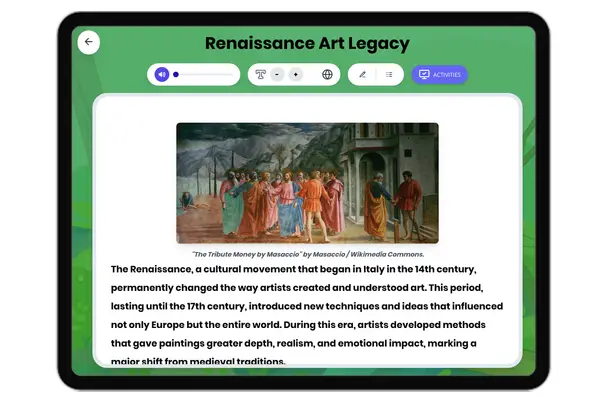
Renaissance Art
This reading passage examines the enduring legacy of Renaissance art in world history, focusing on key techniques such a...
CA HSS 7.8.3CCSS RH.6-8.2CCSS W.6.2
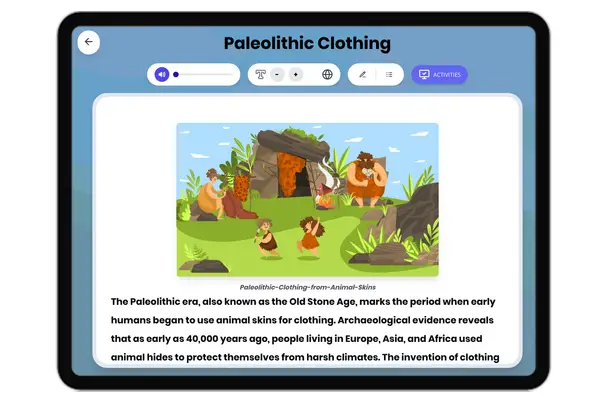
Paleolithic Clothing
This passage explores the fascinating world of Paleolithic clothing, focusing on how early humans used animal skins and ...
CA HSS 6.1CCSS.ELA-LITERACY.RH.6-8.1CCSS.ELA-LITERACY.RH.6-8.4
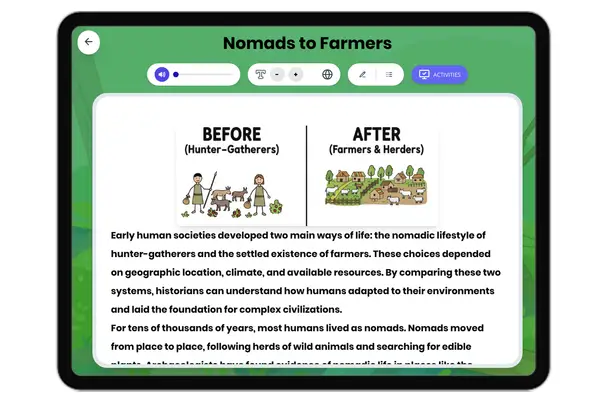
Nomads to Farmers
This engaging passage explores the two major ways of life practiced by early humans: nomadic hunter-gathering and settle...
CA HSS 6.1.1CCSS RH.6-8.2
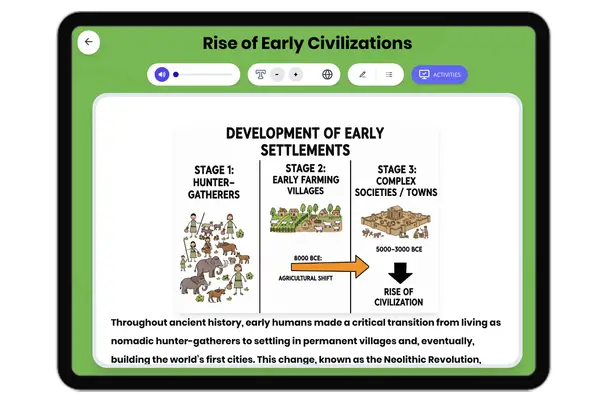
Rise of Early Civilizations
This reading passage explores the critical transformation from early human hunter-gatherer societies to the development ...