This learning resource is available in interactive and printable formats. The interactive worksheet can be played online and assigned to students. The Printable PDF version can be downloaded and printed for completion by hand.
This engaging 250-word science passage helps Grade 4-5 students understand Motion After Collisions, aligned with NGSS standard 4-PS3-3. Students explore how objects change their motion after collisions, sometimes speeding up, slowing down, or changing direction. The passage uses relatable examples like bumper cars at amusement parks to explain abstract concepts of energy transfer and mass. Through clear explanations and concrete examples, students learn how collision effects depend on the masses of objects involved and how much energy transfers between them. The audio-integrated passage includes differentiated versions for diverse learners, Spanish translations, a comprehensive glossary, multiple-choice questions testing recall and application, writing activities requiring explanations and real-world connections, and graphic organizers for cause-and-effect analysis. Students discover why heavier objects affect lighter ones differently during collisions and how energy moves from one object to another. This standards-aligned resource makes physics concepts accessible and engaging for elementary learners while building scientific vocabulary and critical thinking skills essential for understanding motion, energy, and forces in the physical world.
CONTENT PREVIEW
Expand content preview
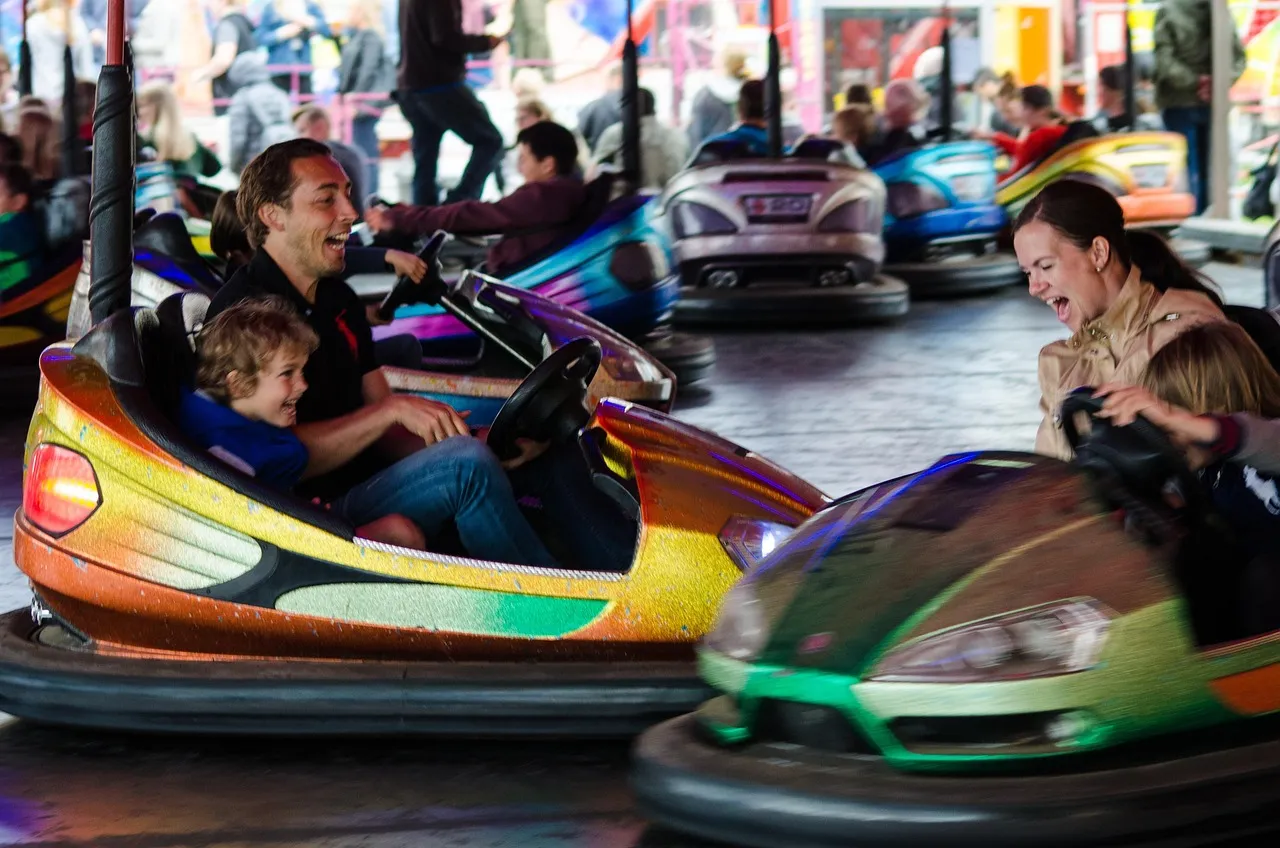
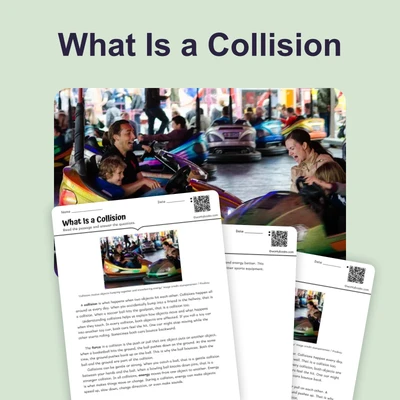
If two bumper cars with the same mass hit each other head-on, they might both bounce backward.Objects can change their direction after a collision too. Image credit stanvpetersen / Pixabay.
A collision happens when two objects bump into each other. When objects collide, they don't just bounce away the same way they came. Instead, their motion changes in different ways. Understanding collisions helps us explain many things we see every day, from bumper cars at amusement parks to balls bouncing on playgrounds.
During a collision, energy moves from one object to another. Energy is the ability to make things move or change. When a moving bumper car hits a stopped one, some energy transfers to the stopped car. This energy transfer makes the stopped car start moving. The car that was moving might slow down because it gave away some of its energy. Think of it like sharing your snack with a friend—you have less, and your friend gets some.
The mass of an object affects what happens during a collision. Mass is how much matter, or stuff, is in an object. When a heavy bumper car hits a lighter one, the lighter car usually speeds up more and might even change direction completely. The heavier car keeps moving in mostly the same direction but might slow down a little. If two bumper cars with the same mass hit each other head-on, they might both bounce backward.
Objects can change their direction after a collision too. Direction means which way something is moving. At the bumper car arena, when two cars hit at an angle, they don't just stop—they bounce off in new directions. The angle they hit at and their masses determine where they go next.
The speed of objects also changes during collisions. If a fast-moving object hits a slow-moving one, the slow object usually speeds up while the fast object slows down. Sometimes objects even stop completely after a collision if all their energy transfers away.
Motion after collisions follows predictable patterns based on energy transfer and mass. Scientists and engineers use these patterns to design safer cars, better sports equipment, and fun amusement park rides. Next time you see bumper cars bouncing around, you'll know exactly why they move the way they do after each collision!
What is a collision?
When two objects bump into each otherWhen an object moves very fastWhen an object stops movingWhen an object changes color
What is mass?
How fast something movesHow much stuff is in an objectThe direction something travelsThe color of an object
What happens during energy transfer in a collision?
Objects change colorObjects get heavierEnergy moves from one object to anotherObjects disappear
Why does a heavy bumper car affect a lighter car more during collision?
Because it has more mass and energyBecause it is painted brighterBecause it moves slowerBecause it is older
What determines where bumper cars go after hitting at an angle?
The color of the carsThe angle and their massesThe time of dayThe driver's age
How do scientists use collision patterns?
To paint carsTo design safer cars and sports equipmentTo make cars go fasterTo change car colors
Objects always keep moving in the same direction after a collision.
TrueFalse
What does direction mean in the passage?
How heavy something isWhich way something is movingHow fast something goesWhat color something is
Perfect For:
👩🏫 Teachers
• Reading comprehension practice
• Auto-graded assessments
• Literacy skill development
👨👩👧👦 Parents
• Reading practice at home
• Comprehension improvement
• Educational reading time
🏠 Homeschoolers
• Reading curriculum support
• Independent reading practice
• Progress monitoring
Reading Features:
📖
Reading Passage
Engaging fiction or nonfiction text
❓
Comprehension Quiz
Auto-graded questions
📊
Instant Feedback
Immediate results and scoring
📄
Printable Version
Download for offline reading
🔊
Read Aloud
Voice-over with word highlighting
Reviews & Ratings
No reviews yet. Be the first to share your experience!
Related Content
Sound from Collisions
This engaging 250-word science passage helps Grade 4-5 students understand how collisions produce sound through energy t...
NGSS 4-PS3-3
Heat from Collisions
This engaging 350-word science passage helps Grade 4-5 students understand how collisions produce heat through energy tr...
NGSS 4-PS3-3
Predicting Collisions
This engaging 250-word science passage helps Grade 4-5 students understand how scientists predict collision outcomes by ...
NGSS 4-PS3-3
What Is a Collision
This engaging science passage introduces Grade 4-5 students to the concept of collisions and energy transfer, aligned wi...
NGSS 4-PS3-3
Modeling Collisions
This engaging 250-word science passage teaches Grade 4-5 students about modeling collisions and how scientists use model...