The Feudal System
Interactive passage with audio narration, comprehension questions, and printable PDF.
By completing this purchase you agree to our Terms of Use and Privacy Policy. Your subscription renews automatically until you cancel. You can cancel anytime from your account settings. All sales are final and non-refundable. Digital content is available for download in your account immediately upon purchase.
What's included
The Feudal System preview and details
About this printable The Feudal System reading passage (Grades 5-8)
Sample passage and quiz from The Feudal System
Reading passage and comprehension quiz preview
The Feudal System
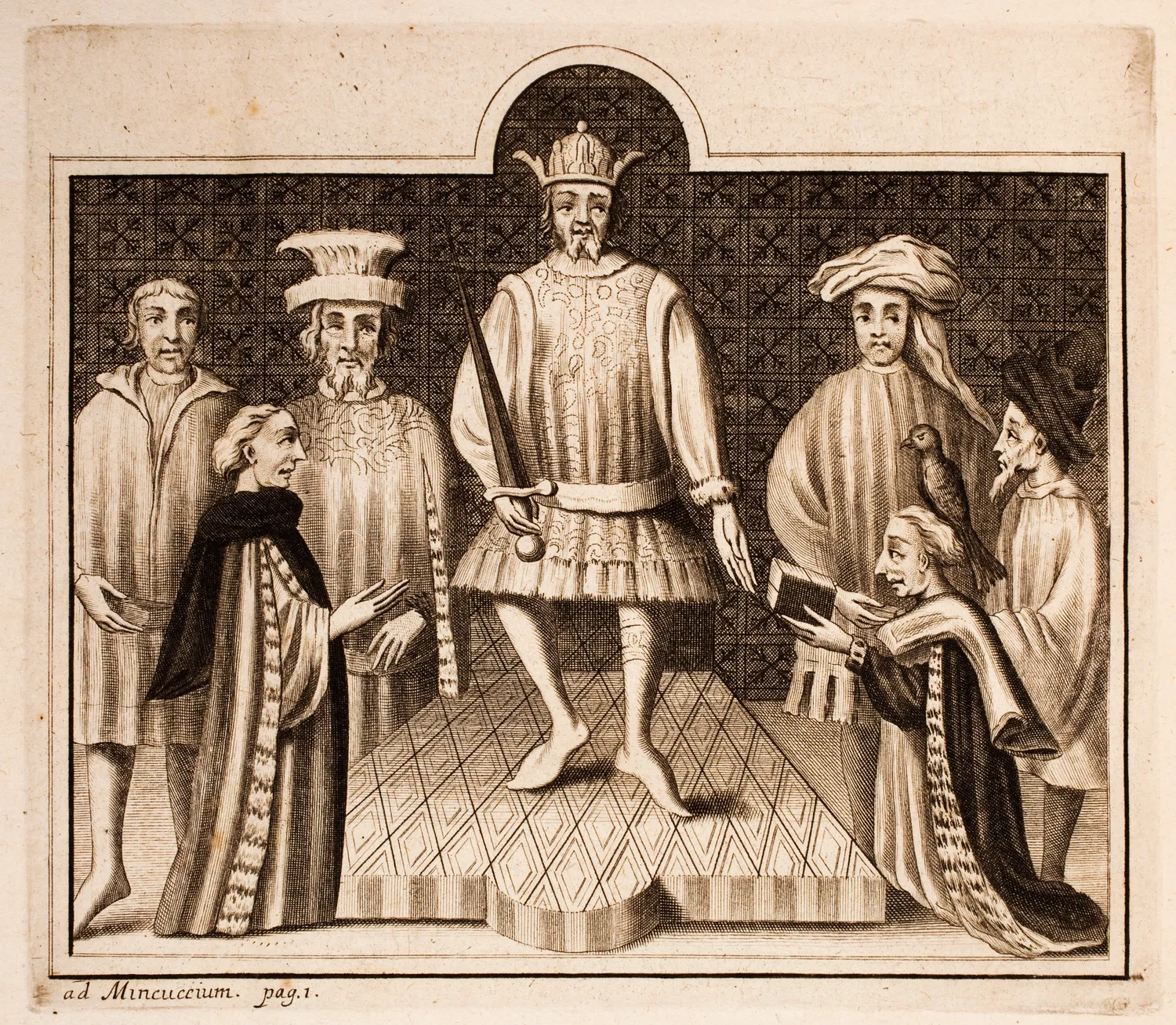
"Johann Schilter Jo Schilteri Codex juris alemannici feudalis" / Wikimedia Commons.
Feudalism was the main political and social structure in Europe during the Middle Ages, from about the 9th to the 15th century. At its core, feudalism was built on the exchange of land, known as fiefs, for loyalty and military service. This system created a network of relationships that shaped how people lived, worked, and governed in medieval society.
The origins of feudalism are closely connected to the decline of the Roman Empire. As central authority weakened, local rulers needed ways to protect their territories from invasions. In the 9th century, rulers such as Charles the Bald of France began granting land to trusted supporters, or vassals. In return, vassals promised to serve as knights and defend their lord's land. This mutual agreement was formalized in ceremonies known as homage and fealty. For example, the Domesday Book of 1086, a primary source from England, records the names of many landholders and the obligations they owed to King William the Conqueror.
Feudal society was organized in a strict hierarchy. At the top was the king, who granted large fiefs to powerful nobles. These nobles became lords, and in turn, gave smaller pieces of land to their own vassals, often knights. At the bottom were the serfs and peasants, who worked the land in exchange for protection. Each level of society depended on the others. For instance, a knight might receive a manor and, in return, promise to provide soldiers when needed. Archaeological evidence from medieval castles shows how these estates were designed for both defense and daily life, with thick walls and fields for farming.
Feudalism also shaped daily life and law. Lords had the power to collect taxes and hold courts. Vassals and serfs followed strict rules about work, loyalty, and duties. The system was not the same everywhere: in France, Germany, and England, local customs changed how feudalism worked. Over time, as trade and towns grew, the power of feudal lords declined. By the end of the Middle Ages, monarchs began to centralize authority, leading to the rise of modern states.
Feudalism's legacy can be seen in the way it influenced social structure and government throughout European history. By understanding feudalism, historians learn how land, loyalty, and power were connected in the Middle Ages.
This study of feudalism helps connect to broader course themes, such as the development of government, social systems, and the effects of geography on human societies.
Interesting Fact: Some medieval castles had secret passages and tunnels to help lords and knights escape during attacks!
Comprehension quiz (8 questions)
1. What was exchanged in feudalism?
2. Who was at the top of the feudal hierarchy?
3. What document recorded feudal landholders in 1086?
4. Why did feudalism begin in Europe?
5. How did feudalism affect daily life?
6. What caused feudalism to decline?
7. Feudal society included kings, lords, knights, and serfs.
8. What is a vassal?
Perfect for the way you teach
- Build comprehension skills
- Auto-graded quiz
- Differentiated reading
- Read together at home
- Improve fluency
- Quiet reading time
- Reading curriculum support
- Independent practice
- Track Lexile growth