Sophocles the Playwright
Interactive passage with audio narration, comprehension questions, and printable PDF.
By completing this purchase you agree to our Terms of Use and Privacy Policy. Your subscription renews automatically until you cancel. You can cancel anytime from your account settings. All sales are final and non-refundable. Digital content is available for download in your account immediately upon purchase.
What's included
Part of this bundle

Sophocles the Playwright preview and details
About this printable Sophocles the Playwright reading passage (Grades 6-8)
Sample passage and quiz from Sophocles the Playwright
Reading passage and comprehension quiz preview
Sophocles the Playwright
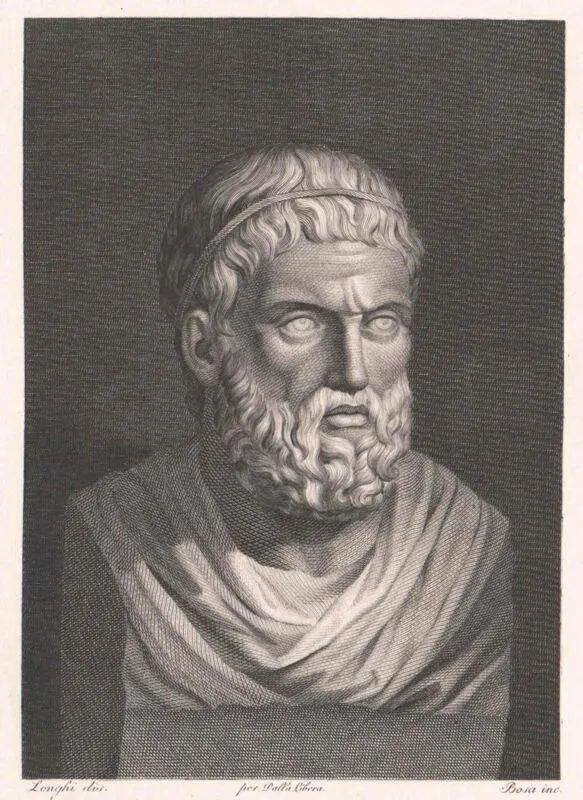
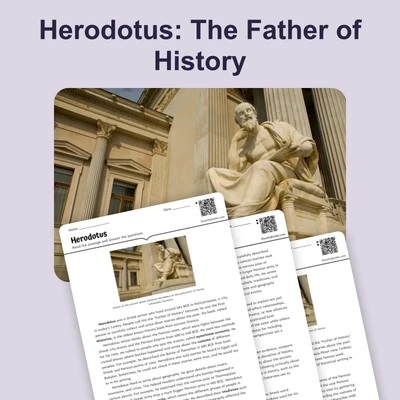
"Sophocles" by Austrian National Library / Europeana (Public domain).
Sophocles was one of the most important playwrights of ancient Greece, living from about 496 BCE to 406 BCE in the city-state of Athens. He is best known for writing tragedies, a form of drama that explores serious themes such as fate, justice, and the struggles of humans against powerful forces. Sophocles' most famous work, Oedipus Rex, is still performed and studied today.
The city of Athens was a center of cultural and political life during Sophocles’ time. Each year, Athenians held dramatic festivals like the Dionysia to honor the god Dionysus. Playwrights competed by presenting plays, and winning these competitions brought fame and respect. Sophocles entered many of these festivals and won first prize more than 18 times, according to ancient records. Archaeological discoveries, such as inscriptions listing victors of dramatic contests, confirm his success. The open-air theater of Dionysus, built into the slope of the Acropolis, was where thousands gathered to watch his plays.
Sophocles introduced several innovations to Greek drama. He increased the number of actors on stage from two to three, which allowed for more complex dialogue and character development. He also reduced the role of the chorus, giving individual characters more importance. Sophocles' plays often dealt with themes of moral choice and the limits of human knowledge, reflecting the beliefs and values of Athenian society. In Oedipus Rex, for example, the main character tries to escape a dreadful prophecy but ends up fulfilling it, showing the power of fate in Greek thought.
Primary sources, such as fragments of ancient manuscripts and references by later writers like Aristotle, help historians reconstruct Sophocles’ achievements. Aristotle praised Oedipus Rex as a perfect example of tragic structure in his work Poetics. Over time, Greek tragedy influenced Roman, Renaissance, and even modern drama. The tradition of examining human flaws and moral choices continues in theater and literature today.
Sophocles' life and works reveal much about the role of art, religion, and civic duty in ancient Greece. His tragedies helped people reflect on justice, leadership, and the consequences of personal actions. Through his innovations, Sophocles shaped the development of Western theater and left a legacy that endures across centuries.
Learning about Sophocles connects to broader themes of how societies use storytelling and performance to express values and challenge beliefs.
Interesting Fact: Only seven of the over 120 plays Sophocles wrote have survived to modern times.
Comprehension quiz (8 questions)
1. Where did Sophocles live?
2. What type of plays did Sophocles write?
3. How many of Sophocles' plays survive today?
4. Why was the Dionysia festival important?
5. How did Sophocles change Greek drama?
6. What theme did Oedipus Rex explore?
7. Sophocles was a Roman playwright.
8. What does 'chorus' mean in Greek drama?
Perfect for the way you teach
- Build comprehension skills
- Auto-graded quiz
- Differentiated reading
- Read together at home
- Improve fluency
- Quiet reading time
- Reading curriculum support
- Independent practice
- Track Lexile growth