This passage explores the fascinating world of Paleolithic clothing, focusing on how early humans used animal skins and bone needles to survive harsh environments. Students will learn about archaeological discoveries, technological innovations, and the social significance of clothing in prehistoric societies. The passage is aligned with CA HSS 6.1 and CCSS RH.6-8.1 standards, ensuring rigorous historical and ELA skills development. The resource includes a detailed reading passage, glossary, multiple-choice quiz, writing activities, graphic organizers, a timeline, and Spanish translations. Read aloud audio and a relevant public domain image enrich the learning experience, making it suitable for diverse learners. This comprehensive educational tool helps students analyze history through evidence, understand cause and effect, and connect past innovations to broader human development.
Written by Workybooks TeamPublished by Workybooks
Preview
Sample passage and quiz content
CONTENT PREVIEW
Expand content preview
Paleolithic-Clothing-from-Animal-Skins
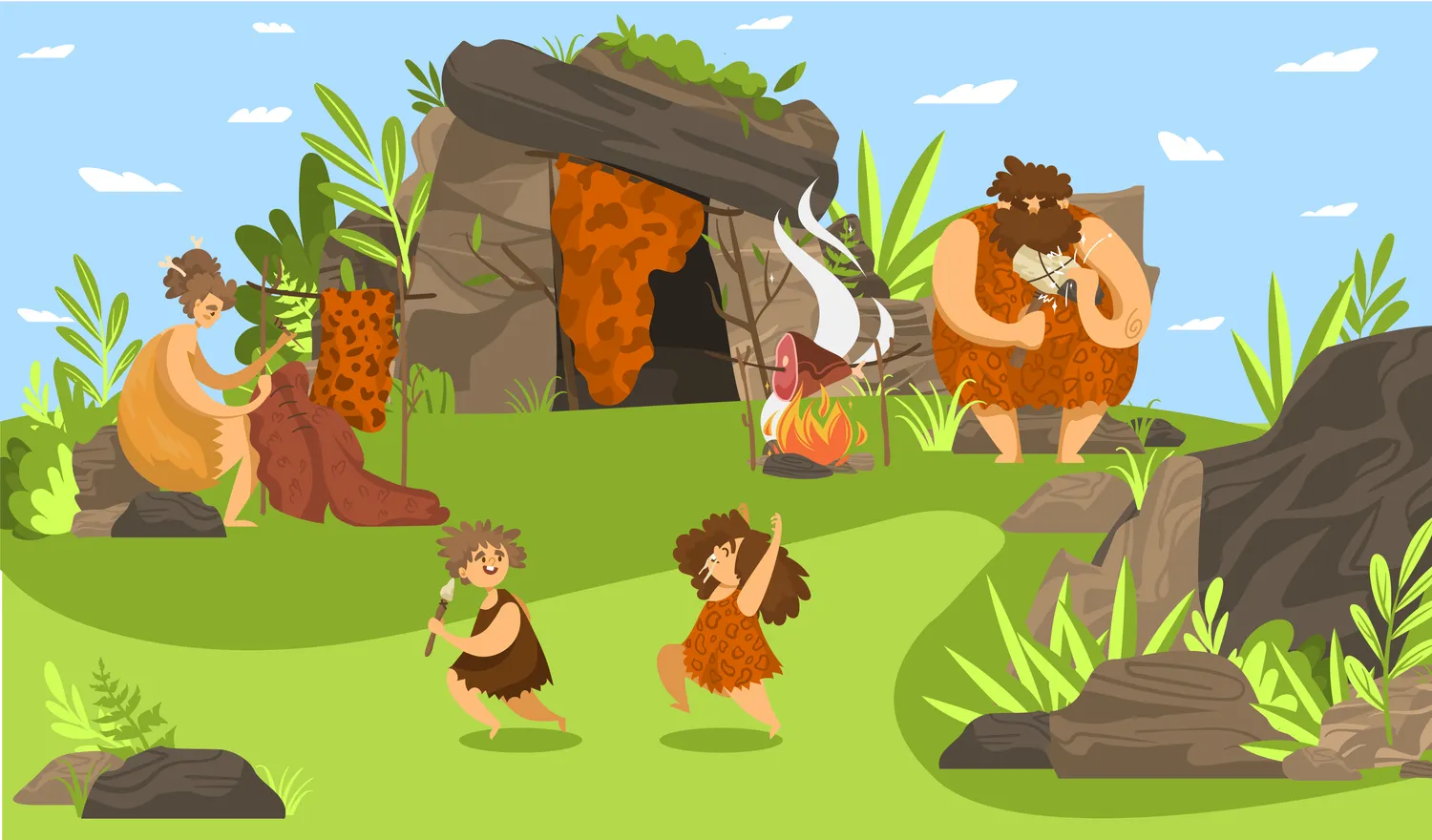
The Paleolithic era, also known as the Old Stone Age, marks the period when early humans began to use animal skins for clothing. Archaeological evidence reveals that as early as 40,000 years ago, people living in Europe, Asia, and Africa used animal hides to protect themselves from harsh climates. The invention of clothing was a crucial adaptation for survival, especially as humans migrated to colder regions during the Ice Age.
Early humans developed specialized tools to process animal skins. They used sharp stone blades to scrape hides clean and soften them. Around 28,000 years ago, people in places like the Kostenki site in Russia began using bone needles with eyes drilled at one end. These needles allowed them to sew hides together using sinew or plant fibers as thread. Archaeologists have found ancient bone needles in caves across Europe and Asia. For example, the famous Dzudzuana Cave in Georgia yielded some of the oldest known sewing needles, dating back about 30,000 years. These discoveries suggest that clothing technology spread across wide regions over time.
Making and wearing clothing from animal skins required significant innovation. The process included hunting animals, removing and cleaning the hides, softening them through pounding or soaking, and then stitching pieces together. Clothing was not only practical but also had social and symbolic functions. Some Paleolithic cave paintings and figurines, such as the "Venus" figurines from Central Europe, show detailed representations of clothing, indicating its importance in early societies. Clothing could signal a person's role, status, or group identity, and it likely played a role in ritual or ceremonial practices.
The use of animal skin clothing changed over time as people developed new tools and techniques. As humans moved into new environments, clothing adapted to local resources and climates. The need for warmth and protection drove technological advancements, such as better sewing methods and more efficient use of hides. However, evidence is limited, and much of what we know comes from well-preserved sites or rare artifacts. Archaeologists continue to debate how widespread certain techniques were or how styles evolved in different regions.
The development of Paleolithic clothing demonstrates the resourcefulness and creativity of early humans. It shows how people adapted to their environment, used available materials, and built the foundations for later cultural and technological achievements. The study of ancient clothing connects to broader themes of human adaptation, social organization, and innovation in world history.
Interesting Fact: Some of the earliest known sewing needles were so finely crafted that they are still sharp today!
What tool did early humans use to sew?
Bone needlesMetal wiresWooden sticksStone bowls
Where was Dzudzuana Cave located?
GeorgiaRussiaFranceEgypt
How old are the oldest known sewing needles?
About 30,000 yearsAbout 2,000 yearsAbout 100,000 yearsAbout 1,000 years
Why was animal skin clothing important?
For survival in harsh climatesFor cooking foodFor building housesFor making jewelry
What does 'innovation' mean in this context?
A new tool or methodA type of animalA cave paintingA kind of food
How did clothing change over time?
New tools and techniquesStayed exactly the sameBecame smallerStopped using animal skins
Some early needles are still sharp. True or false?
TrueFalse
What is 'sinew' used for?
Thread for sewingMaking potteryPainting cavesBuilding shelters
Who it's for
Perfect for the way you teach
Teachers
Build comprehension skills
Auto-graded quiz
Differentiated reading
Parents
Read together at home
Improve fluency
Quiet reading time
Homeschoolers
Reading curriculum support
Independent practice
Track Lexile growth
Topics
Paleolithicclothinganimal skinsbone needlesearly humansarchaeologyancient history
Reviews & Ratings
No reviews yet. Be the first to share your experience!
More reading you might love
20 more
Lost City of Pompeii
This engaging passage explores the ancient Roman city of Pompeii, which was buried by the eruption of Mount Vesuvius in ...
CA HSS 6.1RH.6-8.2RH.6-8.4RH.6-8.7
Minoan Civilization
This engaging history reading passage explores the Minoans, one of the earliest civilizations of the Bronze Age located ...
CA HSS 6.1RH.6-8.1RH.6-8.4
How Ancient Ideas Spread
This history reading passage explores the concept of cultural diffusion and its significance in shaping ancient civiliza...
CA HSS 6.16.2TEKS 113.18(B)(1)(A)RI.6.3
First Humans
This engaging history reading passage explores the evolution of early humans, tracing the journey from the earliest homi...
CA HSS 6.1RH.6-8.1RH.6-8.2W.6.2
Who Were the Neanderthals
This engaging history reading passage explores the fascinating world of the Neanderthals, our ancient relatives who live...
CA HSS 6.1TEKS 6.2RI.6.1RI.6.4
Early Human Cognition
This engaging reading passage explores the Cognitive Revolution, a major turning point in human history that occurred ar...
CA HSS 6.1CCSS.RI.6.1CCSS.RI.6.2CCSS.RI.6.4
Valmiki and the Ramayana
This ancient history reading passage explores the life and legacy of Valmiki, the celebrated poet credited with composin...
CA HSS 6.1CCSS.ELA-LITERACY.RH.6-8.1CCSS.ELA-LITERACY.RH.6-8.2
China's Terracotta Army
This passage explores the fascinating discovery of the Terra-Cotta Army near Xi’an, China, and its significance in ancie...
CA HSS 6.1CCSS RH.6-8.1CCSS RH.6-8.4CCSS RH.6-8.7
Dead Sea Scrolls Discovery
This passage explores the remarkable discovery of the Dead Sea Scrolls, one of history’s most significant archaeological...
CA HSS 6.1CCSS.RI.6.1CCSS.RI.6.3
Indigenous Snowshoes
This passage examines how snowshoes were developed and utilized by Indigenous peoples of North America and northern Eura...
CA HSS 6.1CCSS RI.6.1CCSS RI.6.4CCSS W.6.2
Life as a Hunter-Gatherer
This engaging history reading passage explores the ways early humans survived and spread across continents by foraging, ...
CA HSS 6.1RI.6.1RI.6.4RI.7.1
Human Impact on Extinctions
This passage explores how Paleolithic people, or early humans, shaped their environment through the use of fire, hunting...
CA HSS 6.1CCSS RH.6-8.2CCSS RI.6.4
Stone Age Settlements
Explore how early humans in the Paleolithic Era built shelters such as caves and huts to survive harsh climates. This pa...
CA HSS 6.1CCSS.RI.6.3CCSS.RI.7.1CCSS.RI.8.2
How Early Humans Survived the Ice Age
This passage explores how Paleolithic people adapted to a variety of landscapes, including coastal regions, mountains, p...
CA HSS 6.1CCSS RH.6-8.1CCSS RH.6-8.2CCSS RH.6-8.4
Life in the Neolithic Age
This engaging passage explores what life was like during a typical day in the Neolithic Age, a pivotal era in ancient hi...
CA HSS 6.1CCSS RH.6-8.2CCSS RH.6-8.4
Ramayana Epic of India
This passage introduces students to the epic of the Ramayana and its role in teaching the concept of dharma within ancie...
CA HSS 6.1RI.6.1RI.6.4RI.7.1
How Artifacts Are Restored
This engaging passage explores how scientists, especially archaeologists and conservators, protect and restore artifacts...
CA HSS 6.1RI.6.1RH.6-8.2
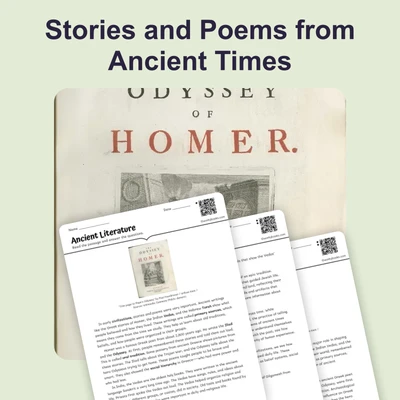
Ancient World Literature
This passage explores the importance of ancient stories and poems from civilizations such as Greece, India, and Israel. ...
CA HSS 6.1CCSS.RI.6.1CCSS.RI.6.4
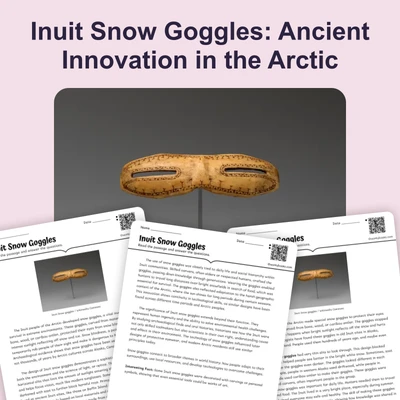
Inuit Snow Goggles
This passage examines the history and significance of Inuit snow goggles, a remarkable invention by Arctic peoples who i...
CA HSS 6.16.2CCSS.RI.6.1CCSS.RI.6.4
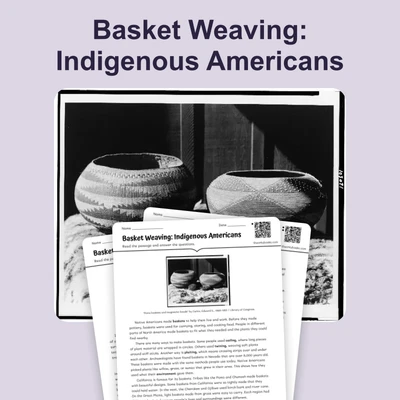
Native American Basket Weaving
This passage examines the historical importance of basket weaving among Indigenous Americans, highlighting how different...