The Specific Heat Capacity of Water — Reading Comprehension
Rate this
Present
Present in classroom. No work saved
Assign
Classroom with student accounts, Track progress
Quick Play
No student accounts, assign with a link
Grades
5
6
7
8
Standards
MS-PS3
HS-PS3
RI.6.3
RI.7.1
PRINT+DIGITAL RESOURCE
This learning resource is available in interactive and printable formats. The interactive worksheet can be played online and assigned to students. The Printable PDF version can be downloaded and printed for completion by hand.
This middle school science reading passage, 'The Specific Heat Capacity of Water,' explains how water's high specific heat makes it slow to heat and cool, helping regulate body temperature, climate, and weather. Students learn that specific heat is the amount of energy needed to raise the temperature of 1 gram of a substance by 1°C. The passage compares water to other materials like sand and metal and explains how water's thermal properties are important in science, engineering, and the natural world. It aligns with NGSS MS-PS1-4 and Common Core standards RI.6.1 and RI.6.4. With 8 comprehension questions, a fun fact, and relatable examples, this resource builds science literacy while exploring heat and energy.
CONTENT PREVIEW
Expand content preview
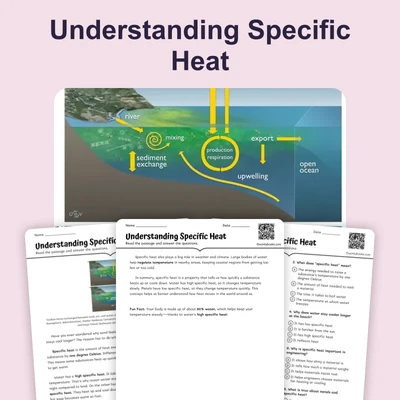
Water is all around us—in oceans, lakes, rivers, and even our own bodies. But did you know that water has a special property that makes it very good at holding heat? This property is called specific heat capacity.
Specific heat capacity is the amount of energy needed to raise the temperature of one gram of a substance by one degree Celsius. Water has a very high specific heat capacity compared to most other materials. It takes more energy to heat water than it does to heat metal, sand, or many other substances.
This is why water heats up slowly and cools down slowly too. On a hot day, sand at the beach may burn your feet, but the ocean feels cool. That’s because water resists quick temperature changes.
The high specific heat of water is also why our bodies, which are made mostly of water, stay at a stable temperature. It helps keep animals, people, and even plants from overheating or cooling too quickly.
Water’s ability to store and release heat also plays a huge role in climate and weather. Oceans and lakes absorb heat during the day and release it at night, helping to balance temperatures in the environment.
In summary, the specific heat capacity of water is high, which means it takes a lot of energy to heat it up. This makes water an important part of life on Earth, from keeping our bodies stable to helping regulate the planet’s temperature.
Fun Fact: Water's high specific heat is so powerful that the ocean stores 1,000 times more heat than the atmosphere—helping to shape weather all over the world!
What is specific heat capacity?
The energy needed to boil a substanceThe time it takes to cool a substanceThe amount of energy needed to raise the temperature of 1 gram of a substance by 1°CThe weight of a material
What is true about water’s specific heat capacity?
It is lower than metalIt is very highIt changes oftenIt doesn’t affect temperature
Why does the ocean feel cool even when the sand is hot?
The sand reflects more heatWater evaporates quicklyWater heats up more slowly due to its high specific heatSand stores energy better
Which of the following materials has a higher specific heat capacity than water?
IronCopperSandNone of the above
How does water’s high specific heat help humans?
It makes water heavierIt helps the body keep a stable temperatureIt helps water boil fasterIt keeps skin cool only when swimming
How does specific heat affect the environment?
Oceans trap water under the surfaceWater absorbs and releases heat, helping control temperatureIt makes rain fall fasterIt increases ocean waves
What happens to water when it gains heat slowly?
It changes colorIt breaks into gas quicklyIt slowly increases in temperatureIt freezes
Why is the high specific heat of water important in climate?
It creates more cloudsIt helps regulate air pressureIt prevents sudden changes in temperatureIt causes snow to melt faster
Perfect For:
👩🏫 Teachers
• Reading comprehension practice
• Auto-graded assessments
• Literacy skill development
👨👩👧👦 Parents
• Reading practice at home
• Comprehension improvement
• Educational reading time
🏠 Homeschoolers
• Reading curriculum support
• Independent reading practice
• Progress monitoring
Reading Features:
📖
Reading Passage
Engaging fiction or nonfiction text
❓
Comprehension Quiz
Auto-graded questions
📊
Instant Feedback
Immediate results and scoring
📄
Printable Version
Download for offline reading
🔊
Read Aloud
Voice-over with word highlighting
Reviews & Ratings
No reviews yet. Be the first to share your experience!
Related Content
What is Deforestation?
Deforestation is the large-scale removal of forests, primarily caused by human activities like agriculture, logging, and...
RI.5.3RI.6.3RI.7.3
Cold Fronts and Warm Fronts: A Comparison
Cold fronts bring thunderstorms and cooler temperatures, while warm fronts bring light rain and warmer temperatures. Bot...
7.RI.7.3RI.5.3RI.5.5RI.6.9
The Great Pacific Garbage Patch
The Great Pacific Garbage Patch is a massive collection of plastic waste in the North Pacific Ocean. It harms marine lif...
RI.5.3RI.6.3RI.7.3
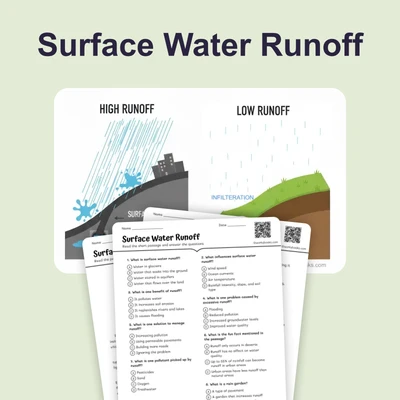
Surface Water Runoff
Surface water runoff replenishes rivers and lakes but can cause flooding and pollution. Solutions like rain gardens and ...
RI.5.3RI.6.3RI.7.3
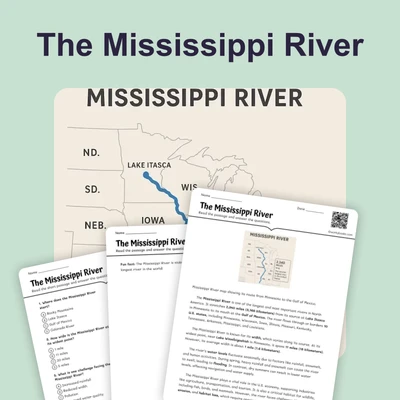
The Mississippi River
The Mississippi River is one of the longest rivers in North America, stretching 2,340 miles from Lake Itasca to the Gulf...
RI.5.3RI.6.3RI.7.3
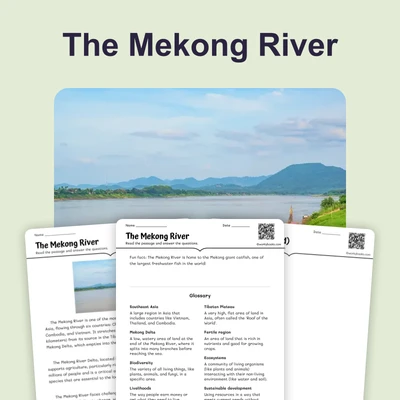
The Mekong River
The Mekong River flows 2,700 miles through six countries in Southeast Asia, ending in the fertile Mekong Delta. It suppo...
RI.5.3RI.6.3RI.7.3
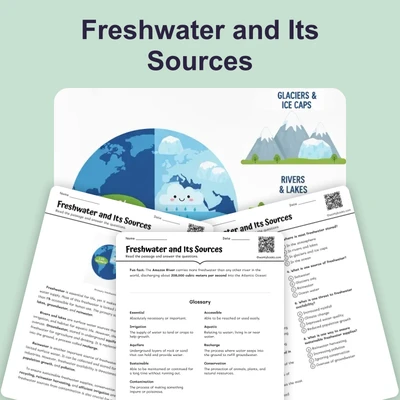
Freshwater and Its Sources
Freshwater is a limited resource, with most stored in glaciers and aquifers. Rivers, lakes, and groundwater are key sour...
RI.5.3RI.6.3RI.7.3
Difference Between a Rock and a Mineral
Rocks are mixtures of minerals, while minerals are naturally occurring, inorganic solids with a specific composition and...
RI.5.3RI.6.3RI.7.3
Runoff from Precipitation
Runoff from precipitation replenishes rivers and lakes but can cause flooding and pollution. Solutions like rain gardens...
RI.5.3RI.6.3RI.7.3
Large Streams of Moving Water
Large streams of moving water, like rivers and creeks, shape landscapes, support ecosystems, and provide freshwater for ...
RI.5.3RI.6.3RI.7.3
Cyclones and Anticyclones: A Comparison
Cyclones are low-pressure systems that bring stormy weather, while anticyclones are high-pressure systems that bring cle...
7.RI.7.1RI.5.3RI.5.5RI.6.9
The Brahmaputra River
The Brahmaputra River originates in the Himalayas and flows 1,800 miles through China, India, and Bangladesh, joining th...
RI.5.3RI.6.3RI.7.3
The Amazon River Dolphin
The Amazon River dolphin, also known as the pink river dolphin or boto, is a unique freshwater species found in the Amaz...
RI.5.3RI.6.3RI.7.3
Rare Earth Minerals in Smartphones and Computers
Rare earth minerals are critical for smartphones, computers, and renewable energy. Mining them has environmental impacts...
RI.5.3RI.6.3RI.7.3
What is Transpiration
Transpiration is the process by which plants release water vapor into the atmosphere. It cools plants, contributes to hu...
RI.5.3RI.6.3RI.7.3
The Amazon River
The Amazon River is the largest river in the world by discharge volume, stretching 4,000 miles from the Andes Mountains ...
RI.5.3RI.6.3RI.7.3
Vertical Farming
Vertical farming is an innovative method of growing crops in vertically stacked layers, often in controlled environments...
RI.5.3RI.6.3RI.7.3
Do All Minerals Have Crystal Structures?
All minerals have a crystalline structure, but not all form visible crystals. The size and shape of crystals depend on f...
RI.5.3RI.6.3RI.7.3
Why Are Pollinators Important?
This passage explores the critical ecological role of pollinators in maintaining ecosystem stability and supporting huma...
MS-LS2-4RI.6.3RI.7.3RI.8.8
What Would Happen If Bees Went Extinct?
This passage examines the potential consequences of bee extinction, perfectly aligned with NGSS standard MS-LS2-4 on eco...