Temperature Gradient
Interactive passage with audio narration, comprehension questions, and printable PDF.
By completing this purchase you agree to our Terms of Use and Privacy Policy. Your subscription renews automatically until you cancel. You can cancel anytime from your account settings. All sales are final and non-refundable. Digital content is available for download in your account immediately upon purchase.
What's included
Temperature Gradient preview and details
About this printable Temperature Gradient science reading passage, NGSS-aligned (Grades 5-8)
Sample passage and quiz from Temperature Gradient
Reading passage and comprehension quiz preview
What Is a Temperature Gradient?

Have you ever walked from a sunny sidewalk into the shade and felt a sudden change in temperature? That quick change is caused by something called a temperature gradient.
A temperature gradient is the difference in temperature between two places that are close to each other. When heat moves from a hot area to a cooler one, it follows the temperature gradient. The bigger the difference in temperature, the stronger the gradient.
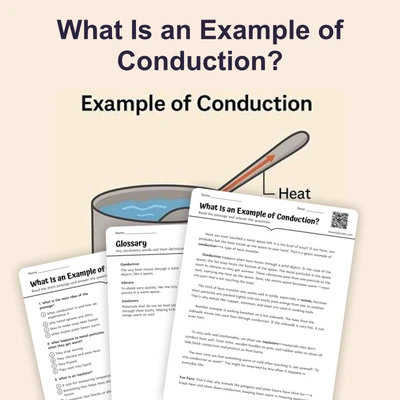
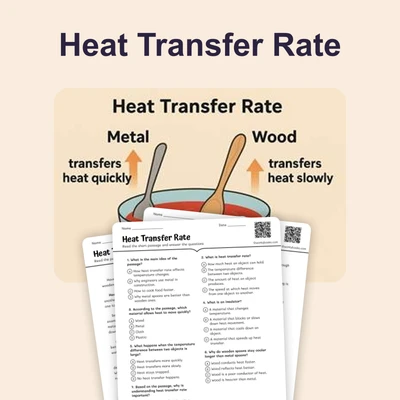
Think about a metal spoon in a hot cup of tea. The bottom of the spoon, touching the tea, gets very warm. The top of the spoon, sticking out in the air, stays cooler. The temperature changes along the length of the spoon. That change is the temperature gradient. Heat moves up the spoon, from the hot end to the cool end.
Temperature gradients can happen in many places. In the ocean, warm water near the surface meets colder water below. In weather systems, warm air and cold air create gradients that can cause wind, clouds, and even storms!
Understanding temperature gradients helps scientists study how heat moves in the world. Engineers also use this knowledge to design buildings, machines, and even clothing that keep us comfortable.
Temperature gradients are all around us. From cooking food to studying the weather, they help us understand how heat flows and how to control it in everyday life.
Fun Fact: Earth's surface has its own temperature gradient! As you go deeper underground, the temperature rises. That’s why deep caves and mines are warmer than the surface.
Comprehension quiz (8 questions)
1. What is the main idea of the passage?
2. What causes a temperature gradient?
3. What example from the passage shows a temperature gradient in action?
4. In the passage, what does the word gradient most likely mean?
5. According to the passage, why is the bottom of the spoon warmer than the top?
6. Which of the following is a result of temperature gradients in weather systems?
7. Why is the temperature higher deeper underground, according to the passage?
8. What is one reason scientists and engineers study temperature gradients?
Perfect for the way you teach
- Build comprehension skills
- Auto-graded quiz
- Differentiated reading
- Read together at home
- Improve fluency
- Quiet reading time
- Reading curriculum support
- Independent practice
- Track Lexile growth