The Specific Heat of Copper — Reading Comprehension
Rate this
Premium Resource
Present
Present in classroom. No work saved
Assign
Classroom with student accounts, Track progress
Quick Play
No student accounts, assign with a link
Grades
5
6
7
8
Standards
MS-PS3
HS-PS3
RI.6.3
RI.7.1
PRINT+DIGITAL RESOURCE
This learning resource is available in interactive and printable formats. The interactive worksheet can be played online and assigned to students. The Printable PDF version can be downloaded and printed for completion by hand.
This middle school reading passage, 'The Specific Heat of Copper,' explores how copper responds to heat due to its low specific heat capacity—about 0.39 J/g·°C. Students learn that this means copper heats up and cools down quickly, making it ideal for cooking pans, electrical wires, and other tools requiring fast heat transfer. The passage defines specific heat capacity and compares copper's thermal properties to water. It also explains the practical uses of copper in engineering and science. Aligned with NGSS MS-PS3-3, which addresses energy transfer and changes in temperature, this passage also supports ELA standards like RI.6.1. It includes 8 comprehension questions, a fun fact, and vocabulary support, making it a useful resource for both science and literacy development.
CONTENT PREVIEW
Expand content preview
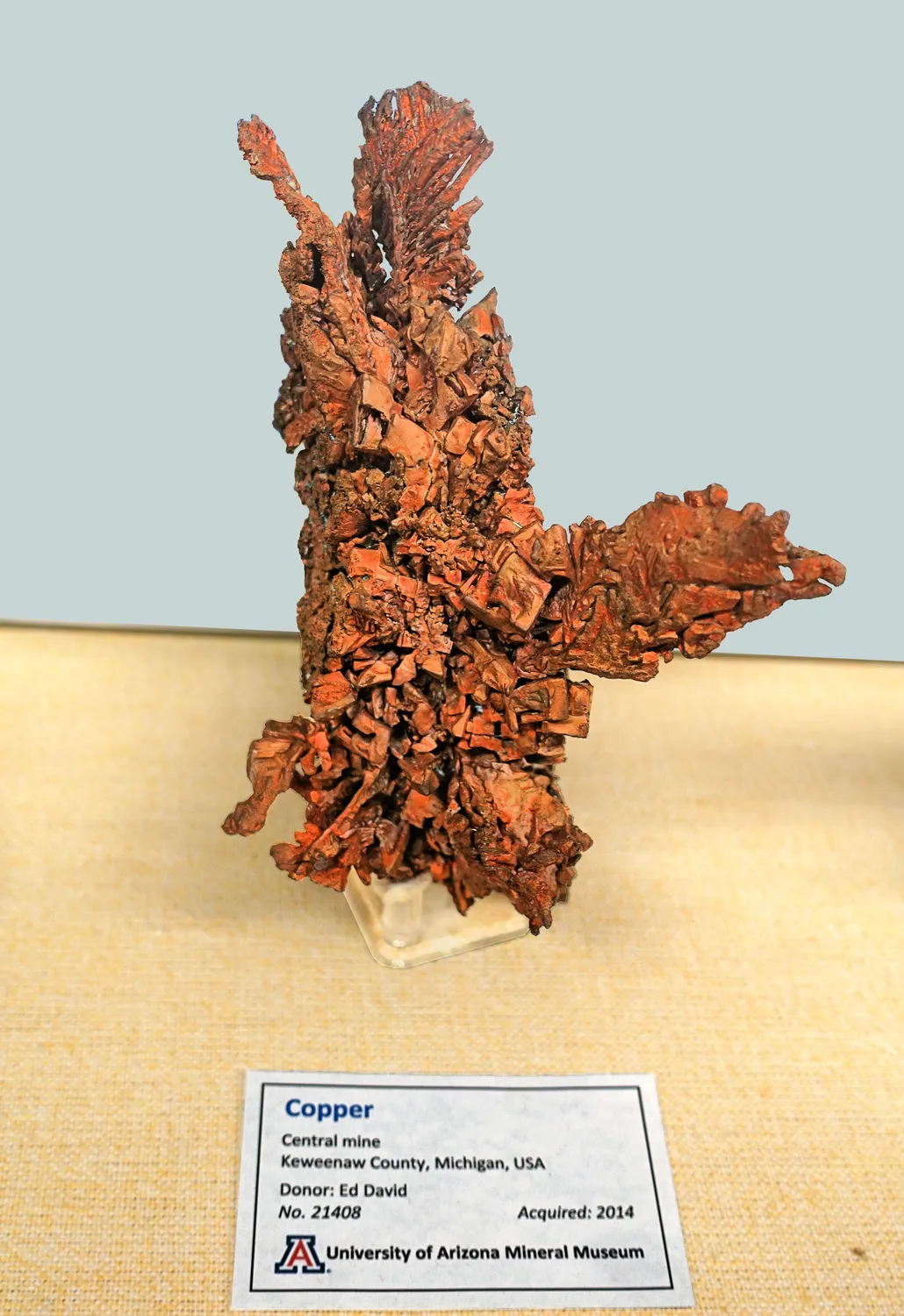
"Copper, Central Mine, Keweenaw County, Michigan - Dr. Ed David Collection - University of Arizona Mineral Museum - University of Arizona - Tucson, AZ - clean background" by Eric Polk / Wikimedia Commons.
Copper is a reddish-brown metal that is widely used in wires, pots, pipes, and coins. It is known for conducting heat and electricity very well. But how quickly does copper heat up when energy is added? To understand this, we need to learn about the specific heat capacity of copper.
Specific heat capacity is the amount of energy needed to raise the temperature of 1 gram of a substance by 1 degree Celsius. Different materials have different specific heat capacities. Some heat up quickly, while others take longer to warm.
The copper specific heat capacity is about 0.39 joules per gram per degree Celsius (J/g·°C.. This is much lower than water, which has a specific heat capacity of about 4.18 J/g·°C. Because of this, copper heats up and cools down much faster than water.
That’s why copper is often used in cooking pans—it gets hot quickly and spreads heat evenly. It’s also useful in electrical wiring, where efficient heat transfer is important. However, because copper heats and cools so quickly, it doesn't store heat well.
Understanding the specific heat capacity of copper helps scientists and engineers choose the right materials for heating and cooling systems. It also helps us understand how different materials respond to energy in real-world situations.
In summary, the copper specific heat capacity is low, meaning copper heats up fast and cools quickly. This makes it ideal for many uses where quick heat transfer is needed.
Fun Fact: Copper is the only metal (other than gold. that has a natural color other than gray or silver—it has a reddish-orange glow. This is due to the unique way its electrons absorb and reflect light!
What is the specific heat capacity of copper?
4.18 J/g·°C1.00 J/g·°C0.39 J/g·°C2.10 J/g·°C
What does “specific heat capacity” mean?
The time it takes a material to boilThe energy needed to melt 1 gram of metalThe amount of energy needed to raise 1 gram of a substance by 1°CThe total heat a material can hold forever
Why does copper heat up quickly?
It reflects sunlightIt has a low specific heat capacityIt is very heavyIt is always used in coins
Which material has a much higher specific heat capacity than copper?
AluminumWaterIronSand
Why is copper useful in cooking pans?
It melts easilyIt keeps heat trappedIt heats quickly and spreads heat evenlyIt cools food faster
How does copper compare to water in storing heat?
It stores heat better than waterIt keeps heat longerIt stores very little heatIt doesn’t conduct heat at all
What is one reason copper is used in electrical wires?
It stays coldIt breaks easilyIt transfers heat wellIt has high specific heat
What is the main idea of the passage?
Copper is found in natureCopper has a low specific heat, so it heats up and cools down quicklyWater is better than copperCopper is used in jewelry
Perfect For:
👩🏫 Teachers
• Reading comprehension practice
• Auto-graded assessments
• Literacy skill development
👨👩👧👦 Parents
• Reading practice at home
• Comprehension improvement
• Educational reading time
🏠 Homeschoolers
• Reading curriculum support
• Independent reading practice
• Progress monitoring
Reading Features:
📖
Reading Passage
Engaging fiction or nonfiction text
❓
Comprehension Quiz
Auto-graded questions
📊
Instant Feedback
Immediate results and scoring
📄
Printable Version
Download for offline reading
🔊
Read Aloud
Voice-over with word highlighting
Reviews & Ratings
No reviews yet. Be the first to share your experience!
Related Content
Understanding Specific Heat
This passage, 'Understanding Specific Heat,' explains the concept of specific heat to middle school students in an acces...
MS-PS3HS-PS3RI.6.3RI.7.1
The Specific Heat Capacity of Water
This middle school science reading passage, 'The Specific Heat Capacity of Water,' explains how water's high specific he...
MS-PS3HS-PS3RI.6.3RI.7.1
The Specific Heat of Ice
This middle school science passage, 'The Specific Heat of Ice,' explains how ice has a lower specific heat than liquid w...
MS-PS3HS-PS3RI.6.3RI.7.1
What Is Thermal Energy?
This middle school science passage, 'What Is Thermal Energy?', introduces students to the concept of energy from particl...
MS-PS3HS-PS3RI.6.3RI.7.1
What Is the Difference Between Thermal Energy and Heat?
This passage, 'What Is the Difference Between Thermal Energy and Heat?', helps middle school students understand the key...
MS-PS3HS-PS3RI.6.3RI.7.1
How Does Heat Move?
This engaging middle school science passage introduces students to the basic principles of heat transfer, aligning with ...
MS-PS3HS-PS3RI.6.3RI.7.1
What Is Conduction?
This middle school science passage explains the concept of conduction, focusing on how heat moves through solids. Aligne...
MS-PS3HS-PS3RI.6.3RI.7.1
What Is Conductivity?
This middle school science reading passage introduces students to the concept of conductivity, explaining how materials ...
MS-PS3HS-PS3RI.6.3RI.7.1
What Is an Example of Conduction?
This middle school science reading passage explains conduction through everyday examples, such as a hot metal spoon in s...
MS-PS3HS-PS3RI.6.3RI.7.1
What Is a Temperature Gradient?
This engaging science passage introduces students to the concept of a temperature gradient, a key idea aligned with the ...
MS-PS3HS-PS3RI.6.3RI.7.1
Heat Transfer Rate
This passage introduces students to the concept of heat transfer rate, aligned with NGSS standard MS-PS3-3. It explains ...
MS-PS3HS-PS3RI.6.3RI.7.1
What Is Entropy in Energy?
This passage introduces the concept of entropy in the context of energy, aligning with NGSS standard MS-PS3-4. It explai...
MS-PS3HS-PS3RI.6.3RI.7.1
What is Deforestation?
Deforestation is the large-scale removal of forests, primarily caused by human activities like agriculture, logging, and...
RI.5.3RI.6.3RI.7.3
Cold Fronts and Warm Fronts: A Comparison
Cold fronts bring thunderstorms and cooler temperatures, while warm fronts bring light rain and warmer temperatures. Bot...
7.RI.7.3RI.5.3RI.5.5RI.6.9
The Great Pacific Garbage Patch
The Great Pacific Garbage Patch is a massive collection of plastic waste in the North Pacific Ocean. It harms marine lif...
RI.5.3RI.6.3RI.7.3
Surface Water Runoff
Surface water runoff replenishes rivers and lakes but can cause flooding and pollution. Solutions like rain gardens and ...
RI.5.3RI.6.3RI.7.3
The Mississippi River
The Mississippi River is one of the longest rivers in North America, stretching 2,340 miles from Lake Itasca to the Gulf...
RI.5.3RI.6.3RI.7.3
The Mekong River
The Mekong River flows 2,700 miles through six countries in Southeast Asia, ending in the fertile Mekong Delta. It suppo...
RI.5.3RI.6.3RI.7.3
Freshwater and Its Sources
Freshwater is a limited resource, with most stored in glaciers and aquifers. Rivers, lakes, and groundwater are key sour...