Vasco da Gama: A Sea Route to India
Interactive passage with audio narration, comprehension questions, and printable PDF.
By completing this purchase you agree to our Terms of Use and Privacy Policy. Your subscription renews automatically until you cancel. You can cancel anytime from your account settings. All sales are final and non-refundable. Digital content is available for download in your account immediately upon purchase.
What's included
Vasco da Gama: A Sea Route to India preview and details
About this printable Vasco da Gama: A Sea Route to India reading passage (Grades 3-5)
Sample passage and quiz from Vasco da Gama: A Sea Route to India
Reading passage and comprehension quiz preview
Vasco da Gama
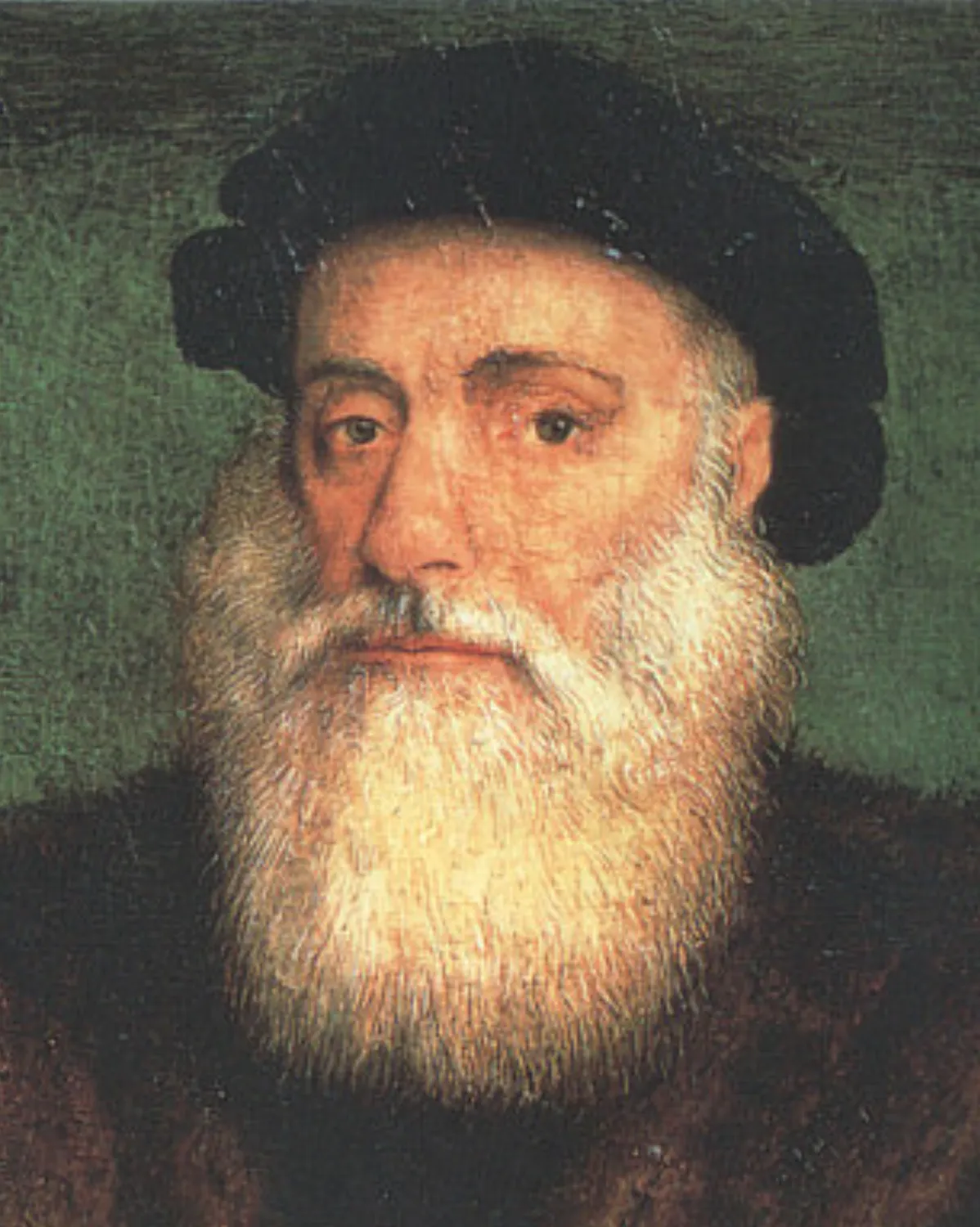
Vasco da Gama was a Portuguese explorer who changed the world. In the late 1400s, European countries wanted to find new ways to reach Asia. They hoped to trade for spices and other valuable goods. At that time, the only known way to reach Asia was by land. This journey was long, expensive, and dangerous.
Portugal decided to try to find a sea route to Asia. In 1497, King Manuel I of Portugal chose Vasco da Gama to lead this important mission. Da Gama and his crew set sail from Lisbon, Portugal, with four ships. Their goal was to sail around the southern tip of Africa, called the Cape of Good Hope, and then continue on to India.
The journey was difficult and dangerous. The ships faced rough seas, storms, and strong winds near the Cape of Good Hope. Many sailors became sick from lack of food and fresh water. Some wanted to turn back, but da Gama showed great determination. He encouraged his crew to keep going.
After many months, the fleet rounded the Cape of Good Hope and sailed up the east coast of Africa. They stopped at several ports to make repairs and get supplies. Finally, in May 1498, Vasco da Gama and his men reached the city of Calicut, India. This was the first time a European had reached India by sea.
Da Gama’s voyage was a huge success. He brought back spices and gold to Portugal. The new sea route allowed Europeans to trade directly with Asia. This made Portugal very rich and powerful. Other countries soon followed and started their own voyages of exploration.
Vasco da Gama’s bravery and skill changed history. His journey helped connect Europe and Asia and started a new era of world trade. People in Europe could now buy spices and goods from Asia more easily and cheaply.
Interesting Fact: The Cape of Good Hope was first called the "Cape of Storms" because of its dangerous weather.
Comprehension quiz (8 questions)
1. Who was Vasco da Gama?
2. What did Portugal want to find?
3. Where did da Gama reach in 1498?
4. Why was da Gama’s voyage important?
5. What happened after da Gama's success?
6. How did da Gama show determination?
7. Da Gama sailed around the Cape of Good Hope. True or false?
8. What does "fleet" mean?
Common Core standards for Vasco da Gama: A Sea Route to India
Explain events, procedures, ideas, or concepts in a historical, scientific, or technical text, including what happened and why, based on specific information in the text.
Determine the meaning of general academic and domain-specific words or phrases in a text relevant to a grade 4 topic or subject area.
Describe the overall structure (e.g., chronology, comparison, cause/effect, problem/solution) of events, ideas, concepts, or information in a text or part of a text.
Write informative/explanatory texts to examine a topic and convey ideas and information clearly.
Perfect for the way you teach
- Build comprehension skills
- Auto-graded quiz
- Differentiated reading
- Read together at home
- Improve fluency
- Quiet reading time
- Reading curriculum support
- Independent practice
- Track Lexile growth