What Is Condensation in the Water Cycle? — Reading Comprehension
Rate this
Premium Resource
Present
Present in classroom. No work saved
Assign
Classroom with student accounts, Track progress
Quick Play
No student accounts, assign with a link
Grades
5
6
7
8
Standards
MS-ESS2-6
PRINT+DIGITAL RESOURCE
This learning resource is available in interactive and printable formats. The interactive worksheet can be played online and assigned to students. The Printable PDF version can be downloaded and printed for completion by hand.
This NGSS-aligned reading passage introduces students to the role of condensation in the water cycle. Written for middle school readers, it defines condensation as the process where water vapor cools and turns back into liquid. Students will learn how temperature changes cause condensation, which leads to cloud formation and precipitation. Real-life examples such as dew on grass and water on a cold glass help students connect science to everyday life. The passage supports the NGSS standard MS-ESS2-4 and builds science literacy by including important vocabulary and clear explanations. This resource is ideal for reinforcing Earth systems concepts and weather-related phenomena through reading comprehension activities.
CONTENT PREVIEW
Expand content preview
densation is a key part of the water cycle, which is the continuous movement of water through Earth’s systems. It happens when water vapor in the air cools down and changes back into liquid water. This process forms clouds, fog, and even dew on grass in the early morning.
Condensation begins after evaporation, when heat from the Sun turns liquid water into vapor. That vapor rises into the atmosphere. As the water vapor goes higher, the air becomes cooler. When the vapor cools enough, it turns into tiny water droplets. These droplets group together around small particles like dust and form clouds. Without condensation, we wouldn’t have any precipitation—rain, snow, sleet, or hail.
Temperature plays a major role in condensation. Warm air can hold more water vapor, but as the air cools, it can't hold as much. This is why condensation often occurs at night or early in the morning when temperatures are lower. It's also why you might see water droplets on the outside of a cold glass—the water in the air around the glass condenses when it touches the cold surface.
Condensation is important because it helps return water to the Earth's surface. It makes weather events like rain possible and is a part of the natural system that keeps water moving. Meteorologists study condensation to help predict weather, and engineers use it in machines like air conditioners and refrigerators.
Fun Fact: Every cloud you see in the sky is made up of billions of tiny water droplets formed by condensation!
What is condensation?
Water turning into iceWater vapor becoming liquidWater soaking into soilWater running off land
What causes water vapor to condense?
Strong windsHeat from the SunCooling of airMovement of rivers
What forms when tiny droplets group together in the sky?
DewCloudsHailWind
Which process happens before condensation in the water cycle?
FreezingRunoffEvaporationPrecipitation
Why do water droplets form on a cold glass?
Ice is meltingGlass is leakingWater in air condensesGlass is evaporating
What role does temperature play in condensation?
Warmer air causes itCooler air causes itIt freezes waterIt speeds up sunlight
What is the main idea of the passage?
Water vapor is dangerousClouds are made of gasCondensation turns vapor into liquidAir can't hold water
How do air conditioners use condensation?
They heat airThey create cloudsThey cool vapor into liquidThey dry water
Perfect For:
👩🏫 Teachers
• Reading comprehension practice
• Auto-graded assessments
• Literacy skill development
👨👩👧👦 Parents
• Reading practice at home
• Comprehension improvement
• Educational reading time
🏠 Homeschoolers
• Reading curriculum support
• Independent reading practice
• Progress monitoring
Reading Features:
📖
Reading Passage
Engaging fiction or nonfiction text
❓
Comprehension Quiz
Auto-graded questions
📊
Instant Feedback
Immediate results and scoring
📄
Printable Version
Download for offline reading
🔊
Read Aloud
Voice-over with word highlighting
Reviews & Ratings
No reviews yet. Be the first to share your experience!
Related Content
How Rainforests Help the Planet
This NGSS-aligned reading passage for middle school students explains how rainforests help regulate Earth’s climate and ...
MS-ESS2-6MS-LS2-5
Understanding the Koppen Climate Classification System
This NGSS-aligned science reading passage explains the Köppen Climate Classification System, a scientific method used to...
MS-ESS2-6MS-LS2-5
What Is a Temperate Climate?
This NGSS-aligned science reading passage introduces middle school students to temperate climates, which have moderate t...
MS-ESS2-6
What Is the Temperate Zone?
This NGSS-aligned reading passage explains the location and characteristics of the temperate zone. Students learn that t...
MS-ESS2-6
Humid Continental Climate Characteristics
This NGSS-aligned reading passage introduces middle school students to the humid continental climate zone. It explains t...
MS-ESS2-6
Humid Continental Climate Countries
This NGSS-aligned reading passage introduces students to countries that have a humid continental climate, including part...
MS-ESS2-6
How Do Highland Climates Differ from Polar Climates?
This NGSS-aligned reading passage helps middle school students compare and contrast highland and polar climates. It expl...
MS-ESS2-6
Which Factor Controls the Water Cycle?
This NGSS-aligned science reading passage explores the question: Which factor controls the water cycle? Students will le...
MS-ESS2-6
What Are Natural Causes That Lead to Increased CO₂ Levels in the Carbon Cycle?
This NGSS-aligned middle school science passage explains natural causes that increase carbon dioxide levels in the carbo...
MS-ESS2-6
Earth's Spheres
This middle school science passage introduces students to Earth's four major spheres: the geosphere, hydrosphere, atmosp...
MS-ESS2-4MS-ESS2-6
Weather vs. Climate
This comprehensive passage for grades 6-8 explores the difference between weather and climate, aligning with NGSS standa...
MS-ESS2-6
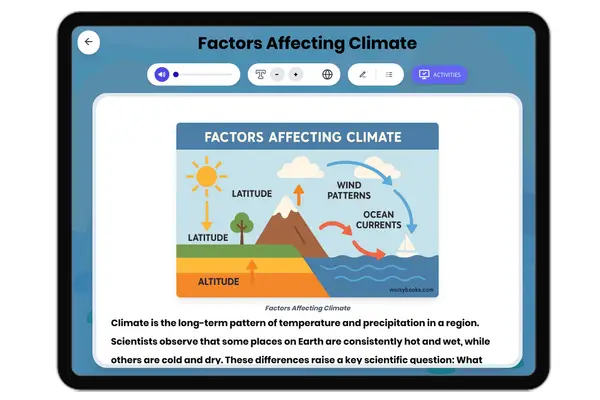
Factors Affecting Climate
This informative science passage for grades 6-8 explains the main factors that determine climate in different regions of...
MS-ESS2-6
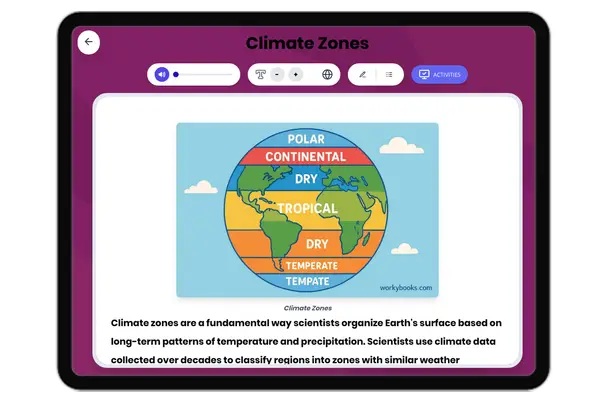
Climate Zones
This passage provides an in-depth look at Earth’s climate zones using the Köppen classification system, covering tropica...
MS-ESS2-6
The Greenhouse Effect
This comprehensive middle school science passage explores the greenhouse effect, a process essential to maintaining Eart...
MS-ESS2-6MS-ESS3-5
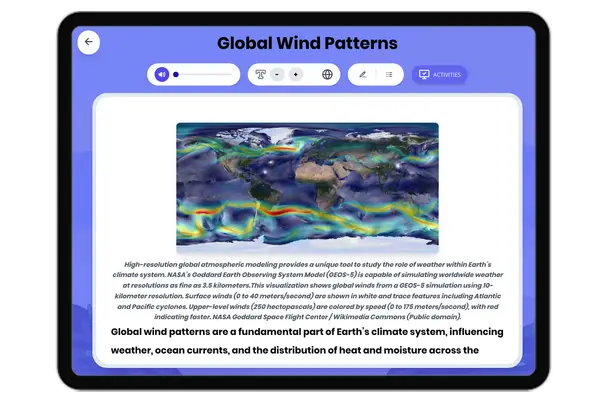
Global Wind Patterns
This comprehensive passage introduces middle school students to global wind patterns and atmospheric circulation, aligni...
MS-ESS2-6
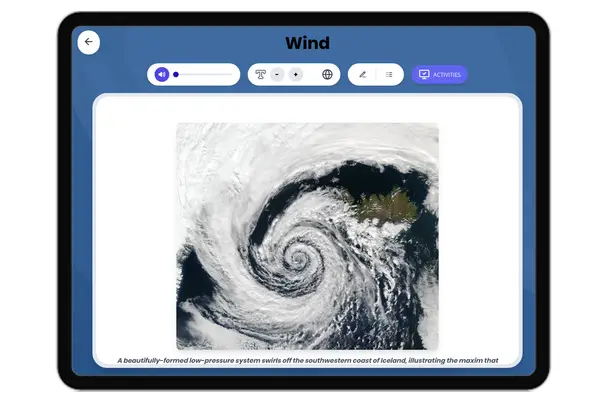
Wind
This comprehensive science passage introduces middle school students to the mechanisms of wind formation, focusing on ai...
MS-ESS2-5MS-ESS2-6
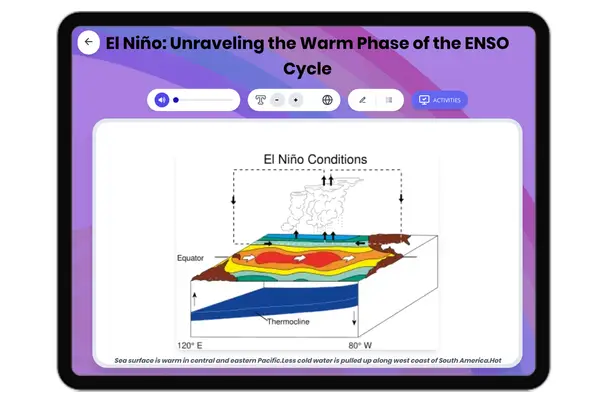
El Niño
This middle school science passage provides an in-depth exploration of El Niño, the warm phase of the El Niño-Southern O...
MS-ESS2-6MS-ESS3-5
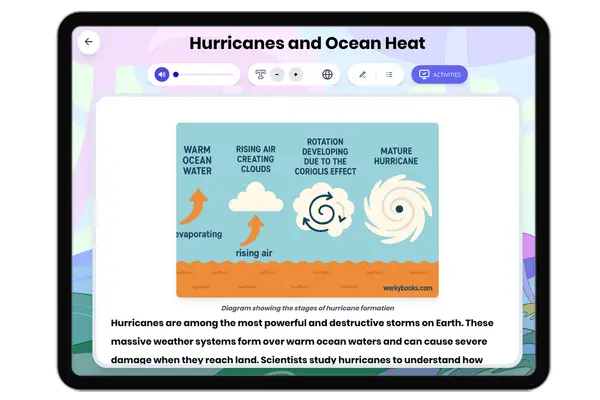
Hurricanes and Ocean Heat
This middle school science passage explores the relationship between hurricanes and ocean heat, aligning with NGSS stand...
MS-ESS2-6MS-ESS3-2
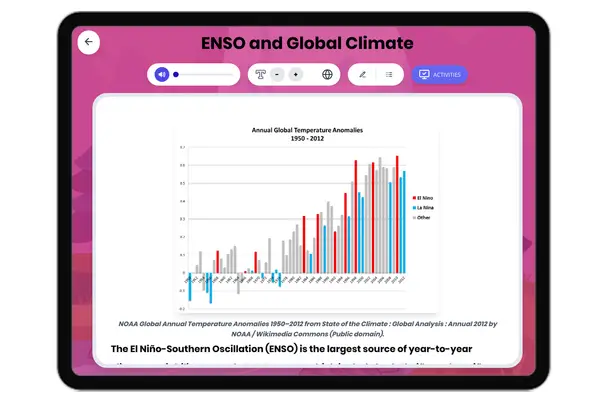
ENSO and Global Climate
This comprehensive passage explores the El Niño-Southern Oscillation (ENSO), a crucial driver of global climate variabil...