What Are Natural Causes That Lead to Increased CO₂ Levels in the Carbon Cycle?
Interactive passage with audio narration, comprehension questions, and printable PDF.
By completing this purchase you agree to our Terms of Use and Privacy Policy. Your subscription renews automatically until you cancel. You can cancel anytime from your account settings. All sales are final and non-refundable. Digital content is available for download in your account immediately upon purchase.
What's included
What Are Natural Causes That Lead to Increased CO₂ Levels in the Carbon Cycle? preview and details
About this printable What Are Natural Causes That Lead to Increased CO₂ Levels in the Carbon Cycle? science reading passage, NGSS-aligned (Grades 5-8)
Sample passage and quiz from What Are Natural Causes That Lead to Increased CO₂ Levels in the Carbon Cycle?
Reading passage and comprehension quiz preview
What Are Natural Causes That Lead to Increased CO₂ Levels in the Carbon Cycle?
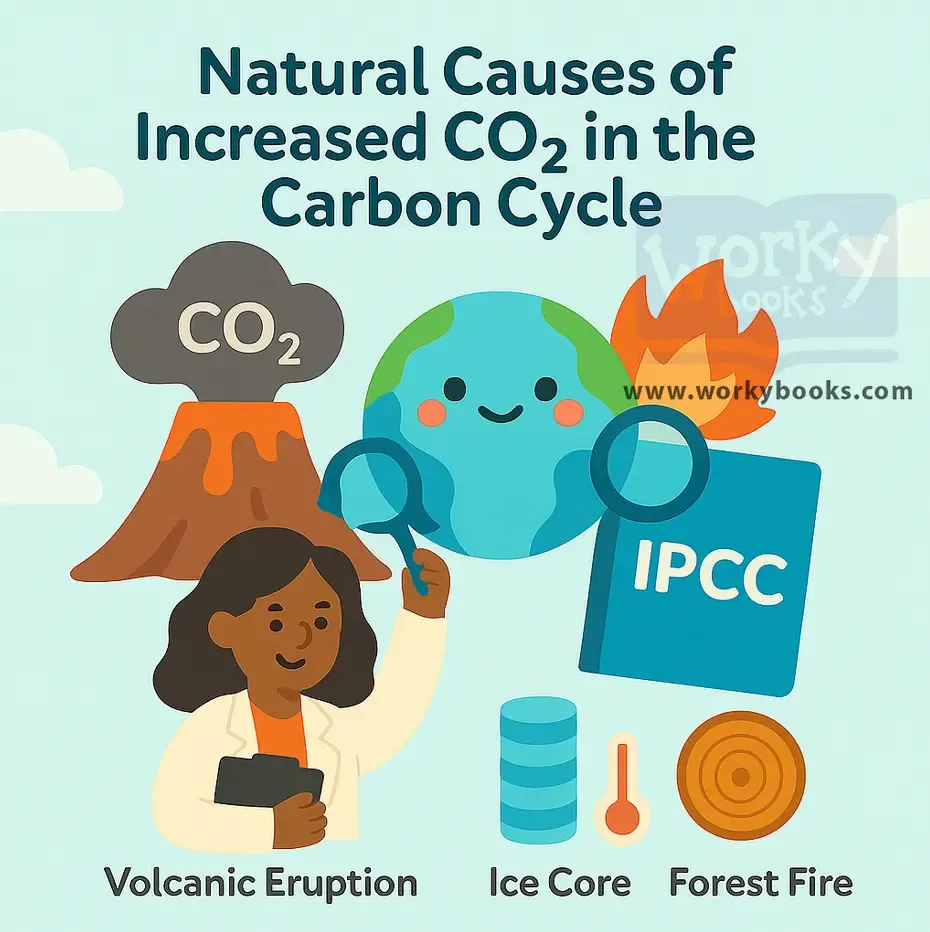
The carbon cycle is the movement of carbon between Earth's atmosphere, oceans, land, and living things. One important part of this cycle is carbon dioxide (CO₂), a gas found in the atmosphere. While humans can increase CO₂ through activities like burning fossil fuels, there are also natural causes that add CO₂ to the atmosphere. These natural events play a major role in keeping the carbon cycle balanced over time.
One natural cause of increased CO₂ is volcanic eruptions. When a volcano erupts, it releases gases trapped deep inside the Earth, including carbon dioxide. Even though volcanic eruptions are not common, they can send large amounts of CO₂ into the air very quickly.
Another natural cause is forest fires. When trees burn, the carbon stored in their trunks, branches, and leaves is released into the atmosphere as carbon dioxide. Forest fires can happen because of lightning strikes, especially during dry seasons. While forests also absorb CO₂ through photosynthesis, fires temporarily flip the process by releasing stored carbon back into the air.
Decomposition is another key source. When plants and animals die, decomposers like bacteria and fungi break them down. This process releases carbon dioxide as the organisms decay. In large ecosystems like wetlands or rainforests, decomposition is constantly adding CO₂ to the atmosphere.
In the ocean, warmer temperatures can cause carbon dioxide to be released from seawater into the air. The ocean normally stores a lot of carbon, but when the water warms up, it holds less gas, and CO₂ is released.
These natural sources are part of Earth’s normal carbon cycle. However, when they happen more often or more intensely—such as during long droughts or warming events—they can lead to higher CO₂ levels in the atmosphere.
Fun Fact: A single large volcanic eruption can release as much CO₂ as several hundred million cars running for a year!
Comprehension quiz (8 questions)
1. What is the carbon cycle?
2. Which gas is added to the atmosphere during volcanic eruptions?
3. What natural event releases CO₂ from burning trees?
4. How does decomposition add carbon dioxide to the air?
5. Which process removes carbon dioxide from the atmosphere?
6. What happens to CO₂ when ocean water gets warmer?
7. What is the main idea of the passage?
8. If forest fires increase during drought, what may happen to CO₂ levels?
Perfect for the way you teach
- Build comprehension skills
- Auto-graded quiz
- Differentiated reading
- Read together at home
- Improve fluency
- Quiet reading time
- Reading curriculum support
- Independent practice
- Track Lexile growth