This learning resource is available in interactive and printable formats. The interactive worksheet can be played online and assigned to students. The Printable PDF version can be downloaded and printed for completion by hand.
This NGSS-aligned reading passage introduces middle school students to the humid continental climate zone. It explains the key characteristics of this climate: hot summers, cold winters, and four distinct seasons. Students learn how this climate supports crops like wheat and apples, and why temperatures change so much due to the region’s distance from large bodies of water. With vocabulary, real-world examples, and comprehension questions, this passage supports science literacy and understanding of Earth's climate zones and ecosystems.
CONTENT PREVIEW
Expand content preview
A humid continental climate is a type of temperate climate found in parts of North America, Europe, and Asia, especially in areas that are far from the ocean. This climate has hot summers, cold winters, and a wide range of temperatures throughout the year. It also gets moderate to high rainfall, which supports many types of plants and forests.
One of the most important features of this climate is that it has four distinct seasons—spring, summer, autumn, and winter. Summers can be warm or hot and often have thunderstorms. Winters can be very cold, with snow and freezing temperatures. Because the land is far from large bodies of water, there is nothing to keep the temperature steady, so it changes a lot with the seasons.
The humid continental climate is divided into two main types:
● Warm summer subtype: Summers are hot and humid, winters are cold and snowy (example: New York City or Beijing). ● Cool summer subtype: Summers are mild, and winters are very cold (example: Moscow or parts of Canada).
This climate is great for growing crops like wheat, corn, and apples, thanks to its warm summers and good rainfall. It also supports many deciduous forests, which are trees that lose their leaves in the fall.
People living in this climate need different clothes and homes for each season—like air conditioning in summer and heating in winter.
Fun Fact: The humid continental climate is one of the only climates that regularly experiences both snowstorms and heatwaves in the same year!
Where is the humid continental climate found?
Near the equatorOn islands in the oceanIn areas far from the ocean, like North America and AsiaOnly in tropical rainforests
How many seasons does a humid continental climate have?
TwoFourOneSix
What are winters like in a humid continental climate?
Hot and dryCold and snowyMild with no snowWarm and rainy
Why does the temperature change so much in this climate?
The wind blows all yearIt is close to the oceanThe land is far from water that would keep it steadyThere are too many trees
What types of crops grow well in this climate?
Bananas and coconutsCorn, wheat, and applesPineapples and riceCoffee and sugarcane
What is the difference between the warm summer and cool summer subtypes?
One gets more sunshineOne has deserts and one does notOne has hotter summers than the otherOne has fewer animals
What is the main idea of the passage?
Humid continental climates never changeThis climate only exists in EuropeThe humid continental climate has four seasons and big temperature changesPeople don’t live in this climate
Why do people in this climate need different clothes and homes for each season?
Because they move every monthThe weather is always the sameThe seasons are shortThe temperatures are very different in summer and winter
Perfect For:
👩🏫 Teachers
• Reading comprehension practice
• Auto-graded assessments
• Literacy skill development
👨👩👧👦 Parents
• Reading practice at home
• Comprehension improvement
• Educational reading time
🏠 Homeschoolers
• Reading curriculum support
• Independent reading practice
• Progress monitoring
Reading Features:
📖
Reading Passage
Engaging fiction or nonfiction text
❓
Comprehension Quiz
Auto-graded questions
📊
Instant Feedback
Immediate results and scoring
📄
Printable Version
Download for offline reading
🔊
Read Aloud
Voice-over with word highlighting
Reviews & Ratings
No reviews yet. Be the first to share your experience!
Related Content
How Rainforests Help the Planet
This NGSS-aligned reading passage for middle school students explains how rainforests help regulate Earth’s climate and ...
MS-ESS2-6MS-LS2-5
Understanding the Koppen Climate Classification System
This NGSS-aligned science reading passage explains the Köppen Climate Classification System, a scientific method used to...
MS-ESS2-6MS-LS2-5
What Is a Temperate Climate?
This NGSS-aligned science reading passage introduces middle school students to temperate climates, which have moderate t...
MS-ESS2-6
What Is the Temperate Zone?
This NGSS-aligned reading passage explains the location and characteristics of the temperate zone. Students learn that t...
MS-ESS2-6
Humid Continental Climate Countries
This NGSS-aligned reading passage introduces students to countries that have a humid continental climate, including part...
MS-ESS2-6
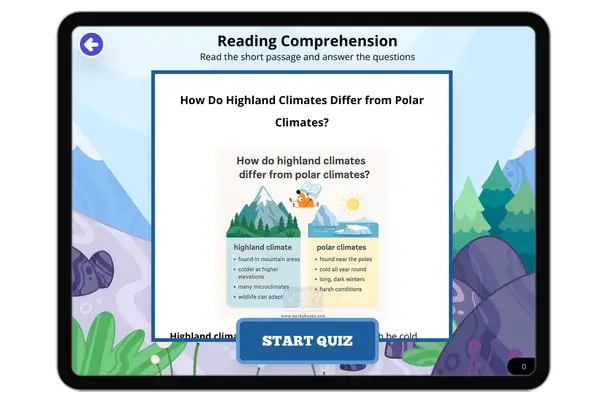
How Do Highland Climates Differ from Polar Climates?
This NGSS-aligned reading passage helps middle school students compare and contrast highland and polar climates. It expl...
MS-ESS2-6
Which Factor Controls the Water Cycle?
This NGSS-aligned science reading passage explores the question: Which factor controls the water cycle? Students will le...
MS-ESS2-6
What Is Condensation in the Water Cycle?
This NGSS-aligned reading passage introduces students to the role of condensation in the water cycle. Written for middle...
MS-ESS2-6
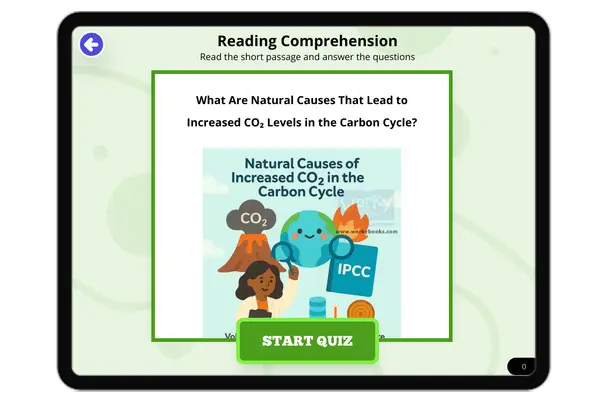
What Are Natural Causes That Lead to Increased CO₂ Levels in the Carbon Cycle?
This NGSS-aligned middle school science passage explains natural causes that increase carbon dioxide levels in the carbo...
MS-ESS2-6
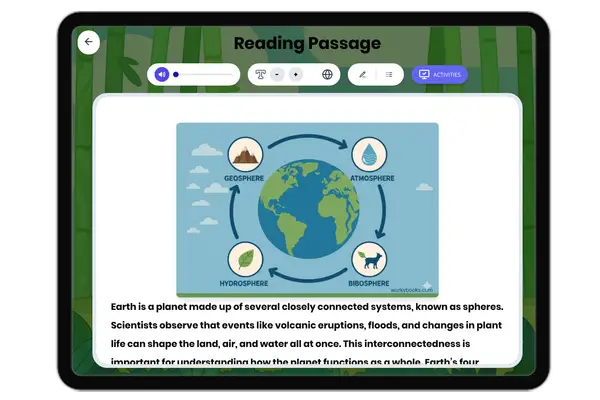
Earth's Spheres
This middle school science passage introduces students to Earth's four major spheres: the geosphere, hydrosphere, atmosp...
MS-ESS2-4MS-ESS2-6
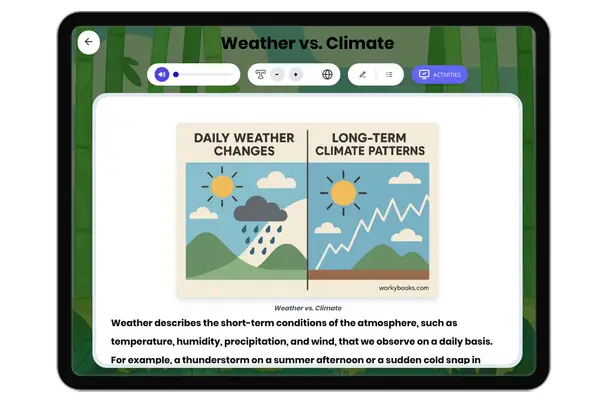
Weather vs. Climate
This comprehensive passage for grades 6-8 explores the difference between weather and climate, aligning with NGSS standa...
MS-ESS2-6
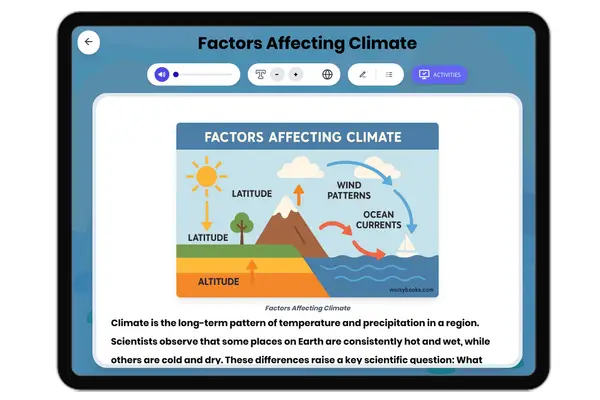
Factors Affecting Climate
This informative science passage for grades 6-8 explains the main factors that determine climate in different regions of...
MS-ESS2-6
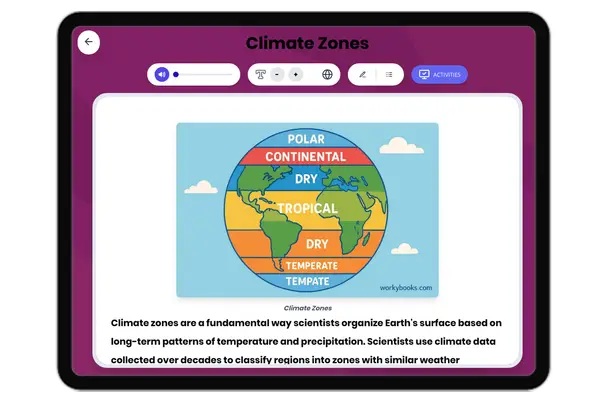
Climate Zones
This passage provides an in-depth look at Earth’s climate zones using the Köppen classification system, covering tropica...
MS-ESS2-6
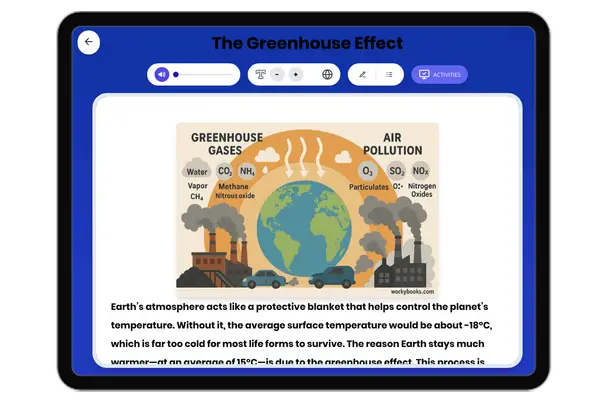
The Greenhouse Effect
This comprehensive middle school science passage explores the greenhouse effect, a process essential to maintaining Eart...
MS-ESS2-6MS-ESS3-5
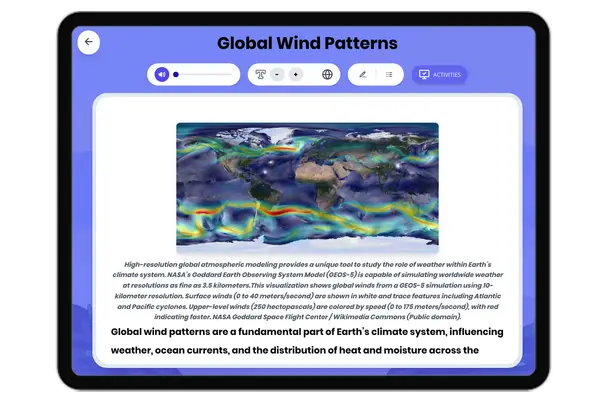
Global Wind Patterns
This comprehensive passage introduces middle school students to global wind patterns and atmospheric circulation, aligni...
MS-ESS2-6
Wind
This comprehensive science passage introduces middle school students to the mechanisms of wind formation, focusing on ai...
MS-ESS2-5MS-ESS2-6
El Niño
This middle school science passage provides an in-depth exploration of El Niño, the warm phase of the El Niño-Southern O...
MS-ESS2-6MS-ESS3-5
Hurricanes and Ocean Heat
This middle school science passage explores the relationship between hurricanes and ocean heat, aligning with NGSS stand...
MS-ESS2-6MS-ESS3-2
ENSO and Global Climate
This comprehensive passage explores the El Niño-Southern Oscillation (ENSO), a crucial driver of global climate variabil...