WorksheetPremium

Layers of Sedimentary Rock

Interactive worksheet with auto-grading, instant feedback, and printable PDF.

No ratings yet
Grade 6ScienceInteractive · Printable
Aligned toTX.SCI.6.10CNGSS MS-ESS2-1CCSS.RST.6-8.4CCSS.RST.6-8.7
Just this resource
$1.50
One-time purchase
Best value
Unlock everything
$49.99$29.99/yr
40% off until Oct 31 — 10,000+ resources
Renews at $49.99/year.

By completing this purchase you agree to our Terms of Use and Privacy Policy. Your subscription renews automatically until you cancel. You can cancel anytime from your account settings. All sales are final and non-refundable. Digital content is available for download in your account immediately upon purchase.

Unlock above to use these actions

What's included

2 worksheet pages
Auto-graded
4 Common Core standards
Assign to a class
Classroom-ready
Printable PDF

Layers of Sedimentary Rock preview and details

About this worksheet

Teach students to read rock layers like pages in a book with this one-page worksheet! Students learn the law of superposition, then number a set of rock layers from oldest to youngest.

The passage explains that the stripes of rock in a cliff or canyon wall are layers of sedimentary rock. Each one formed when sand, mud, or shells settled at the bottom of a lake or sea, one layer on top of another. The bottom layer settled first, so it is the oldest, and the top layer settled last, so it is the youngest. This rule is called the law of superposition. Students also learn which rocks sand, mud, shells, and pebbles become. A Key Words note defines sediment, superposition, and fossil, and a simple doodle shows a layered cliff. In the first activity, students study a diagram of four labeled rock layers, sandstone, limestone with fossils, shale, and conglomerate, and number them from 1, the oldest, to 4, the youngest. In the second activity, students circle the rock that forms from sand and from mud, then use their layer diagram to decide if the fossils are older or younger than the sandstone. The sheet is written to Texas TEKS 6.10C and also fits NGSS MS-ESS2-1.

What's inside:

  • A short passage with a doodle and a Key Words note
  • A rock layer diagram with 4 layers to number
  • 3 circle the answer questions
  • A visual answer key

How teachers use it:

  • After the Rock Cycle worksheet, as an intro to reading rock layers
  • For bell work, stations, or an exit ticket
  • As homework or sub plans, with no prep needed

It takes about 10 minutes and prints clearly in black and white. This worksheet is part of our Reading in Science series on Earth's systems.

Published by Workybooks
Who it's for

Perfect for the way you teach

Teachers
  • Assign in one click
  • Track progress per student
  • Auto-graded results
Parents
  • Practice at home
  • Print or do on-screen
  • Build skill mastery
Homeschoolers
  • Standards-aligned
  • Self-paced
  • Ready-to-use today
Topics

Reviews & Ratings

No reviews yet. Be the first to share your experience!

Related worksheets

20 more
Worksheet
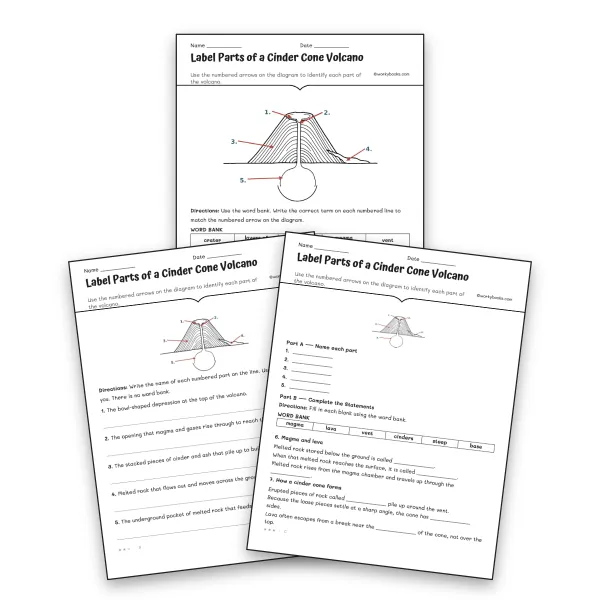
Label Parts of a Cinder Cone Volcano worksheet for grades 5 to 8
Grades 5–8

Label Parts of a Cinder Cone Volcano

earth and space science · CCSS.RST.6-8.4+1

$1.50
Passage
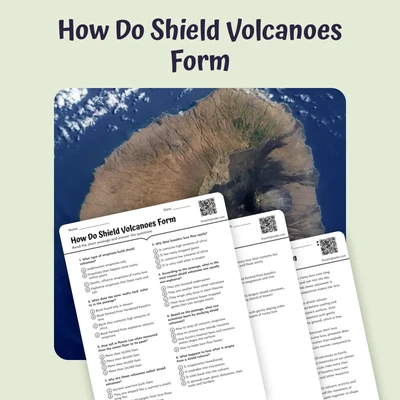
How Do Shield Volcanoes Form reading passage for grades 5 to 8
Grades 5–8

How Do Shield Volcanoes Form

earth and space science · CCSS.RST.6-8.4+1

$1.50
Worksheet
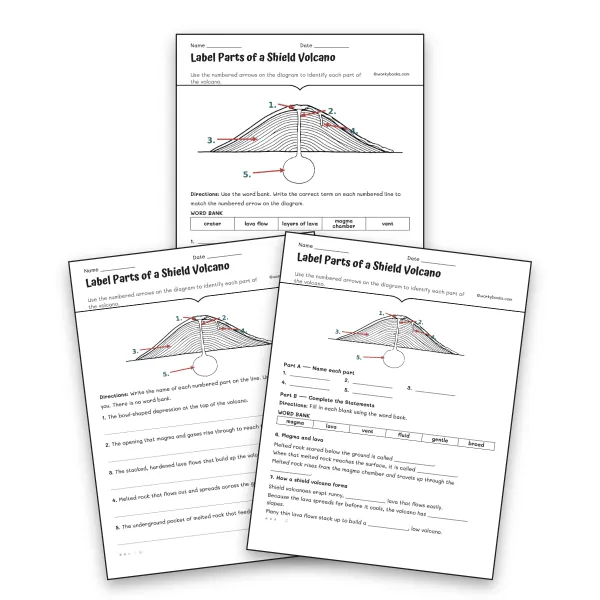
Label Parts of a Shield Volcano worksheet for grades 5 to 8
Grades 5–8

Label Parts of a Shield Volcano

earth and space science · CCSS.RST.6-8.4+1

$1.50
Worksheet
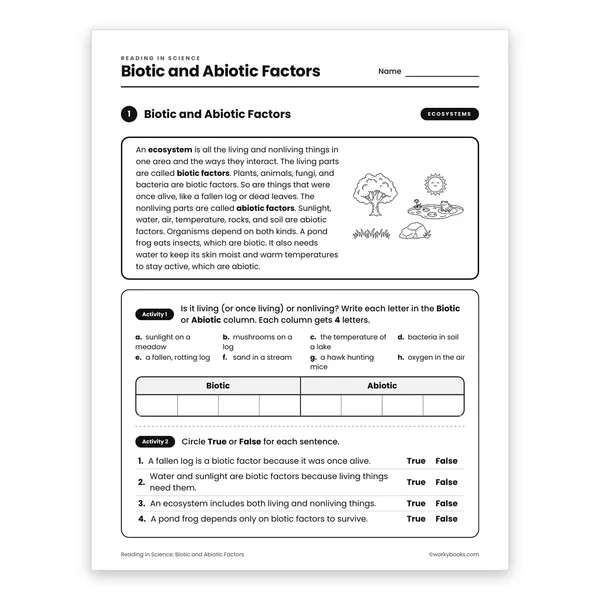
Biotic and Abiotic Factors worksheet for grade 6
Grade 6

Biotic and Abiotic Factors

life science · TX.SCI.6.12A+2

$1.50
Worksheet
Abiotic Factors in an Ecosystem worksheet for grade 6
Grade 6

Abiotic Factors in an Ecosystem

life science · TX.SCI.6.12A+2

$1.50
Worksheet
Competition in an Ecosystem worksheet for grade 6
Grade 6

Competition in an Ecosystem

life science · TX.SCI.6.12A+2

$1.50
Worksheet
Populations and Limiting Factors worksheet for grade 6
Grade 6

Populations and Limiting Factors

life science · TX.SCI.6.12A+3

$1.50
Worksheet
Predator and Prey worksheet for grade 6
Grade 6

Predator and Prey

life science · TX.SCI.6.12B+2

$1.50
Worksheet
Symbiotic Relationships worksheet for grade 6
Grade 6

Symbiotic Relationships

life science · TX.SCI.6.12B+2

$1.50
Worksheet
Predator and Prey Populations worksheet for grade 6
Grade 6

Predator and Prey Populations

life science · TX.SCI.6.12B+3

$1.50
Worksheet
Relationships Between Organisms worksheet for grade 6
Grade 6

Relationships Between Organisms

life science · TX.SCI.6.12B+2

$1.50
Worksheet
Levels of Organization in an Ecosystem worksheet for grade 6
Grade 6

Levels of Organization in an Ecosystem

life science · TX.SCI.6.12C+1

$1.50
Worksheet
Organism, Population, and Community worksheet for grade 6
Grade 6

Organism, Population, and Community

life science · TX.SCI.6.12C+1

$1.50
Worksheet
Land Ecosystems worksheet for grade 6
Grade 6

Land Ecosystems

life science · TX.SCI.6.12A+2

$1.50
Worksheet
Water Ecosystems worksheet for grade 6
Grade 6

Water Ecosystems

life science · TX.SCI.6.12A+2

$1.50
Worksheet
Earth’s Four Spheres worksheet for grade 6
Grade 6

Earth’s Four Spheres

earth and space science · TX.SCI.6.10A+2

$1.50
Worksheet
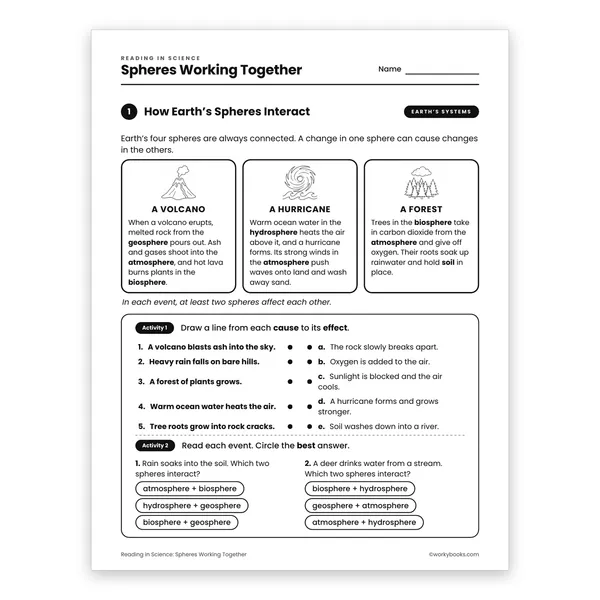
Spheres Working Together worksheet for grade 6
Grade 6

Spheres Working Together

earth and space science · TX.SCI.6.10A+2

$1.50
Worksheet
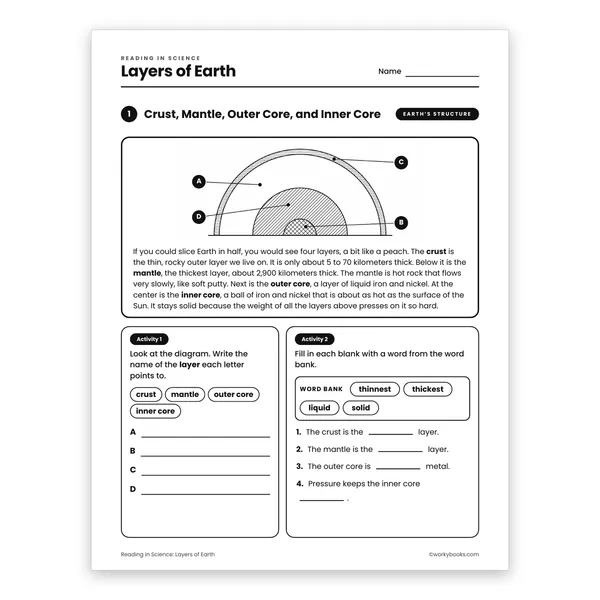
Layers of Earth worksheet for grade 6
Grade 6

Layers of Earth

earth and space science · TX.SCI.6.10B+2

$1.50
Worksheet
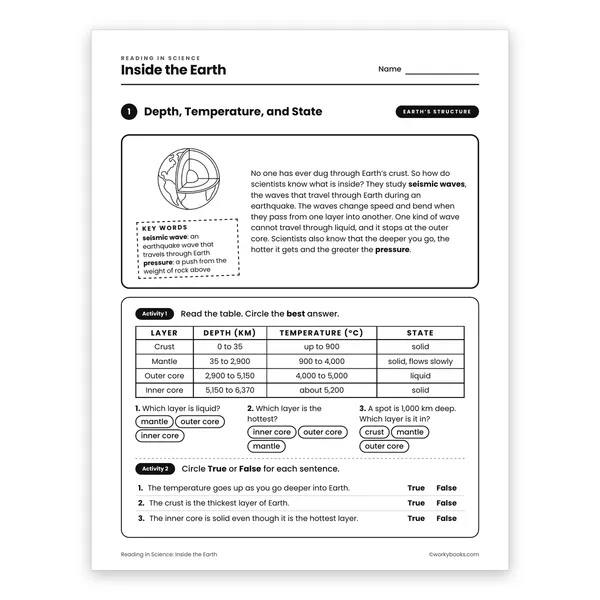
Inside the Earth worksheet for grade 6
Grade 6

Inside the Earth

earth and space science · TX.SCI.6.10B+2

$1.50
Worksheet
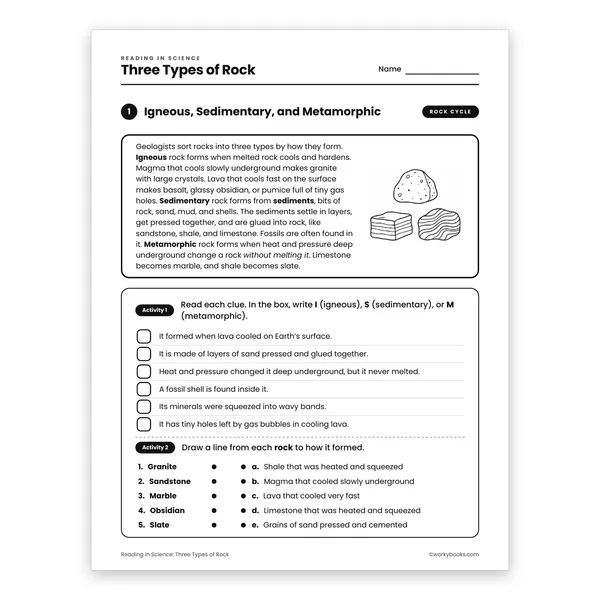
Three Types of Rock worksheet for grade 6
Grade 6

Three Types of Rock

earth and space science · TX.SCI.6.10C+2

$1.50
Copyright © 2026 Workybooks Classroom. Made with ♥ in California.