3Common Core · ELA

3rd Grade ELA standards

Every 3rd Grade ELA Common Core standard, grouped by domain. Select a standard to see the worksheets and resources aligned to it.

92 standards6 domains
GradeK12345
Domain

Showing 92 of 92 standards

Language

31 standards
CCSS.ELA-Literacy.L.3.1

Demonstrate command of the conventions of standard English grammar and usage when writing or speaking.

CCSS.ELA-Literacy.L.3.1.a

Explain the function of nouns, pronouns, verbs, adjectives, and adverbs in general and their functions in particular sentences.

CCSS.ELA-Literacy.L.3.1.b

Form and use regular and irregular plural nouns.

CCSS.ELA-Literacy.L.3.1.c

Use abstract nouns (e.g., childhood).

CCSS.ELA-Literacy.L.3.1.d

Form and use regular and irregular verbs.

CCSS.ELA-Literacy.L.3.1.e

Form and use the simple (e.g., I walked; I walk; I will walk) verb tenses.

CCSS.ELA-Literacy.L.3.1.f

Ensure subject-verb and pronoun-antecedent agreement.*

CCSS.ELA-Literacy.L.3.1.g

Form and use comparative and superlative adjectives and adverbs, and choose between them depending on what is to be modified.

CCSS.ELA-Literacy.L.3.1.h

Use coordinating and subordinating conjunctions.

CCSS.ELA-Literacy.L.3.1.i

Produce simple, compound, and complex sentences.

CCSS.ELA-Literacy.L.3.2

Demonstrate command of the conventions of standard English capitalization, punctuation, and spelling when writing.

CCSS.ELA-Literacy.L.3.2.a

Capitalize appropriate words in titles.

CCSS.ELA-Literacy.L.3.2.b

Use commas in addresses.

CCSS.ELA-Literacy.L.3.2.c

Use commas and quotation marks in dialogue.

CCSS.ELA-Literacy.L.3.2.d

Form and use possessives.

CCSS.ELA-Literacy.L.3.2.e

Use conventional spelling for high-frequency and other studied words and for adding suffixes to base words (e.g., sitting, smiled, cries, happiness).

CCSS.ELA-Literacy.L.3.2.f

Use spelling patterns and generalizations (e.g., word families, position-based spellings, syllable patterns, ending rules, meaningful word parts) in writing words.

Click to expandView resources →
CCSS.ELA-Literacy.L.3.2.g

Consult reference materials, including beginning dictionaries, as needed to check and correct spellings.

CCSS.ELA-Literacy.L.3.3

Use knowledge of language and its conventions when writing, speaking, reading, or listening.

CCSS.ELA-Literacy.L.3.3.a

Choose words and phrases for effect.*

CCSS.ELA-Literacy.L.3.3.b

Recognize and observe differences between the conventions of spoken and written standard English.

CCSS.ELA-Literacy.L.3.4

Determine or clarify the meaning of unknown and multiple-meaning word and phrases based on grade 3 reading and content, choosing flexibly from a range of strategies.

Click to expandView resources →
CCSS.ELA-Literacy.L.3.4.a

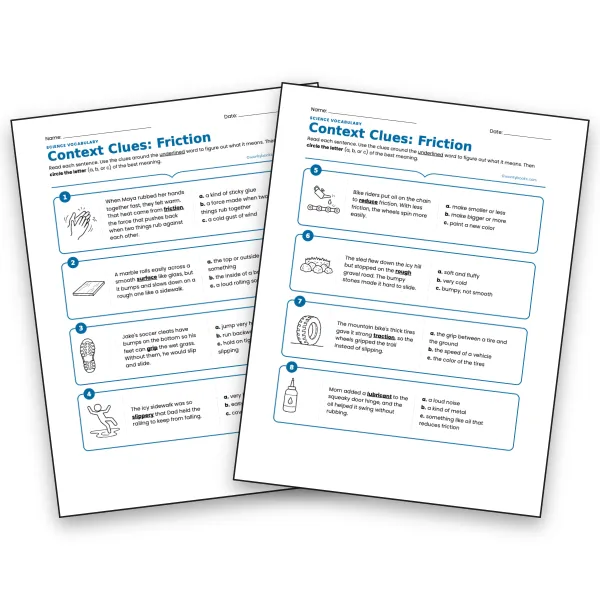
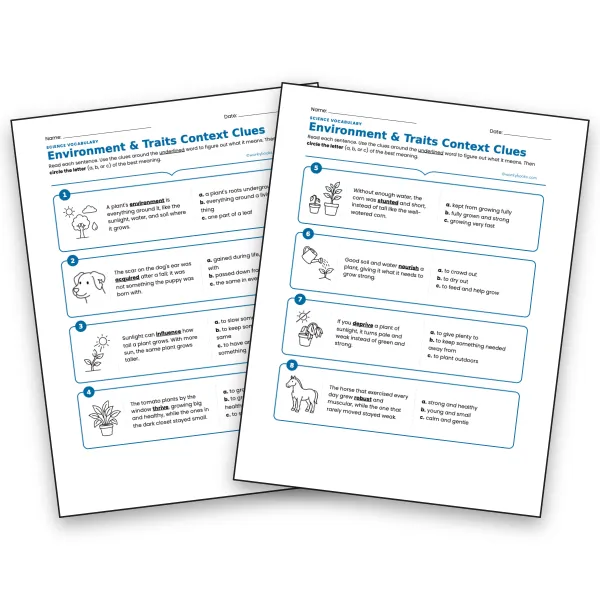
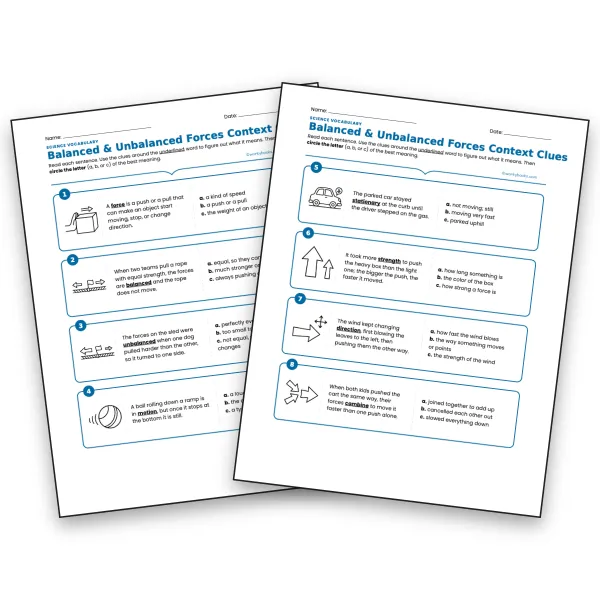
Use sentence-level context as a clue to the meaning of a word or phrase.

CCSS.ELA-Literacy.L.3.4.b

Determine the meaning of the new word formed when a known affix is added to a known word (e.g., agreeable/disagreeable, comfortable/uncomfortable, care/careless, heat/preheat).

Click to expandView resources →
CCSS.ELA-Literacy.L.3.4.c

Use a known root word as a clue to the meaning of an unknown word with the same root (e.g., company, companion).

CCSS.ELA-Literacy.L.3.4.d

Use glossaries or beginning dictionaries, both print and digital, to determine or clarify the precise meaning of key words and phrases.

CCSS.ELA-Literacy.L.3.5

Demonstrate understanding of figurative language, word relationships and nuances in word meanings.

CCSS.ELA-Literacy.L.3.5.a

Distinguish the literal and nonliteral meanings of words and phrases in context (e.g., take steps).

CCSS.ELA-Literacy.L.3.5.b

Identify real-life connections between words and their use (e.g., describe people who are friendly or helpful).

CCSS.ELA-Literacy.L.3.5.c

Distinguish shades of meaning among related words that describe states of mind or degrees of certainty (e.g., knew, believed, suspected, heard, wondered).

Click to expandView resources →
CCSS.ELA-Literacy.L.3.6

Acquire and use accurately grade-appropriate conversational, general academic, and domain-specific words and phrases, including those that signal spatial and temporal relationships (e.g., After dinner that night we went looking for them).

Click to expandView resources →

Language worksheets

Practice aligned to Language standards

Browse all
Worksheet
Making Plural Nouns - worksheet educational content
Grade 3

Making Plural Nouns

grammar · L.3.1.B+1

Free
Worksheet
Informational Text—Where Do You Live? - worksheet educational content
Grade 3

Informational Text—Where Do You Live?

reading informational text · RI.3.10+6

Free
Worksheet
Irregular Verbs Past Tense - worksheet educational content
Grade 3

Irregular Verbs Past Tense

grammar · L.3.1.D+2

Free
Worksheet
Verbs with Past Tense - worksheet educational content
Grade 3

Verbs with Past Tense

grammar · L.3.1.E+4

Free
Worksheet
Past, Present, or Future Tense? - worksheet educational content
Grade 3

Past, Present, or Future Tense?

grammar · L.3.1.E+1

$1.50
Worksheet
Complete Sentence or Fragment? - worksheet educational content
Grade 3

Complete Sentence or Fragment?

grammar · L.3.1.I+1

Free
Worksheet
Compound Sentences - worksheet educational content
Grade 3

Compound Sentences

grammar · L.3.1.I+4

$1.50
Worksheet
Capitalization - Titles - worksheet educational content
Grade 3

Capitalization - Titles

grammar · L.3.2.A+1

$1.50
Worksheet
Adding Commas - worksheet educational content
Grade 3

Adding Commas

grammar · L.3.2.B+1

$1.50
Worksheet
Punctuating Dialogue - worksheet educational content
Grade 3

Punctuating Dialogue

grammar · L.3.2.C+1

$1.50
Worksheet
Possessive Nouns - worksheet educational content
Grade 3

Possessive Nouns

grammar · L.3.2.D+2

Free
Worksheet
Adding Suffixes - worksheet educational content
Grade 3

Adding Suffixes

vocabulary development · L.3.2.E+3

$1.50

Reading: Foundational Skills

9 standards
CCSS.ELA-Literacy.RF.3.3

Know and apply grade-level phonics and word analysis skills in decoding words.

CCSS.ELA-Literacy.RF.3.3.a

Identify and know the meaning of the most common prefixes and derivational suffixes.

CCSS.ELA-Literacy.RF.3.3.b

Decode words with common Latin suffixes.

CCSS.ELA-Literacy.RF.3.3.c

Decode multisyllable words.

CCSS.ELA-Literacy.RF.3.3.d

Read grade-appropriate irregularly spelled words.

CCSS.ELA-Literacy.RF.3.4

Read with sufficient accuracy and fluency to support comprehension.

CCSS.ELA-Literacy.RF.3.4.a

Read grade-level text with purpose and understanding.

CCSS.ELA-Literacy.RF.3.4.b

Read grade-level prose and poetry orally with accuracy, appropriate rate, and expression on successive readings.

CCSS.ELA-Literacy.RF.3.4.c

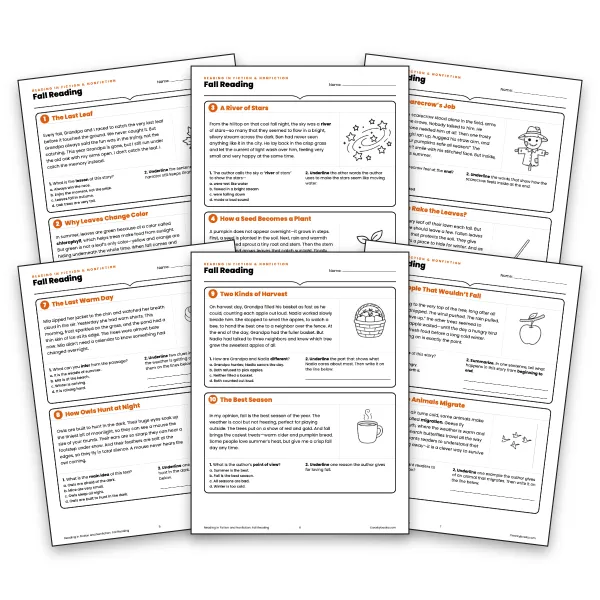
Use context to confirm or self-correct word recognition and understanding, rereading as necessary.

Reading: Foundational Skills worksheets

Practice aligned to Reading: Foundational Skills standards
Browse all
Worksheet
Informational Text on Holi - worksheet educational content
Grade 3

Informational Text on Holi

reading informational text · RI.3.10+4

$1.50
Worksheet
Informational Text —Meet the Governors - worksheet educational content
Grade 3

Informational Text —Meet the Governors

reading informational text · RI.3.10+3

$1.50
Worksheet
Informational Text on Goods and Services - worksheet educational content
Grade 3

Informational Text on Goods and Services

reading informational text · RI.3.10+3

$1.50
Worksheet
Informational Text—Where Do You Live? - worksheet educational content
Grade 3

Informational Text—Where Do You Live?

reading informational text · RI.3.10+6

Free
Worksheet
Adding Suffixes - worksheet educational content
Grade 3

Adding Suffixes

vocabulary development · L.3.2.E+3

$1.50
Worksheet
What's That Word Mean? - worksheet educational content
Grade 3

What's That Word Mean?

vocabulary development · RF.3.4.C+4

Free
Worksheet
What's That Word Mean? Multiple Choice - worksheet educational content
Grade 3

What's That Word Mean? Multiple Choice

vocabulary development · RF.3.4.C+4

$1.50
Worksheet
Adding Prefixes - worksheet educational content
Grade 3

Adding Prefixes

vocabulary development · RF.3.3.A+9

$1.50
Worksheet
Prefixes and Suffixes - worksheet educational content
Grade 3

Prefixes and Suffixes

vocabulary development · RF.3.3.A+5

$1.50
Worksheet
Sharks—Informational Text - worksheet educational content
Grade 3

Sharks—Informational Text

reading informational text · RI.3.1+6

Free
Worksheet
Spider—Main Idea - worksheet educational content
Grade 3

Spider—Main Idea

reading informational text · RI.3.2+5

Free
Worksheet
Koi Fish—What’s the Main Idea? - worksheet educational content
Grade 3

Koi Fish—What’s the Main Idea?

reading informational text · RI.3.2+2

$1.50

Reading: Informational Text

10 standards
CCSS.ELA-Literacy.RI.3.1

Ask and answer questions to demonstrate understanding of a text, referring explicitly to the text as the basis for the answers.

CCSS.ELA-Literacy.RI.3.2

Determine the main idea of a text; recount the key details and explain how they support the main idea.

CCSS.ELA-Literacy.RI.3.3

Describe the relationship between a series of historical events, scientific ideas or concepts, or steps in technical procedures in a text, using language that pertains to time, sequence, and cause/effect.

Click to expandView resources →
CCSS.ELA-Literacy.RI.3.4

Determine the meaning of general academic and domain-specific words and phrases in a text relevant to a grade 3 topic or subject area.

CCSS.ELA-Literacy.RI.3.5

Use text features and search tools (e.g., key words, sidebars, hyperlinks) to locate information relevant to a given topic efficiently.

CCSS.ELA-Literacy.RI.3.6

Distinguish their own point of view from that of the author of a text.

CCSS.ELA-Literacy.RI.3.7

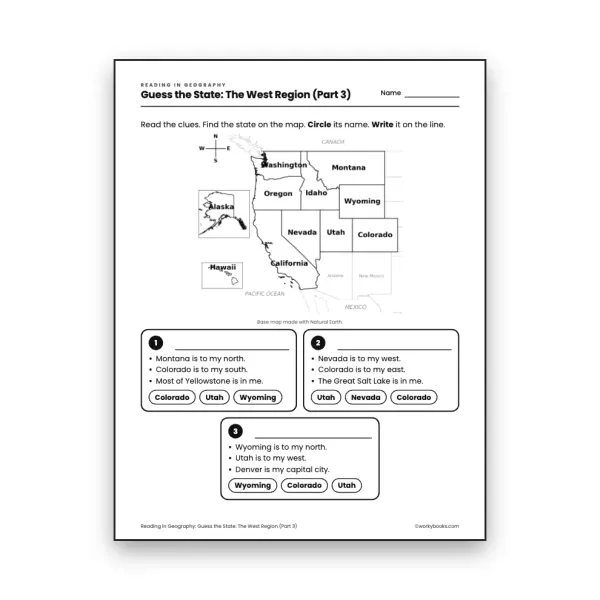
Use information gained from illustrations (e.g., maps, photographs) and the words in a text to demonstrate understanding of the text (e.g., where, when, why, and how key events occur).

Click to expandView resources →
CCSS.ELA-Literacy.RI.3.8

Describe the logical connection between particular sentences and paragraphs in a text (e.g., comparison, cause/effect, first/second/third in a sequence).

Click to expandView resources →
CCSS.ELA-Literacy.RI.3.9

Compare and contrast the most important points and key details presented in two texts on the same topic.

CCSS.ELA-Literacy.RI.3.10

By the end of the year, read and comprehend informational texts, including history/social studies, science, and technical texts, at the high end of the grades 2–3 text complexity band independently and proficiently.

Click to expandView resources →

Reading: Informational Text worksheets

Practice aligned to Reading: Informational Text standards
Browse all
Worksheet
Informational Text on Holi - worksheet educational content
Grade 3

Informational Text on Holi

reading informational text · RI.3.10+4

$1.50
Worksheet
Informational Text —Meet the Governors - worksheet educational content
Grade 3

Informational Text —Meet the Governors

reading informational text · RI.3.10+3

$1.50
Worksheet
Informational Text on Goods and Services - worksheet educational content
Grade 3

Informational Text on Goods and Services

reading informational text · RI.3.10+3

$1.50
Worksheet
Informational Text—Where Do You Live? - worksheet educational content
Grade 3

Informational Text—Where Do You Live?

reading informational text · RI.3.10+6

Free
Worksheet
Sharks—Informational Text - worksheet educational content
Grade 3

Sharks—Informational Text

reading informational text · RI.3.1+6

Free
Worksheet
Spider—Main Idea - worksheet educational content
Grade 3

Spider—Main Idea

reading informational text · RI.3.2+5

Free
Worksheet
Koi Fish—What’s the Main Idea? - worksheet educational content
Grade 3

Koi Fish—What’s the Main Idea?

reading informational text · RI.3.2+2

$1.50
Worksheet
Author's Opinion - worksheet educational content
Grade 3

Author's Opinion

reading informational text · RI.3.6

Free
Worksheet
Handy Helpers —Authors Point of View - worksheet educational content
Grade 3

Handy Helpers —Authors Point of View

reading informational text · RI.3.6

$1.50
Worksheet
Cause & Effect - worksheet educational content
Grade 3

Cause & Effect

reading informational text · RI.3.8

Free
Worksheet
French Fries Compare & Contrast Text - worksheet educational content
Grade 3

French Fries Compare & Contrast Text

reading informational text · RI.3.9+4

$1.50
Worksheet
Informational Text — Cloud Gazing - worksheet educational content
Grade 3

Informational Text — Cloud Gazing

reading informational text · RI.3.10+5

$1.50

Reading: Literature

10 standards
CCSS.ELA-Literacy.RL.3.1

Ask and answer questions to demonstrate understanding of a text, referring explicitly to the text as the basis for the answers.

CCSS.ELA-Literacy.RL.3.2

Recount stories, including fables, folktales, and myths from diverse cultures; determine the central message, lesson, or moral and explain how it is conveyed through key details in the text.

Click to expandView resources →
CCSS.ELA-Literacy.RL.3.3

Describe characters in a story (e.g., their traits, motivations, or feelings) and explain how their actions contribute to the sequence of events.

CCSS.ELA-Literacy.RL.3.4

Determine the meaning of words and phrases as they are used in a text, distinguishing literal from nonliteral language.

CCSS.ELA-Literacy.RL.3.5

Refer to parts of stories, dramas, and poems when writing or speaking about a text, using terms such as chapter, scene, and stanza; describe how each successive part builds on earlier sections.

Click to expandView resources →
CCSS.ELA-Literacy.RL.3.6

Distinguish their own point of view from that of the narrator or those of the characters.

CCSS.ELA-Literacy.RL.3.7

Explain how specific aspects of a text’s illustrations contribute to what is conveyed by the words in a story (e.g., create mood, emphasize aspects of a character or setting).

Click to expandView resources →
CCSS.ELA-Literacy.RL.3.8

(Not applicable to literature)

CCSS.ELA-Literacy.RL.3.9

Compare and contrast the themes, settings, and plots of stories written by the same author about the same or similar characters (e.g., in books from a series).

Click to expandView resources →
CCSS.ELA-Literacy.RL.3.10

By the end of the year, read and comprehend literature, including stories, dramas, and poetry, at the high end of the grades 2–3 text complexity band independently and proficiently.

Click to expandView resources →

Reading: Literature worksheets

Practice aligned to Reading: Literature standards

Browse all
Worksheet
Informational Text—Where Do You Live? - worksheet educational content
Grade 3

Informational Text—Where Do You Live?

reading informational text · RI.3.10+6

Free
Worksheet
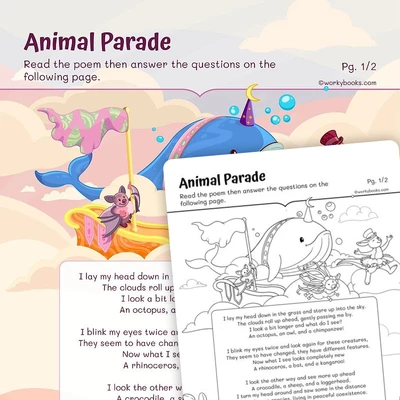
Animal Parade Poem - worksheet educational content
Grade 3

Animal Parade Poem

reading literature · SL.3.5+3

Free
Worksheet
What Do Humans Need? Informational text - worksheet educational content
Grade 3

What Do Humans Need? Informational text

reading informational text · RL.3.1

$1.50
Worksheet
Story Summary Graphic Organizer - worksheet educational content
Grades 2–6

Story Summary Graphic Organizer

writing · RL.1.1+7

$1.50
Worksheet
Fable on The King’s Quest—Author's Purpose - worksheet educational content
Grade 3

Fable on The King’s Quest—Author's Purpose

reading literature · RL.3.2+7

$1.50
Worksheet
Carl and the Lost Girl—Moral of the Story - worksheet educational content
Grade 3

Carl and the Lost Girl—Moral of the Story

reading literature · RL.3.2+5

$1.50
Worksheet
Morning Chaos—Using Illustrations to Comprehend - worksheet educational content
Grade 3

Morning Chaos—Using Illustrations to Comprehend

reading literature · RL.3.7

Free
Worksheet
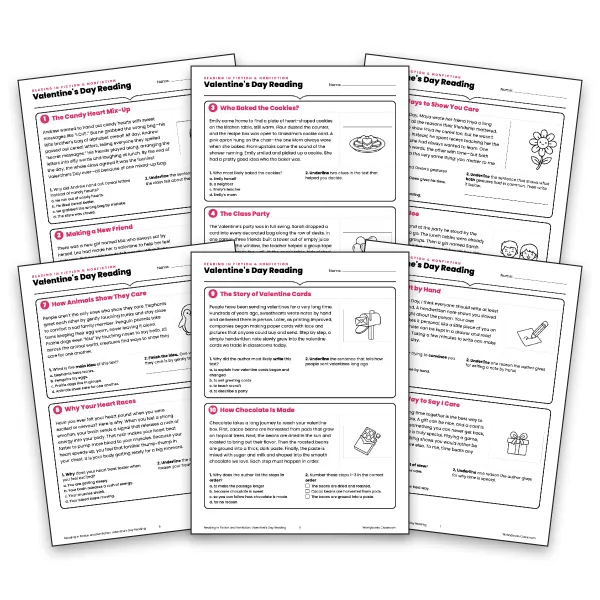
Valentine's Day— Short Fiction Passage - worksheet educational content
Grade 3

Valentine's Day— Short Fiction Passage

reading literature · RL.3.7+2

$1.50
Worksheet
Story Map Graphic Organizer - worksheet educational content
Grades 2–6

Story Map Graphic Organizer

writing · RL.1.1+7

$1.50
Worksheet
Character Traits Graphic Organizer - worksheet educational content
Grades 2–6

Character Traits Graphic Organizer

writing · RL.3.3+2

Free
Worksheet
Literal vs Nonliteral Language - worksheet educational content
Grade 3

Literal vs Nonliteral Language

vocabulary development · L.3.5.A+2

$1.50
Worksheet
Literal and Nonliteral Language - worksheet educational content
Grade 3

Literal and Nonliteral Language

reading literature · L.3.5.A+2

Free

Speaking & Listening

10 standards
CCSS.ELA-Literacy.SL.3.1

Engage effectively in a range of collaborative discussions (one-on-one, in groups, and teacher-led) with diverse partners on grade 3 topics and texts, building on others' ideas and expressing their own clearly.

Click to expandView resources →
CCSS.ELA-Literacy.SL.3.1.a

Come to discussions prepared, having read or studied required material; explicitly draw on that preparation and other information known about the topic to explore ideas under discussion.

Click to expandView resources →
CCSS.ELA-Literacy.SL.3.1.b

Follow agreed-upon rules for discussions (e.g., gaining the floor in respectful ways, listening to others with care, speaking one at a time about the topics and texts under discussion).

Click to expandView resources →
CCSS.ELA-Literacy.SL.3.1.c

Ask questions to check understanding of information presented, stay on topic, and link their comments to the remarks of others.

CCSS.ELA-Literacy.SL.3.1.d

Explain their own ideas and understanding in light of the discussion.

CCSS.ELA-Literacy.SL.3.2

Determine the main ideas and supporting details of a text read aloud or information presented in diverse media and formats, including visually, quantitatively, and orally.

Click to expandView resources →
CCSS.ELA-Literacy.SL.3.3

Ask and answer questions about information from a speaker, offering appropriate elaboration and detail.

CCSS.ELA-Literacy.SL.3.4

Report on a topic or text, tell a story, or recount an experience with appropriate facts and relevant, descriptive details, speaking clearly at an understandable pace.

Click to expandView resources →
CCSS.ELA-Literacy.SL.3.5

Create engaging audio recordings of stories or poems that demonstrate fluid reading at an understandable pace; add visual displays when appropriate to emphasize or enhance certain facts or details.

Click to expandView resources →
CCSS.ELA-Literacy.SL.3.6

Speak in complete sentences when appropriate to task and situation in order to provide requested detail or clarification. (See grade 3 Language standards 1 and 3 here for specific expectations.)

Click to expandView resources →

Speaking & Listening worksheets

Practice aligned to Speaking & Listening standards
Browse all
Worksheet
Animal Parade Poem - worksheet educational content
Grade 3

Animal Parade Poem

reading literature · SL.3.5+3

Free
Worksheet
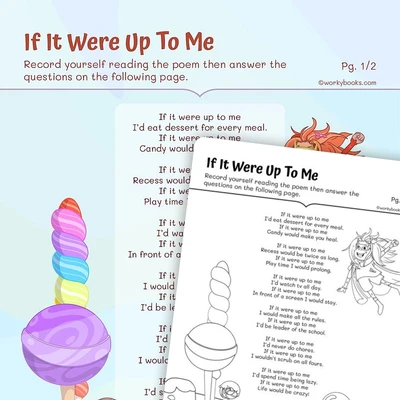
If It Were Up To Me—Poem - worksheet educational content
Grade 3

If It Were Up To Me—Poem

reading literature · RF.3.4.B+5

$1.50
Worksheet
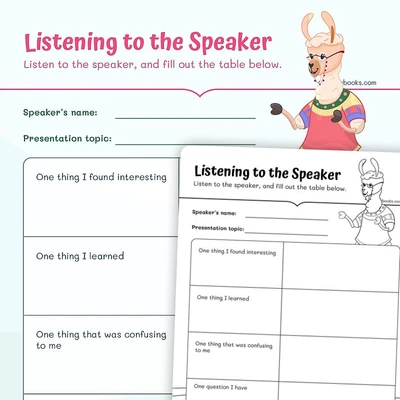
Listening to the Speaker - worksheet educational content
Grade 3

Listening to the Speaker

speaking and listening · SL.3.3

Free

Writing

22 standards
CCSS.ELA-Literacy.W.3.1

Write opinion pieces on topics or texts, supporting a point of view with reasons.

CCSS.ELA-Literacy.W.3.1.a

Introduce the topic or text they are writing about, state an opinion, and create an organizational structure that lists reasons.

CCSS.ELA-Literacy.W.3.1.b

Provide reasons that support the opinion.

CCSS.ELA-Literacy.W.3.1.c

Use linking words and phrases (e.g., because, therefore, since, for example) to connect opinion and reasons.

CCSS.ELA-Literacy.W.3.1.d

Provide a concluding statement or section.

CCSS.ELA-Literacy.W.3.2

Write informative/explanatory texts to examine a topic and convey ideas and information clearly.

CCSS.ELA-Literacy.W.3.2.a

Introduce a topic and group related information together; include illustrations when useful to aiding comprehension.

CCSS.ELA-Literacy.W.3.2.b

Develop the topic with facts, definitions, and details.

CCSS.ELA-Literacy.W.3.2.c

Use linking words and phrases (e.g., also, another, and, more, but) to connect ideas within categories of information.

CCSS.ELA-Literacy.W.3.2.d

Provide a concluding statement or section.

CCSS.ELA-Literacy.W.3.3

Write narratives to develop real or imagined experiences or events using effective technique, descriptive details, and clear event sequences.

CCSS.ELA-Literacy.W.3.3.a

Establish a situation and introduce a narrator and/or characters; organize an event sequence that unfolds naturally.

CCSS.ELA-Literacy.W.3.3.b

Use dialogue and descriptions of actions, thoughts, and feelings to develop experiences and events or show the response of characters to situations.

CCSS.ELA-Literacy.W.3.3.c

Use temporal words and phrases to signal event order.

CCSS.ELA-Literacy.W.3.3.d

Provide a sense of closure.

CCSS.ELA-Literacy.W.3.4

With guidance and support from adults, produce writing in which the development and organization are appropriate to task and purpose. (Grade-specific expectations for writing types are defined in standards 1-3 above.)

Click to expandView resources →
CCSS.ELA-Literacy.W.3.5

With guidance and support from peers and adults, develop and strengthen writing as needed by planning, revising, and editing. (Editing for conventions should demonstrate command of Language standards 1-3 up to and including grade 3 here.)

Click to expandView resources →
CCSS.ELA-Literacy.W.3.6

With guidance and support from adults, use technology to produce and publish writing (using keyboarding skills) as well as to interact and collaborate with others.

Click to expandView resources →
CCSS.ELA-Literacy.W.3.7

Conduct short research projects that build knowledge about a topic.

CCSS.ELA-Literacy.W.3.8

Recall information from experiences or gather information from print and digital sources; take brief notes on sources and sort evidence into provided categories.

Click to expandView resources →
CCSS.ELA-Literacy.W.3.9

(Begins in grade 4)

CCSS.ELA-Literacy.W.3.10

Write routinely over extended time frames (time for research, reflection, and revision) and shorter time frames (a single sitting or a day or two) for a range of discipline-specific tasks, purposes, and audiences.

Click to expandView resources →

Writing worksheets

Practice aligned to Writing standards

Browse all
Worksheet
Third Grade Opinion Writing Unit - worksheet educational content
Grade 3

Third Grade Opinion Writing Unit

writing · W.3.1.A+3

$1.50
Worksheet
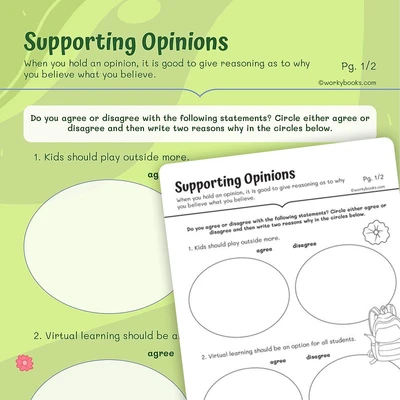
Supporting Opinions - worksheet educational content
Grade 3

Supporting Opinions

writing · W.3.1.B+3

$1.50
Worksheet
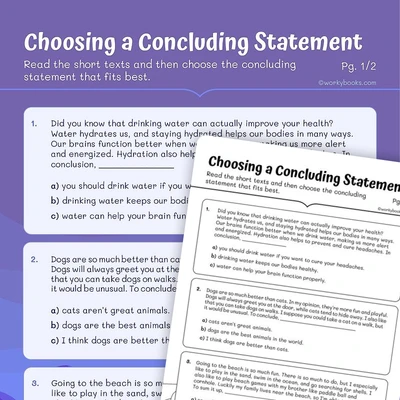
Choosing a Concluding Statement - worksheet educational content
Grade 3

Choosing a Concluding Statement

writing · W.3.1.D+1

Free
Worksheet
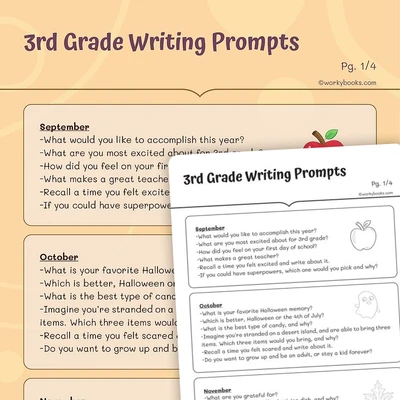
Third Grade Writing Prompts - worksheet educational content
Grade 3

Third Grade Writing Prompts

writing · W.3.10

Free
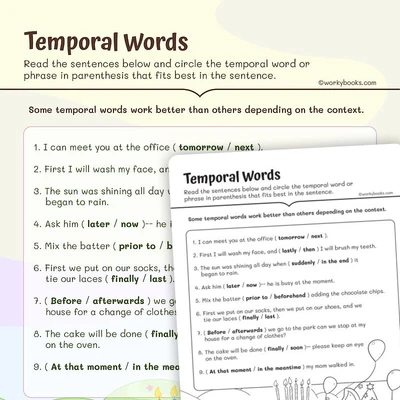
Worksheet
Temporal Words - worksheet educational content
Grade 3

Temporal Words

writing · W.3.3.C+1

$1.50
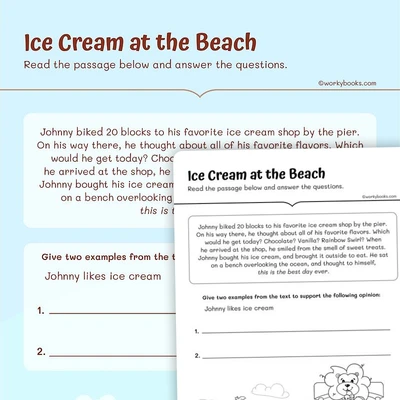
Worksheet
Ice Cream at the Beach—Opinion Passage - worksheet educational content
Grade 3

Ice Cream at the Beach—Opinion Passage

writing · W.3.1.B+1

Free
Worksheet
Transitional Words - worksheet educational content
Grade 3

Transitional Words

writing · W.3.1.C+2

Free
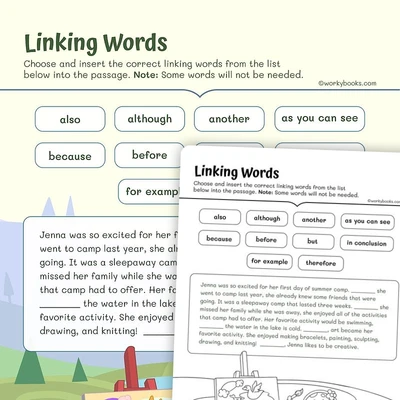
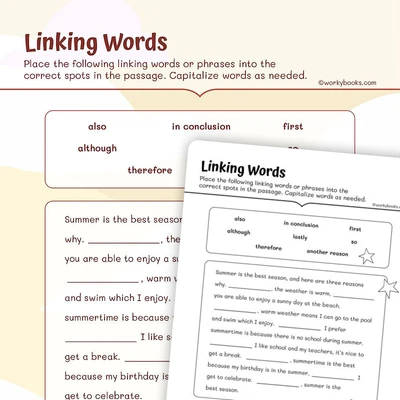
Worksheet
Linking Words - worksheet educational content
Grade 3

Linking Words

writing · W.3.1.C+2

$1.50
Worksheet
Explanatory Writing Unit - worksheet educational content
Grade 3

Explanatory Writing Unit

writing · W.3.2+4

Free
Worksheet
Informative Writing - worksheet educational content
Grade 3

Informative Writing

writing · W.3.2+4

$1.50
Worksheet
Writing Letters—Punctuation in Letter Writing - worksheet educational content
Grade 3

Writing Letters—Punctuation in Letter Writing

writing · W.3.3+6

Free
Worksheet
My Perfect Day—Creative Writing - worksheet educational content
Grade 3

My Perfect Day—Creative Writing

writing · W.3.3.A+2

Free

Looking for another grade or the full scope? See all ELA standards, K–8 →