Air Masses: Types and Characteristics
Interactive passage with audio narration, comprehension questions, and printable PDF.
What's included
Air Masses: Types and Characteristics preview and details
About this printable Air Masses: Types and Characteristics science reading passage, NGSS-aligned (Grades 5-8)
Sample passage and quiz from Air Masses: Types and Characteristics
Reading passage and comprehension quiz preview
Air Masses: Types and Characteristics
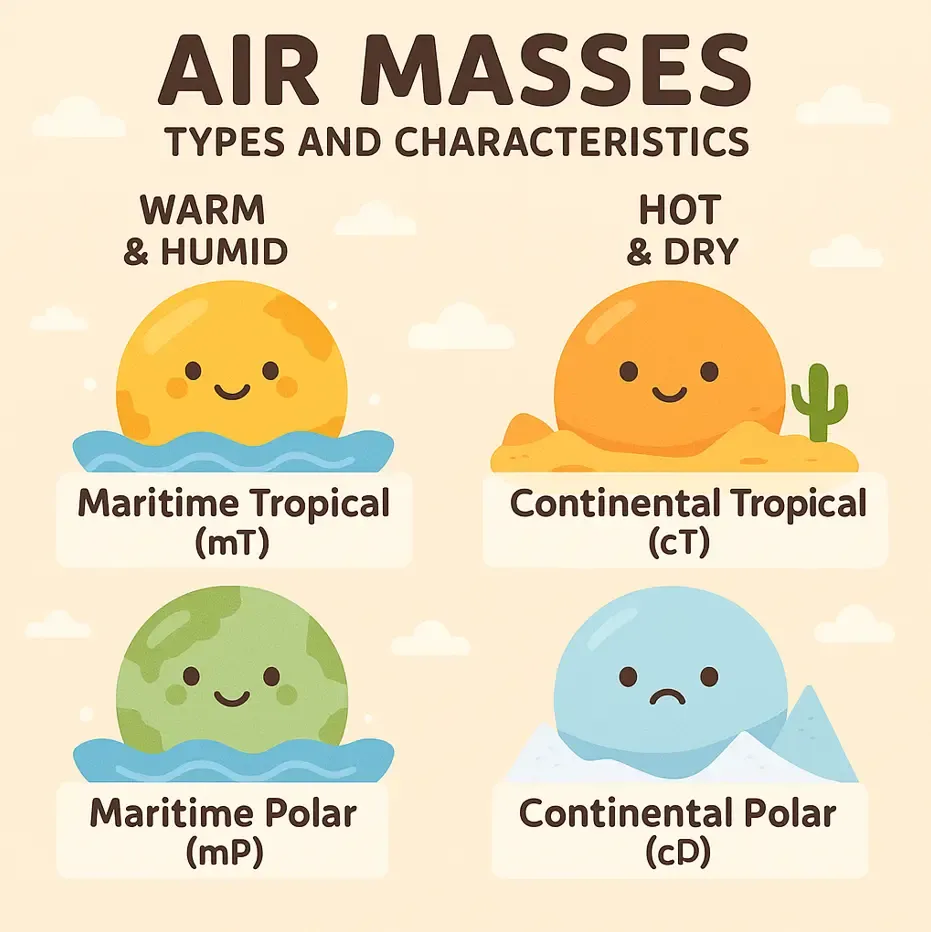
Air masses are large bodies of air with similar temperature and humidity characteristics. They form over specific regions, such as oceans or deserts, and influence weather patterns when they move.
There are four main types of air masses:
- Maritime Tropical (mT): Warm and humid, forming over tropical oceans.
- Continental Tropical (cT): Hot and dry, forming over deserts.
- Maritime Polar (mP): Cool and moist, forming over cold oceans.
Continental Polar (cP): Cold and dry, forming over polar land areas.
Air masses are classified based on their source region (maritime or continental) and temperature (tropical or polar). When air masses move, they bring their weather characteristics with them. For example, a maritime tropical air mass can bring warm, humid weather and rain, while a continental polar air mass can bring cold, dry weather and snow.
The interaction of air masses is a key factor in weather changes. For instance, when a warm air mass meets a cold air mass, it can lead to storms or precipitation.
Fun fact: The largest air masses can cover millions of square miles and influence weather across entire continents!
Comprehension quiz (8 questions)
1. What is an air mass?
2. What are the two factors used to classify air masses?
3. What type of air mass is warm and humid?
4. What type of air mass is cold and dry?
5. What weather does a maritime tropical air mass bring?
6. What happens when a warm air mass meets a cold air mass?
7. What is the fun fact mentioned in the passage?
8. What type of air mass forms over polar land areas?
Perfect for the way you teach
- Build comprehension skills
- Auto-graded quiz
- Differentiated reading
- Read together at home
- Improve fluency
- Quiet reading time
- Reading curriculum support
- Independent practice
- Track Lexile growth