Four Ways Forests Affect the Atmosphere — Reading Comprehension
Rate this
Present
Present in classroom. No work saved
Assign
Classroom with student accounts, Track progress
Quick Play
No student accounts, assign with a link
Grades
6
7
8
9
Standards
7.RI.7.1
PRINT+DIGITAL RESOURCE
This learning resource is available in interactive and printable formats. The interactive worksheet can be played online and assigned to students. The Printable PDF version can be downloaded and printed for completion by hand.
Forests play a vital role in regulating the atmosphere by absorbing CO₂, producing oxygen, cooling temperatures, and improving air quality. Deforestation disrupts these benefits, making forest conservation essential for a healthy planet.
CONTENT PREVIEW
Expand content preview
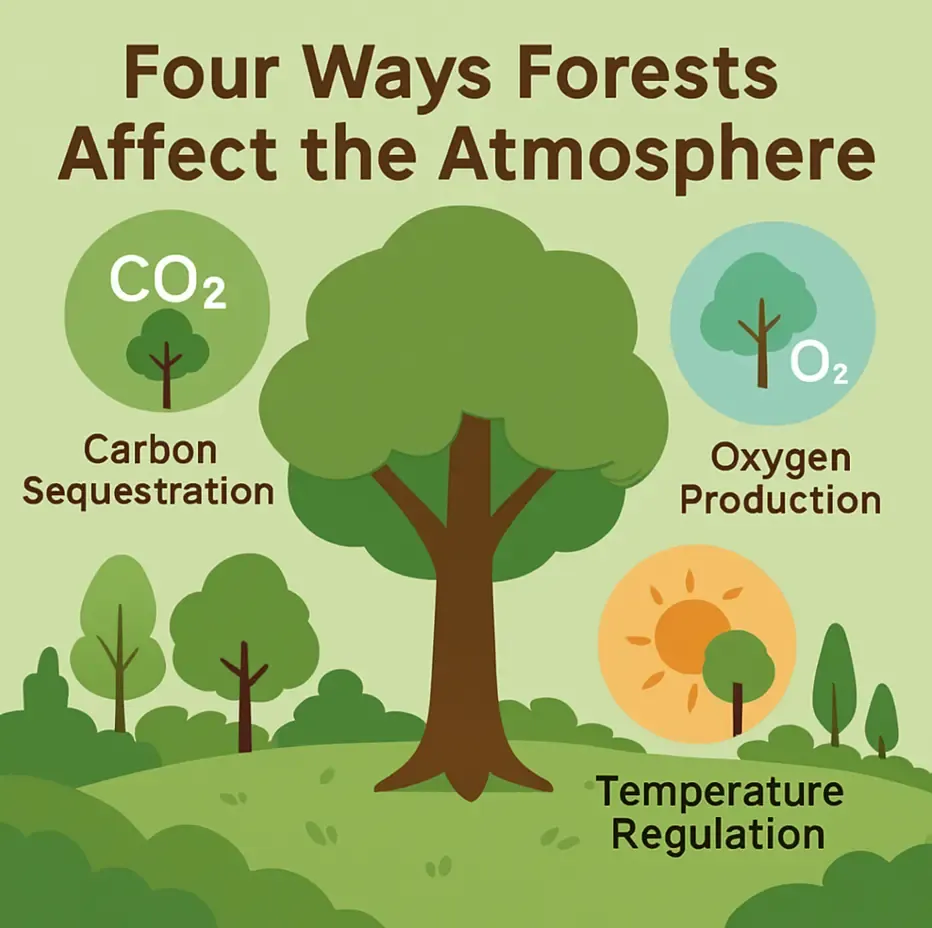
Forests play a vital role in regulating the Earth’s atmosphere. Here are four key ways they influence atmospheric conditions:
Carbon Sequestration: Forests absorb carbon dioxide (CO₂) from the atmosphere during photosynthesis and store it in trees, plants, and soil. This process helps reduce greenhouse gases, which are responsible for global warming.
Oxygen Production: Trees release oxygen as a byproduct of photosynthesis. A single mature tree can produce enough oxygen for two to ten people annually, making forests essential for clean air.
Temperature Regulation: Forests help cool the planet by providing shade and releasing water vapor through transpiration. This process creates a cooling effect, which can lower local temperatures and combat urban heat islands.
Air Quality Improvement: Trees filter pollutants like nitrogen oxides and sulfur dioxide from the air. They also trap dust and particulate matter, improving air quality and reducing respiratory illnesses.
However, deforestation disrupts these benefits. Cutting down forests releases stored CO₂, reduces oxygen production, and worsens air quality. Protecting and restoring forests is crucial for maintaining a healthy atmosphere.
Fun fact: The Amazon rainforest produces 20% of the world’s oxygen, earning it the nickname “the lungs of the Earth.”
What is one way forests affect the atmosphere?
By increasing CO₂ levelsBy absorbing CO₂ through carbon sequestrationBy reducing oxygen levelsBy creating more pollution
What gas do trees release during photosynthesis?
Carbon dioxideOxygenMethaneNitrogen
How do forests help regulate temperature?
By increasing heatBy releasing water vapor through transpirationBy blocking sunlight completelyBy reducing rainfall
What is one pollutant that trees filter from the air?
OxygenNitrogen oxidesCarbon dioxideWater vapor
What is one consequence of deforestation?
Improved air qualityIncreased oxygen productionRelease of stored CO₂Lower temperatures
What percentage of the world’s oxygen does the Amazon rainforest produce?
5%10%20%50%
What is the fun fact mentioned in the passage?
Forests produce no oxygenThe Amazon rainforest produces 20% of the world’s oxygenTrees do not affect air qualityDeforestation improves the atmosphere
What is one benefit of forests for human health?
They increase respiratory illnessesThey improve air quality by filtering pollutantsThey release harmful gasesThey reduce oxygen levels
Perfect For:
👩🏫 Teachers
• Reading comprehension practice
• Auto-graded assessments
• Literacy skill development
👨👩👧👦 Parents
• Reading practice at home
• Comprehension improvement
• Educational reading time
🏠 Homeschoolers
• Reading curriculum support
• Independent reading practice
• Progress monitoring
Reading Features:
📖
Reading Passage
Engaging fiction or nonfiction text
❓
Comprehension Quiz
Auto-graded questions
📊
Instant Feedback
Immediate results and scoring
📄
Printable Version
Download for offline reading
🔊
Read Aloud
Voice-over with word highlighting
Reviews & Ratings
No reviews yet. Be the first to share your experience!
Related Content
Measuring Carbon Stored in Vegetation
Measuring carbon stored in vegetation is crucial for understanding climate change. Plants absorb CO₂ during photosynthes...
7.RI.7.1
Air Temperature: A Key Weather Variable
Air temperature measures how hot or cold the air is and is caused by the kinetic energy of air molecules. It is measured...
7.RI.7.1
Humidity: A Key Weather Variable
Humidity measures the amount of water vapor in the air and is caused by evaporation. It is measured using hygrometers an...
7.RI.7.1
Wind-Powered Trains In the Netherlands
The Netherlands is the first country to run all its electric trains on 100% wind power, thanks to wind farms on land and...
7.RI.7.1
Air Masses: Types and Characteristics
Air masses are large bodies of air with similar temperature and humidity. They form over specific regions and influence ...
7.RI.7.1
Cyclones and Anticyclones: A Comparison
Cyclones are low-pressure systems that bring stormy weather, while anticyclones are high-pressure systems that bring cle...