Cellular Respiration: Releasing Energy
Interactive passage with audio narration, comprehension questions, and printable PDF.
By completing this purchase you agree to our Terms of Use and Privacy Policy. Your subscription renews automatically until you cancel. You can cancel anytime from your account settings. All sales are final and non-refundable. Digital content is available for download in your account immediately upon purchase.
What's included
Cellular Respiration: Releasing Energy preview and details
About this printable Cellular Respiration: Releasing Energy science reading passage, NGSS-aligned (Grades 5-8)
Sample passage and quiz from Cellular Respiration: Releasing Energy
Reading passage and comprehension quiz preview
Cellular Respiration: Releasing Energy

Cellular respiration is a vital process that allows all living organisms to release energy from food molecules like glucose. This process powers every activity in a cell, from dividing to moving substances in and out. Cellular respiration is not the same as breathing; instead, it is a series of chemical reactions inside cells that break down glucose and produce energy. This energy is used to make ATP (adenosine triphosphate), the molecule that stores and delivers energy for all cellular work. Without cellular respiration, life as we know it could not exist.
How Cellular Respiration Works
Cellular respiration takes place mainly in the mitochondria, often called the "powerhouse" of the cell. The overall chemical equation for cellular respiration is: C₆H₁₂O₆ + 6O₂ → 6CO₂ + 6H₂O + ATP. This means one molecule of glucose and six molecules of oxygen are converted into six molecules of carbon dioxide, six molecules of water, and energy (ATP). Cellular respiration occurs in three main stages: glycolysis, the Krebs cycle, and the electron transport chain. In glycolysis, glucose is broken down into smaller molecules, releasing a small amount of ATP. The Krebs cycle further breaks down these molecules, releasing carbon dioxide and more energy. Finally, the electron transport chain uses oxygen to produce most of the ATP. Each step is crucial for extracting the maximum amount of energy from glucose.
Aerobic and Anaerobic Respiration: Differences and Examples
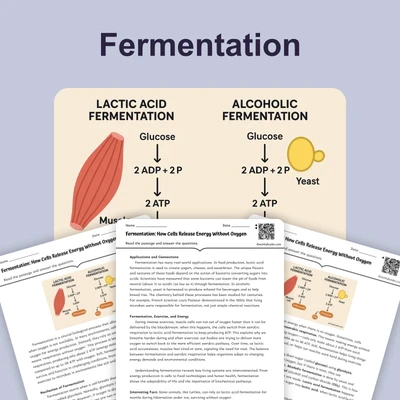
Most of the time, cellular respiration is aerobic, which means it requires oxygen. Aerobic respiration produces up to 38 molecules of ATP from one molecule of glucose, making it highly efficient. However, cells can also perform anaerobic respiration (also known as fermentation) when oxygen is not available. Anaerobic respiration is less efficient, creating only 2 ATP per glucose molecule, but it allows cells to keep working in low-oxygen conditions. For example, muscle cells perform anaerobic respiration during intense exercise, leading to the production of lactic acid. Yeast cells use anaerobic respiration to produce alcohol and carbon dioxide, which is important in baking and brewing industries.
Respiration vs. Breathing: Understanding the Difference
It is important to distinguish cellular respiration from breathing. Breathing is the physical act of inhaling oxygen and exhaling carbon dioxide, which supplies the oxygen needed for cellular respiration. Cellular respiration, on the other hand, is the internal process that actually converts glucose and oxygen into ATP energy. Both processes are connected, but they are not the same. This distinction helps scientists understand how the body takes in vital gases and how cells use them to release energy for life functions.
Every living thing, from plants to animals to single-celled organisms, depends on cellular respiration. Even plants, which make glucose through photosynthesis, must break it down for energy. Understanding cellular respiration helps scientists develop new medical treatments, improve athletic performance, and even design better biofuels. Cellular respiration connects to the core idea that all life relies on the transformation and flow of energy.
Interesting Fact: Mitochondria, the site of cellular respiration, are believed to have originated from ancient bacteria that started living inside other cells billions of years ago!
Comprehension quiz (10 questions)
1. What is the main purpose of cellular respiration?
2. Where does most cellular respiration take place inside the cell?
3. Which of the following is NOT a stage of cellular respiration?
4. What is the main difference between aerobic and anaerobic respiration?
5. In the passage, what does ATP stand for?
6. The word 'mitochondria' in the passage means:
7. What can be inferred about why muscle cells use anaerobic respiration during hard exercise?
8. How are breathing and cellular respiration connected?
9. Cellular respiration occurs in both plants and animals. (True/False)
10. Anaerobic respiration produces more ATP per glucose molecule than aerobic respiration. (True/False)
Perfect for the way you teach
- Build comprehension skills
- Auto-graded quiz
- Differentiated reading
- Read together at home
- Improve fluency
- Quiet reading time
- Reading curriculum support
- Independent practice
- Track Lexile growth