Introduction to Cell Energy
Interactive passage with audio narration, comprehension questions, and printable PDF.
What's included
Introduction to Cell Energy preview and details
About this printable Introduction to Cell Energy science reading passage, NGSS-aligned (Grades 5-8)
Sample passage and quiz from Introduction to Cell Energy
Reading passage and comprehension quiz preview
Introduction to Cell Energy
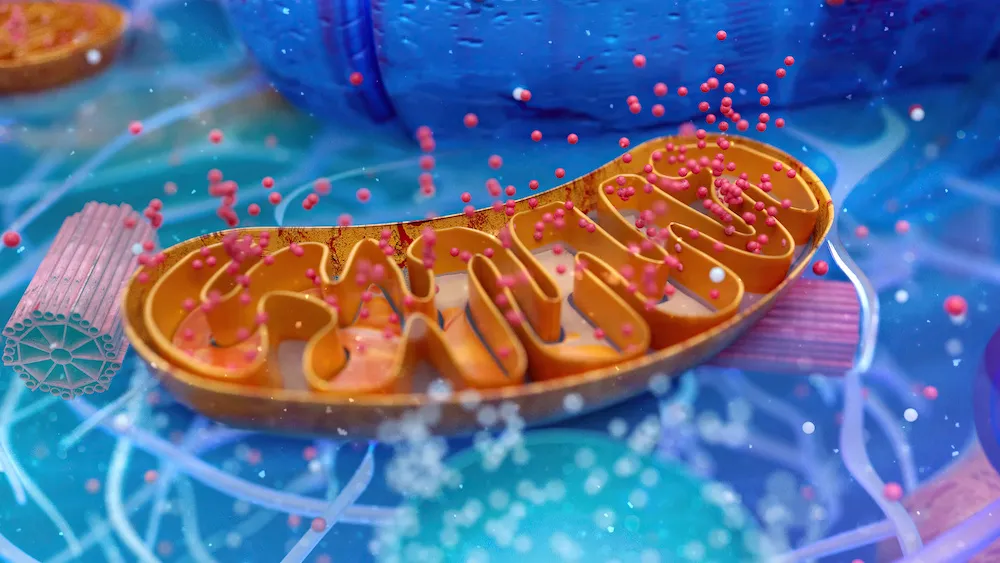
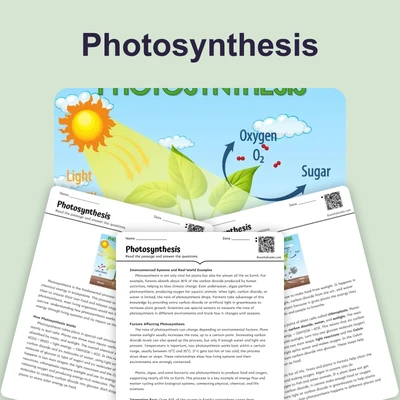
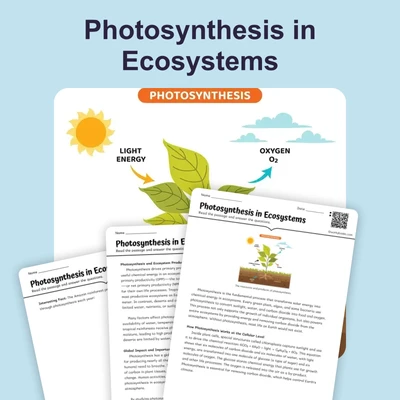
Photosynthesis is the fundamental process that transforms solar energy into chemical energy in ecosystems. Every living organism, from the smallest bacterium to the largest whale, needs energy to survive, grow, and reproduce. Scientists have discovered that inside all cells, a special molecule called ATP acts as the main energy "currency." But how do cells get this energy, and how is it transferred from one form to another?
How Cells Capture and Use Energy
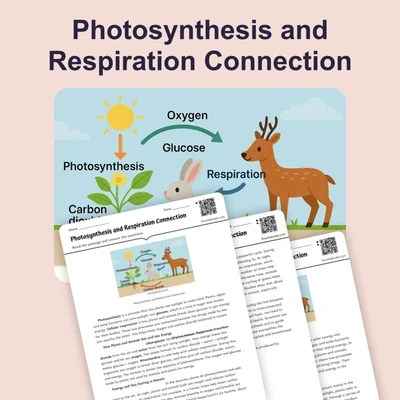
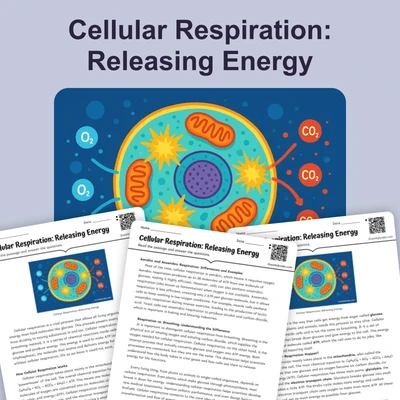
Cells obtain energy from the environment in two major ways: through photosynthesis and cellular respiration. In photosynthesis, plants, algae, and some bacteria absorb sunlight using a pigment called chlorophyll. The light energy is used to convert carbon dioxide and water into glucose, a sugar packed with chemical energy. This process captures about 1% of the sunlight that reaches Earth. Cellular respiration is used to convert glucose into energy by plants, animals, and all organisms. During cellular respiration, cells break down glucose and other food molecules. This releases the chemical energy stored in their bonds, which is then used to make ATP. The ATP produced powers everything from muscle contraction to nerve signaling.
The Flow of Energy in Ecosystems
Energy movement through an ecosystem starts with the sun. Plants and other producers transform solar energy into chemical energy via photosynthesis. Consumers, such as animals, eat plants or other animals to obtain this energy. At each step, some energy is lost as heat, making the process less than 100% efficient. For example, only about 10% of the energy from one trophic level is passed to the next. This explains why food chains rarely have more than four or five links. The flow of energy shapes the structure of entire ecosystems and determines how many organisms can survive in a given area.
ATP: The Energy Currency of Life
ATP, or adenosine triphosphate, is a small molecule found in all living cells. When a cell needs energy, it breaks one of the bonds in ATP, releasing energy that can be used for vital processes like building new molecules or moving materials within the cell. This system is similar to spending money: ATP is earned by breaking down food or capturing sunlight, and then spent when the cell performs work. Without ATP, life as we know it would not exist. Research shows that a single human cell can use and regenerate millions of ATP molecules every second.
Understanding how energy flows at the cellular level helps scientists solve important problems, from developing better crops to treating diseases that affect energy use in cells. These discoveries also help explain global challenges such as food security and climate change.
Interesting Fact: The total amount of ATP used by your body every day is roughly equal to your body weight!
Comprehension quiz (10 questions)
1. What is the main function of ATP in cells?
2. Which process do animals use to obtain energy from food?
3. What percentage of sunlight that reaches Earth is captured by photosynthesis?
4. Which term describes organisms that make their own food from sunlight?
5. Based on the passage, what happens to most of the energy at each step in a food chain?
6. In the passage, what does the phrase 'energy currency' mean when referring to ATP?
7. Why are food chains usually only four or five links long?
8. If a scientist wanted to increase the amount of energy available in an ecosystem, what might they try to do?
9. True or False: Cellular respiration is how most plants make their food.
10. True or False: ATP is used and regenerated millions of times per second in human cells.
Perfect for the way you teach
- Build comprehension skills
- Auto-graded quiz
- Differentiated reading
- Read together at home
- Improve fluency
- Quiet reading time
- Reading curriculum support
- Independent practice
- Track Lexile growth