Fermentation: How Cells Release Energy Without Oxygen
Interactive passage with audio narration, comprehension questions, and printable PDF.
By completing this purchase you agree to our Terms of Use and Privacy Policy. Your subscription renews automatically until you cancel. You can cancel anytime from your account settings. All sales are final and non-refundable. Digital content is available for download in your account immediately upon purchase.
What's included
Fermentation: How Cells Release Energy Without Oxygen preview and details
About this printable Fermentation: How Cells Release Energy Without Oxygen science reading passage, NGSS-aligned (Grades 5-8)
Sample passage and quiz from Fermentation: How Cells Release Energy Without Oxygen
Reading passage and comprehension quiz preview
Fermentation: How Cells Release Energy Without Oxygen
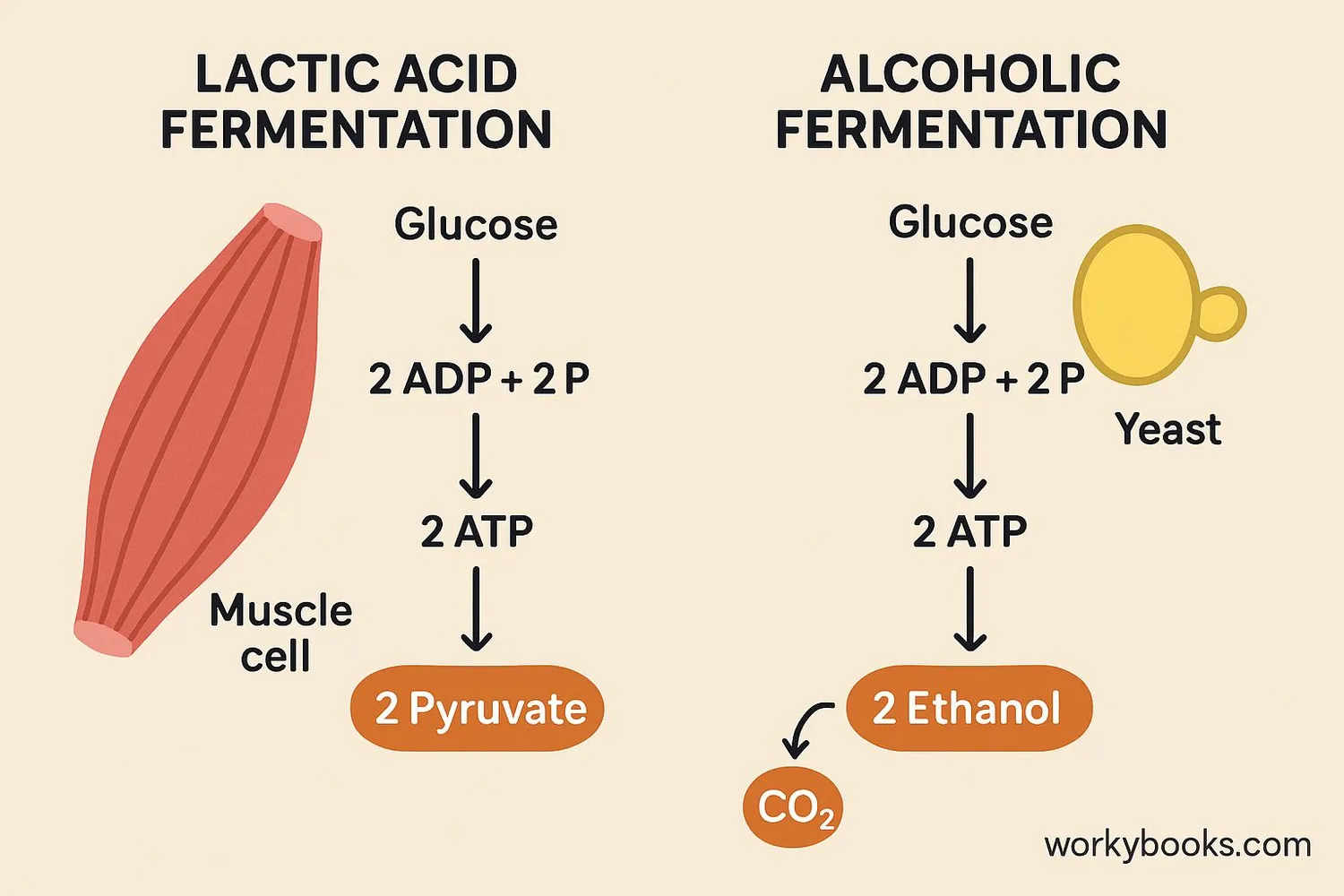
Fermentation is a crucial biological process that allows cells to release energy when oxygen is not available. In many environments, cells cannot always access oxygen for energy production. Instead, they rely on anaerobic respiration, which means 'respiration without oxygen.' This process is less efficient than aerobic respiration, producing only about 2 ATP (energy molecules) per glucose molecule, compared to up to 38 ATP with oxygen. Still, fermentation enables organisms to survive and function in challenging conditions, from our muscle cells during intense exercise to microbes in environments like soil and food.
Mechanism of Fermentation
Fermentation starts when a cell breaks down glucose (a simple sugar) through a process called glycolysis. Normally, glycolysis is followed by steps requiring oxygen to generate more ATP. However, if oxygen is absent, the cell uses fermentation to continue producing energy. There are two main types: alcoholic fermentation and lactic acid fermentation. In alcoholic fermentation, performed by yeast and some bacteria, glucose is converted into ethanol (alcohol) and carbon dioxide (CO₂). This process is vital for making bread, beer, and wine. The carbon dioxide causes bread to rise as it forms bubbles in the dough. In lactic acid fermentation, which occurs in human muscle cells and certain bacteria, glucose is turned into lactic acid instead of ethanol. This buildup of lactic acid in muscles can cause fatigue and soreness after strenuous activity.
Applications and Connections
Fermentation has many real-world applications. In food production, lactic acid fermentation is used to create yogurt, cheese, and sauerkraut. The unique flavors and textures of these foods depend on the action of bacteria converting sugars into acids. Scientists have measured that some bacteria can lower the pH of foods from neutral (about 7) to acidic (as low as 4) through fermentation. In alcoholic fermentation, yeast is harnessed to produce ethanol for beverages and to help bread rise. The chemistry behind these processes has been studied for centuries. For example, French scientist Louis Pasteur demonstrated in the 1850s that living microbes were responsible for fermentation, not just simple chemical reactions.
Fermentation, Exercise, and Energy
During intense exercise, muscle cells can run out of oxygen faster than it can be delivered by the bloodstream. When this happens, the cells switch from aerobic respiration to lactic acid fermentation to keep producing ATP. This explains why we breathe harder during and after exercise: our bodies are trying to deliver more oxygen to switch back to the more efficient aerobic pathway. Over time, as lactic acid accumulates, muscles feel tired or sore, signaling the need for rest. The balance between fermentation and aerobic respiration helps organisms adapt to changing energy demands and environmental conditions.
Understanding fermentation reveals how living systems are interconnected. From energy production in cells to food technologies and human health, fermentation shows the adaptability of life and the importance of biochemical pathways.
Interesting Fact: Some animals, like turtles, can rely on lactic acid fermentation for months during hibernation under ice, surviving without oxygen!
Comprehension quiz (10 questions)
1. What is fermentation?
2. Which type of fermentation occurs in yeast and produces ethanol and carbon dioxide?
3. What causes muscle fatigue and soreness after intense exercise?
4. In the passage, what does 'anaerobic' mean?
5. What are the main products of alcoholic fermentation mentioned in the passage?
6. Based on the passage, why do we breathe harder during exercise?
7. Which food is produced using lactic acid fermentation?
8. True or False: Fermentation produces more ATP than aerobic respiration.
9. True or False: Only human cells can perform fermentation.
10. If a scientist wanted to make bread rise, which type of fermentation would they use?
Perfect for the way you teach
- Build comprehension skills
- Auto-graded quiz
- Differentiated reading
- Read together at home
- Improve fluency
- Quiet reading time
- Reading curriculum support
- Independent practice
- Track Lexile growth