This learning resource is available in interactive and printable formats. The interactive worksheet can be played online and assigned to students. The Printable PDF version can be downloaded and printed for completion by hand.
This comprehensive science passage for grades 6-8 explores the digestive system, tracing the step-by-step journey of food through the human body. Aligned with NGSS standards MS-LS1-3 and MS-LS1-7, students discover how food is broken down in the mouth, stomach, and intestines, and how nutrients are absorbed for energy production. The passage explains the role of organs like the liver, pancreas, and gallbladder, integrates key vocabulary, and connects digestion to the broader concept of cellular respiration. With audio support, Spanish translation, quizzes, writing prompts, and graphic organizers, this resource is ideal for diverse learners in middle school science classrooms. Key concepts are reinforced through activities and accessible explanations, making it perfect for teaching body systems and life science.
CONTENT PREVIEW
Expand content preview
Digestion is the process by which the body changes food into substances it can use for energy, growth, and repair. When a person eats, the food must be broken down into smaller molecules that can be absorbed and delivered to cells. The digestive system is a complex network of organs and specialized chemicals that work together to accomplish this task. Understanding how the digestive system functions reveals how our bodies extract nutrients and energy from what we eat—and why this process is essential for life.
Mouth to Stomach: The Start of Digestion
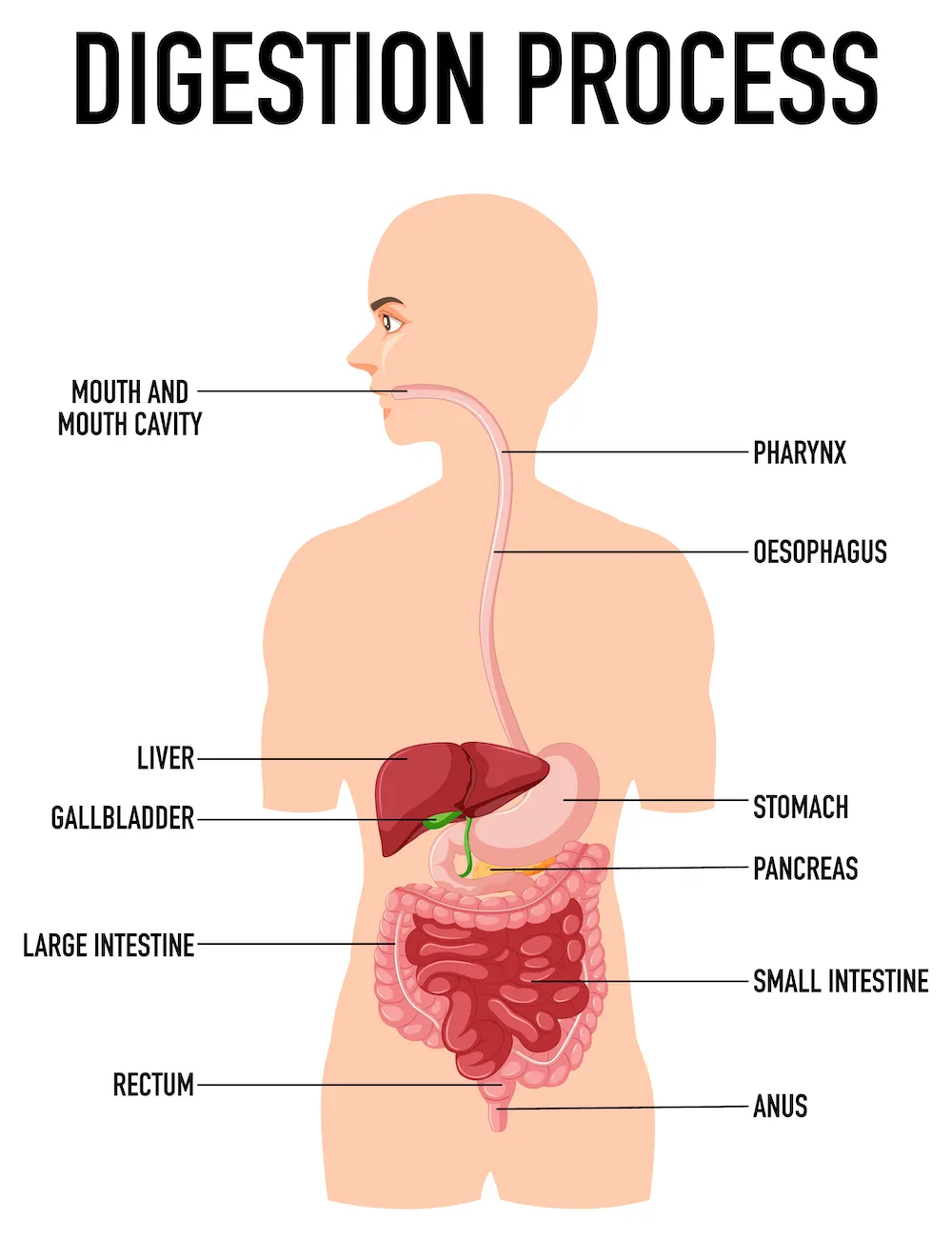
The journey of food begins in the mouth, where both mechanical digestion and chemical digestion occur. Teeth break food into smaller pieces (mechanical), while saliva, containing enzymes, starts to break down carbohydrates (chemical). The chewed food, now called a bolus, moves to the esophagus. Muscular contractions called peristalsis push the food toward the stomach. In the stomach, powerful gastric acid and digestive enzymes further break down proteins, turning the mixture into a semi-liquid called chyme. The stomach’s strong muscles churn the food, increasing the efficiency of chemical breakdown. On average, food spends 2-4 hours in the stomach.
Small Intestine: Absorption of Nutrients
Chyme enters the small intestine, which is over 6 meters long in adults. Here, most nutrient absorption takes place. The small intestine is lined with millions of tiny fingerlike structures called villi, which increase the surface area for absorption. Accessory organs—the liver, pancreas, and gallbladder—release substances that help digestion: bile from the liver breaks down fats, pancreatic enzymes digest proteins, fats, and carbohydrates, and the gallbladder stores and releases bile as needed. Nutrients like glucose, amino acids, and fatty acids pass through villi into the bloodstream. About 90% of nutrient absorption occurs in the small intestine.
Large Intestine and Beyond: Water Absorption and Waste Removal
After leaving the small intestine, indigestible food material moves into the large intestine. Here, water and minerals are absorbed, and the remaining material is turned into solid waste called feces. Helpful bacteria in the large intestine also produce some vitamins. Waste is stored in the rectum and eliminated through the anus. The end result of digestion is that nutrients are delivered to cells, where they are used in cellular respiration to create energy the body needs for all activities. This connection between digestion and cellular respiration is why eating is vital for survival.
Modern science has uncovered the details of digestion through experiments, technological advances like endoscopy, and biochemical analysis. Understanding the digestive system helps doctors treat illnesses, improve nutrition, and develop new food technologies.
Interesting Fact: The surface area of the small intestine, thanks to villi and microvilli, is about the size of a tennis court—allowing maximum absorption of nutrients!
What is the main function of the digestive system?
To break down food and absorb nutrientsTo pump blood throughout the bodyTo protect the body from germsTo control body movements
Which organ releases bile to help break down fats?
PancreasLiverStomachEsophagus
Where does most nutrient absorption occur in the digestive system?
MouthStomachSmall intestineLarge intestine
What is the main purpose of villi in the small intestine?
To churn foodTo increase surface area for absorptionTo produce acidTo store waste
What happens to food in the stomach?
It is absorbed into the bloodIt is broken down by acid and enzymesIt is eliminated as wasteIt is turned into bile
What is peristalsis?
A type of enzymeA muscular action that moves food through the digestive tractA nutrient found in foodA part of the small intestine
Based on the passage, why is digestion important for cellular respiration?
Digestion provides nutrients that cells use to produce energyDigestion helps the lungs get oxygenDigestion controls body temperatureDigestion removes waste from the blood
If the villi in the small intestine were damaged, what might happen?
More bile would be producedNutrient absorption would decreaseDigestion would speed upThe stomach would get larger
True or False: The large intestine is mainly responsible for absorbing most nutrients from food.
TrueFalse
True or False: Enzymes in saliva start the chemical breakdown of food in the mouth.
TrueFalse
Perfect For:
👩🏫 Teachers
• Reading comprehension practice
• Auto-graded assessments
• Literacy skill development
👨👩👧👦 Parents
• Reading practice at home
• Comprehension improvement
• Educational reading time
🏠 Homeschoolers
• Reading curriculum support
• Independent reading practice
• Progress monitoring
Reading Features:
📖
Reading Passage
Engaging fiction or nonfiction text
❓
Comprehension Quiz
Auto-graded questions
📊
Instant Feedback
Immediate results and scoring
📄
Printable Version
Download for offline reading
🔊
Read Aloud
Voice-over with word highlighting
Reviews & Ratings
No reviews yet. Be the first to share your experience!
Related Content
How Does Cryptobiosis work
This passage explains cryptobiosis, the process where organisms like tardigrades pause their metabolism to survive extre...
MS-LS1-3RI.6.3RI.7.3RI.8.8
What Characteristic Is Used to Divide Aquatic Biomes into Three Zones?
This NGSS-aligned reading passage explains how aquatic biomes such as oceans and lakes are divided into three zones base...
MS-LS1-3
Skeletal System
This comprehensive middle school science passage explores the human skeletal system, focusing on the 206 bones of the ad...
MS-LS1-3
Homeostasis
This engaging science passage introduces middle school students to the concept of homeostasis, focusing on how living or...
MS-LS1-3
Organization of the Human Body
This comprehensive passage for grades 6-8, aligned to NGSS MS-LS1-3, guides students through the intricate organization ...
MS-LS1-3
Levels of Organization
This middle school science passage, aligned with NGSS MS-LS1-3, introduces students to the concept of biological levels ...
MS-LS1-3
Muscular System
This comprehensive passage for grades 6-8 explores the human muscular system, covering structure, function, and health. ...
MS-LS1-3
Integumentary System
This comprehensive middle school science passage aligns with NGSS standard MS-LS1-3 and explores the integumentary syste...
MS-LS1-3
Excretory System
This comprehensive middle school science passage explores the excretory system and its importance in maintaining the bod...
MS-LS1-3
Circulatory System
This engaging middle school science passage explores the circulatory system, focusing on how the heart, blood, and blood...
MS-LS1-3
Respiratory System
This comprehensive passage for grades 6-8 explores the respiratory system, examining the pathway of air from the nose an...
MS-LS1-3MS-LS1-7
Nervous System
This comprehensive middle school science passage explores the structure, function, and significance of the human nervous...
MS-LS1-3MS-LS1-8
Endocrine System
This passage explores the middle school science topic of the endocrine system, aligned with NGSS standard MS-LS1-3. It d...
MS-LS1-3
Body Systems Working Together
This middle school science passage explores how the human body's systems work together to sustain life, aligned with NGS...
MS-LS1-3
Immune System
This comprehensive middle school science reading passage explores the immune system, focusing on its role as the body's ...
MS-LS1-3
Reproductive System
This passage provides a comprehensive overview of the human reproductive system for middle school students, aligning wit...
MS-LS1-3MS-LS1-4
Introduction to Cell Energy
This passage introduces middle school students to the essential topic of cell energy, aligning with NGSS standards MS-LS...
MS-LS1-6MS-LS1-7
Cellular Respiration: Releasing Energy
This middle school science reading passage introduces students to the process of cellular respiration, the mechanism by ...
MS-LS1-7
Photosynthesis and Respiration Connection
This science reading passage for grades 6-8 explores the connection between photosynthesis and cellular respiration, ali...