Nutrients and Nutrition
Interactive passage with audio narration, comprehension questions, and printable PDF.
By completing this purchase you agree to our Terms of Use and Privacy Policy. Your subscription renews automatically until you cancel. You can cancel anytime from your account settings. All sales are final and non-refundable. Digital content is available for download in your account immediately upon purchase.
What's included
Nutrients and Nutrition preview and details
About this printable Nutrients and Nutrition science reading passage, NGSS-aligned (Grades 5-8)
Sample passage and quiz from Nutrients and Nutrition
Reading passage and comprehension quiz preview
Nutrients and Nutrition
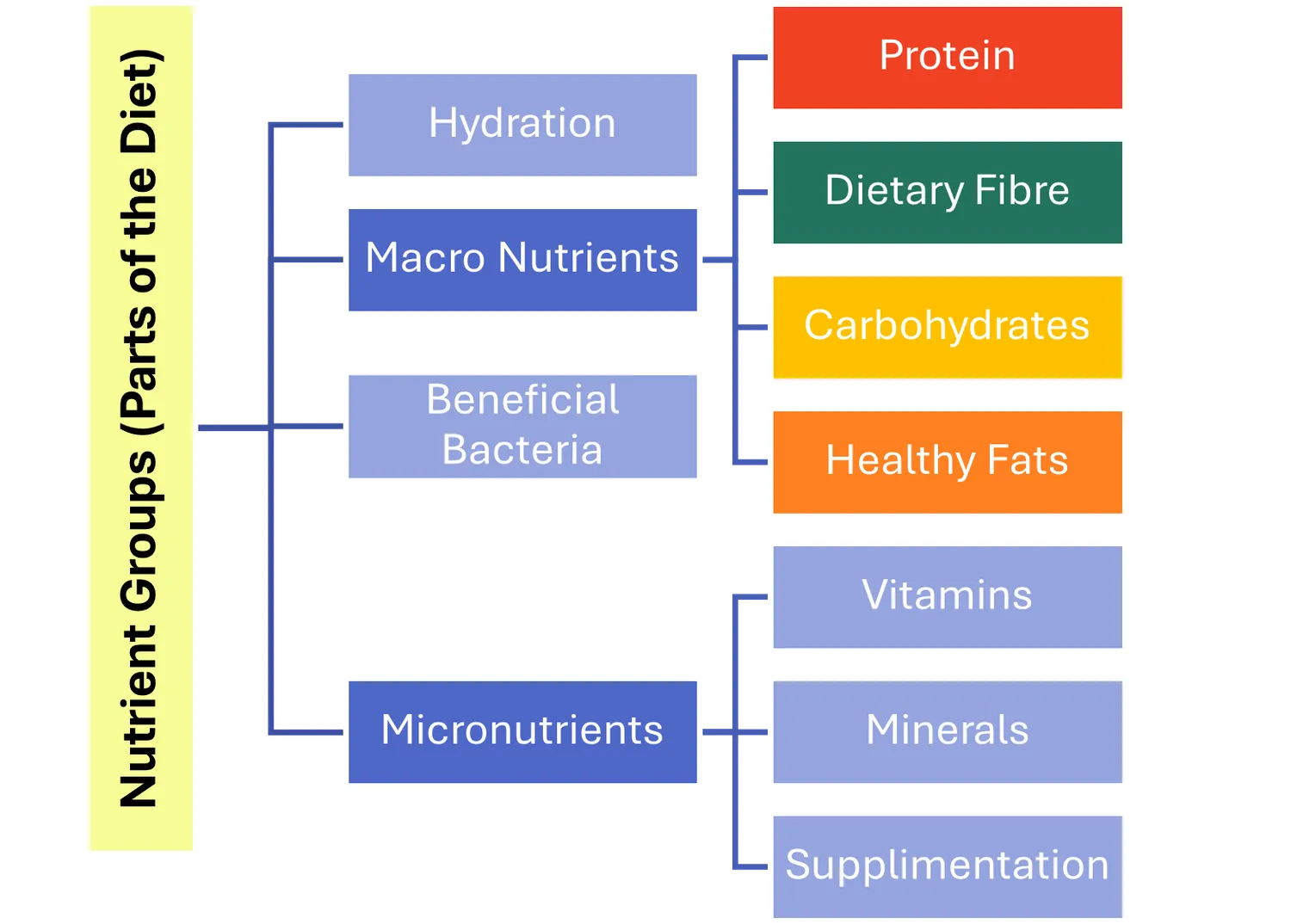
"Food Nutrient Group Chart" / Wikimedia Commons (CC0).
Nutrition is the process by which living things obtain and use food to support life. The importance of nutrition becomes clear when comparing two people: one eating a balanced diet and another relying only on junk food. The person with a balanced diet will tend to have more energy, better growth, and fewer health problems. This is because the human body needs six major types of nutrients to function properly: carbohydrates, proteins, fats, vitamins, minerals, and water. Each of these nutrients plays a different, but essential, role in keeping us healthy.
How Nutrients Support Life
Each nutrient group has a specific job in the body. Carbohydrates are the main source of energy. When you eat bread or pasta, your body breaks down these foods into simple sugars like glucose, which cells use for energy. Proteins, found in foods like meat, eggs, and beans, are used to build and repair tissues. They are made of smaller units called amino acids. Fats, such as those in oils, butter, and nuts, store energy for later use and help insulate the body. Vitamins and minerals are needed in smaller amounts, but they are crucial. Vitamins help regulate body processes, like vision (vitamin A) and cell growth (vitamin C). Minerals, such as calcium and iron, support bone health and help nerves work properly. Water, which makes up about 60% of our body weight, is a universal solvent. It allows nutrients to dissolve and move throughout the body and helps regulate temperature through sweating and breathing.
From Food to Energy: The Digestive System and Cellular Respiration
The digestive system is responsible for breaking down food into smaller pieces so the body can absorb nutrients. Carbohydrates are broken into sugars, proteins into amino acids, and fats into fatty acids and glycerol. These molecules enter the bloodstream and travel to cells. Inside cells, a process called cellular respiration uses glucose and oxygen to release energy, which the cell needs to function. Without proper nutrition, this process cannot happen efficiently, leading to tiredness or illness. Scientists have measured the energy value of foods in calories, and nutrition labels show these amounts to help people make healthy choices.
Balanced Diets, Malnutrition, and Overnutrition
A balanced diet includes all six nutrient types in the right proportions, based on age, activity level, and health needs. Nutrition labels on packaged foods show the amounts of nutrients per serving. By comparing labels, people can choose foods lower in fats or higher in vitamins as needed. Malnutrition occurs when someone does not get enough of one or more nutrients, which can cause stunted growth, weak immune systems, and other health problems. Overnutrition, often from eating too many high-calorie foods, can lead to obesity and diseases like diabetes. Both malnutrition and overnutrition affect how well the body works at the cellular level.
Understanding nutrients and nutrition helps us make better choices for our bodies and our communities. A healthy diet supports growth, brain function, and disease resistance, all of which are essential for a healthy society.
Interesting Fact:
The human brain, although only about 2% of your body weight, uses around 20% of your daily energy intake!
Comprehension quiz (10 questions)
1. Which of the following is NOT one of the six main nutrient types?
2. What is the main function of carbohydrates in the human body?
3. Which nutrient helps regulate temperature and dissolve other nutrients?
4. According to the passage, what does the brain use about 20% of?
5. What does the digestive system do to the food we eat?
6. What does the word 'malnutrition' most likely mean as used in the passage?
7. If someone only eats foods high in fat and sugar, what is a possible result mentioned in the passage?
8. Why are vitamins and minerals needed in only small amounts?
9. A balanced diet includes the right amounts of all six nutrient types. (True/False)
10. Cellular respiration is the process by which cells use glucose and oxygen to make energy. (True/False)
Perfect for the way you teach
- Build comprehension skills
- Auto-graded quiz
- Differentiated reading
- Read together at home
- Improve fluency
- Quiet reading time
- Reading curriculum support
- Independent practice
- Track Lexile growth