GI Bill Benefits 1944
Interactive passage with audio narration, comprehension questions, and printable PDF.
By completing this purchase you agree to our Terms of Use and Privacy Policy. Your subscription renews automatically until you cancel. You can cancel anytime from your account settings. All sales are final and non-refundable. Digital content is available for download in your account immediately upon purchase.
What's included
GI Bill Benefits 1944 preview and details
About this printable GI Bill Benefits 1944 reading passage (Grades 6-8)
Sample passage and quiz from GI Bill Benefits 1944
Reading passage and comprehension quiz preview
GI Bill Benefits 1944
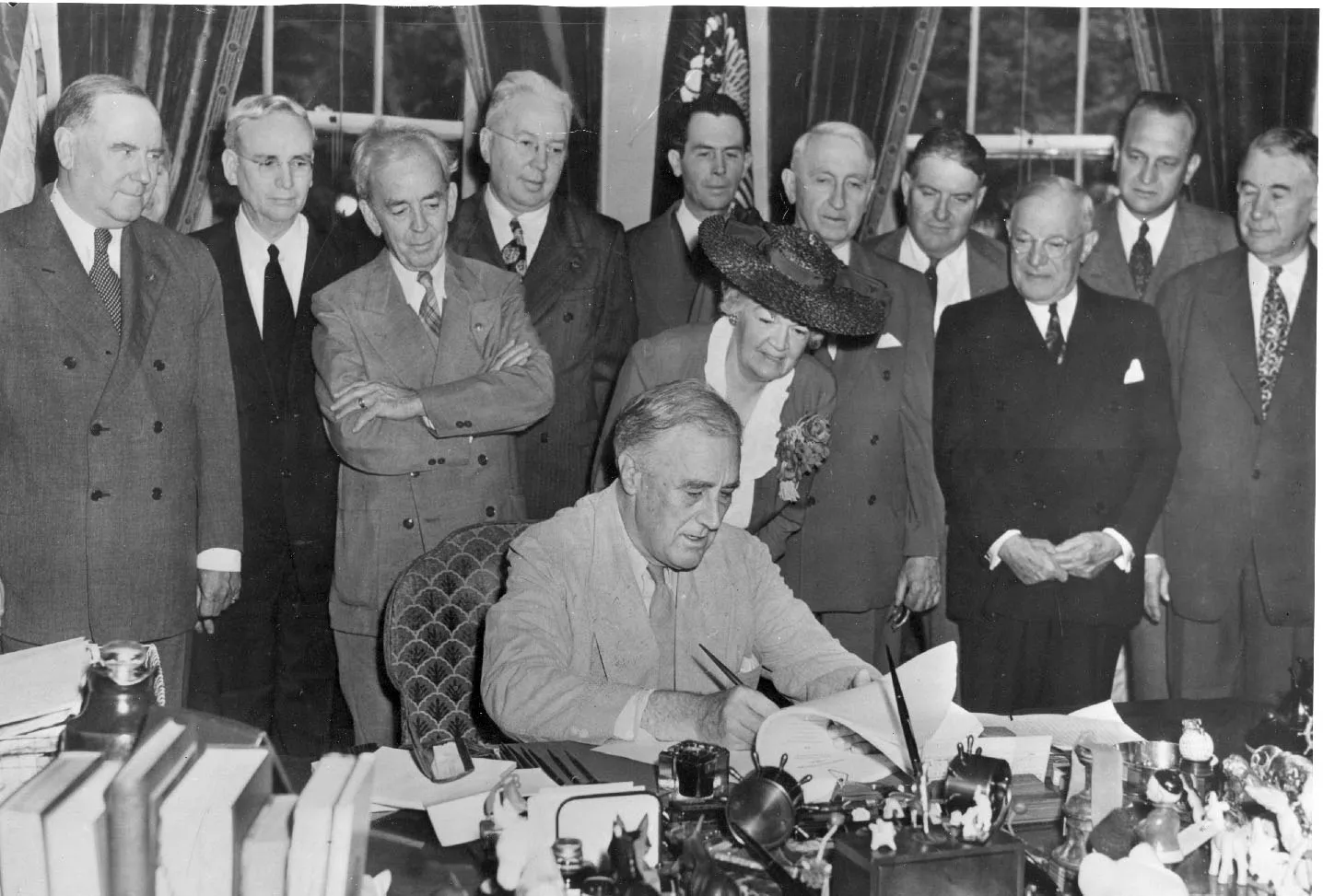
Source: Wikimedia Commons
The GI Bill of 1944 was one of the most significant laws in United States history. Officially called the Servicemen’s Readjustment Act, it provided a set of benefits to millions of veterans returning home after World War II. At the end of the war, America faced a big problem: how would the country help millions of soldiers adjust to civilian life and avoid the economic troubles that had followed World War I? Many feared that unemployment and poverty would rise, especially since so many jobs had been filled by soldiers during the war.
To address these concerns, Congress created the GI Bill. The law included three main types of support: education funding, low-cost home loans, and unemployment assistance. Education was a top priority, as many veterans had postponed or interrupted their studies to serve in the war. The GI Bill paid for college tuition, trade school, and even provided a living allowance. As a result, more than two million veterans attended college by 1950, greatly increasing access to higher education in the United States.
Another key benefit was the home loan program. Before the GI Bill, owning a home was impossible for many families due to high costs and strict lending rules. The GI Bill offered low-interest, government-backed loans that made buying a house more affordable. This led to a housing boom and helped create new suburban communities. Veterans and their families could now achieve the "American Dream" of home ownership, which reshaped the nation’s cities and towns.
The GI Bill also provided unemployment assistance for veterans as they searched for work. They could receive payments for up to one year if they could not find a job right away. This safety net helped prevent widespread poverty and allowed veterans to find employment that matched their skills.
Despite its many successes, the GI Bill was not perfect. Some groups, especially African American veterans, faced discrimination when applying for benefits. Unequal access to education and housing programs meant that not all veterans benefited equally. Over time, civil rights activists worked to challenge these unfair practices and improve the law’s reach.
The overall impact of the GI Bill was enormous. It helped millions of veterans become part of the middle class, increased college graduation rates, and fueled economic growth. The GI Bill changed American society by making education and home ownership possible for more people than ever before. Historians often credit this law with shaping the modern United States.
Interesting Fact: The GI Bill inspired similar programs in other countries and is still an important part of veterans’ benefits in the U.S. today.
Comprehension quiz (8 questions)
1. What year was the GI Bill passed?
2. Who received GI Bill benefits?
3. Which benefit did the GI Bill provide?
4. How did the GI Bill affect home ownership?
5. Why was education a main focus of the GI Bill?
6. What problem did the GI Bill help solve?
7. The GI Bill ended all discrimination. True or false?
8. What does 'veteran' mean?
Perfect for the way you teach
- Build comprehension skills
- Auto-graded quiz
- Differentiated reading
- Read together at home
- Improve fluency
- Quiet reading time
- Reading curriculum support
- Independent practice
- Track Lexile growth