What Would Happen If Bees Went Extinct?
Interactive passage with audio narration, comprehension questions, and printable PDF.
What's included
What Would Happen If Bees Went Extinct? preview and details
About this printable What Would Happen If Bees Went Extinct? science reading passage, NGSS-aligned (Grades 5-8)
Sample passage and quiz from What Would Happen If Bees Went Extinct?
Reading passage and comprehension quiz preview
What Would Happen If Bees Went Extinct?
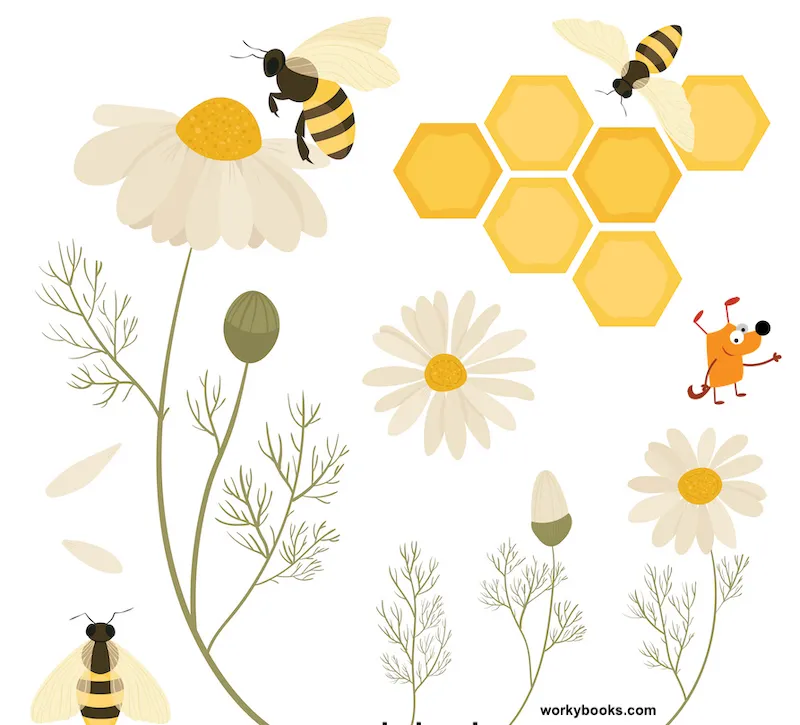
What if all the bees in the world suddenly vanished? It might seem nice not to worry about being stung, but losing these buzzing insects would cause a major crisis for our planet and people.
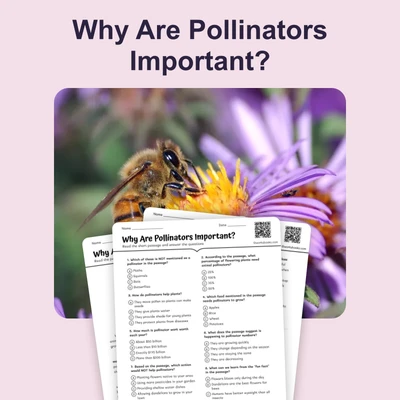
Bees are important pollinators. They help plants make new seeds by moving pollen from flower to flower. They pollinate about 80% of flowering plants and roughly 75% of the fruits, nuts, and veggies we eat. Without bees, we would grow much less food. This would lead to food shortages and much higher prices at grocery stores.
The farming industry would lose about $217 billion each year without bees. Farmers might have to pollinate plants by hand or use machines to do the job. This costs a lot more money and takes more time. Some foods like blueberries and cherries need bees to grow. These fruits might become rare or very expensive.
The natural world would also suffer greatly. Many plants that need bees would start to die off. Animals that eat these plants would have less food, and animals that hunt these plant-eaters would then go hungry too. This chain reaction could cause many species to die out.
Our outdoor spaces would look different too. Fields would have fewer colorful flowers, and forests would become thinner as flowering trees fail to make new trees. Many types of plants would become rare or die out completely without their bee helpers.
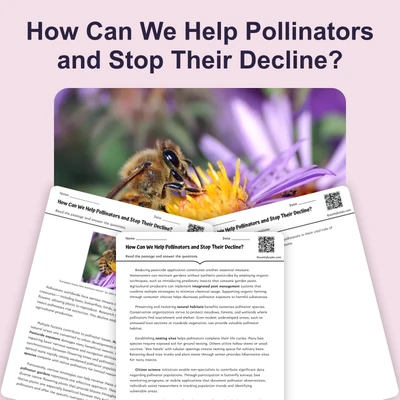
Why are bees dying? Scientists blame several things: harmful chemicals used in farming, destroyed habitats, changing climate, bee sicknesses, and tiny mites that attack bees. But there's good news! We can help by planting flowers bees like, not using bug-killing sprays, buying organic food, and teaching others about why bees matter.
Fun fact: One honeybee can visit about 5,000 flowers in just one day! That's a lot of pollination work!
Comprehension quiz (8 questions)
1. What percentage of flowering plants do bees pollinate?
2. How would losing bees affect our food?
3. How much money would farming lose each year without bees?
4. Which food might become hard to find if bees disappeared?
5. Which problem is NOT mentioned as a result of bees dying out?
6. What can you guess about how bees and flowering plants work together?
7. Why would food cost more if bees disappeared?
8. What action from the passage would best help bees survive?
Perfect for the way you teach
- Build comprehension skills
- Auto-graded quiz
- Differentiated reading
- Read together at home
- Improve fluency
- Quiet reading time
- Reading curriculum support
- Independent practice
- Track Lexile growth