This history reading passage explores how Ancient Egypt was governed, highlighting the roles of the pharaoh, vizier, officials, and scribes. Students will learn about the social hierarchy, how government was organized, and the ways Egyptian society depended on record-keeping and law. The passage uses vocabulary and concepts appropriate for students studying world history, and includes references to archaeological evidence and primary sources. Engaging activities include a multiple-choice quiz, writing prompts, a glossary, graphic organizers, and a timeline of key events. The passage is available in both English and Spanish and features read aloud audio. This content aligns with CA HSS 6.2.3 and CCSS RI.6.3, making it ideal for classrooms focused on ancient civilizations and critical reading skills.
Written by Workybooks TeamPublished by Workybooks
Preview
Sample passage and quiz content
CONTENT PREVIEW
Expand content preview
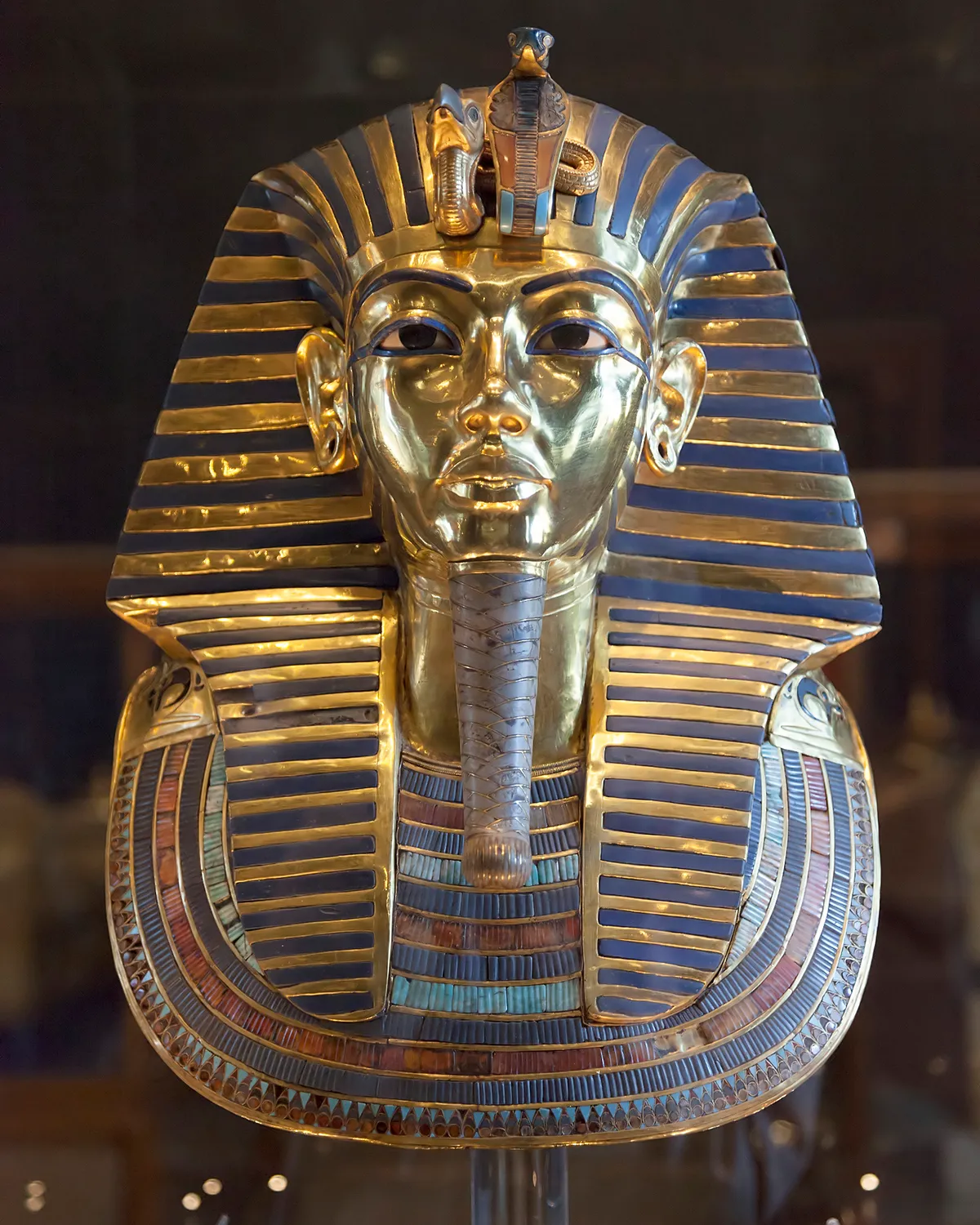
CairoEgMuseumTaaMaskMostlyPhotographed.jpg Source: Wikimedia Commons - Roland Unger
Ancient Egypt was organized under a highly structured system of government that lasted for over 3,000 years, from about 3100 BCE to 30 BCE. At the top of this system was the pharaoh, who was considered both a political leader and a living god. The pharaoh’s authority stretched across the land, from the capital city of Memphis to the smallest farming villages along the Nile River.
The pharaoh ruled with absolute power, but governing such a vast and complex society required a network of officials. The most important of these was the vizier, who acted as the pharaoh’s chief advisor and head of administration. The vizier supervised other officials, collected taxes, managed state projects, and oversaw justice. One ancient inscription from the tomb of the vizier Rekhmire (around 1450 BCE) describes his duties as “overseer of all the king’s works,” showing how central this role was to Egyptian government.
Beneath the vizier were governors, called nomarchs, who managed different regions known as nomes. Each nomarch was responsible for collecting grain, organizing labor for irrigation and building, and maintaining order. Archaeologists have found clay tablets and wall paintings in tombs at Saqqara and Thebes that show officials recording harvests and distributing food. These records reveal that Egypt’s government relied heavily on bureaucracy, a system where officials, rather than elected leaders, managed day-to-day affairs.
Scribes played a critical role in Egyptian government. They were trained to read and write hieroglyphs, the ancient Egyptian writing system. Scribes kept records of taxes, laws, trade, and even military orders. One famous example is the Rosetta Stone, which helped scholars decode Egyptian hieroglyphs. Scribes, who came from respected families, formed a class of educated people essential to the running of the state. Without their work, the pharaoh’s orders could not be communicated or enforced throughout the kingdom.
Egypt’s government was closely tied to its social structure. Most people were farmers or laborers, but the system allowed some, like scribes, to rise in status through education. Religion was also deeply connected to government, as the pharaoh was seen as the link between the gods and the people. This connection justified the pharaoh’s rule and helped maintain stability over centuries. Over time, the system adapted to new challenges, such as foreign invasions or droughts, but the core structure of centralized authority and detailed record-keeping remained strong.
The organization of Ancient Egypt’s government shaped daily life, economic growth, and the development of one of the world’s earliest civilizations. By understanding how this system worked, historians gain insight into the achievements and endurance of Egyptian society.
Interesting Fact: Ancient Egyptian scribes used reed brushes and ink made from soot and plants to record important information on papyrus scrolls. This study of government in Ancient Egypt connects to broader themes of social organization, leadership, and the ways geography shapes history.
Who was at the top of Egypt's government?
PharaohVizierScribeNomarch
What was the role of the vizier?
Chief advisorFarmerSoldierPriest
What did scribes use to write?
Papyrus and inkStone tabletsClay potsWooden sticks
Why were scribes important in Egypt?
They recorded taxes and lawsThey built pyramidsThey farmed landThey led armies
What effect did geography have on Egypt's government?
It needed organized managementIt caused warsIt made farming impossibleIt stopped trade
How did religion support the pharaoh's power?
Pharaoh was seen as a godPharaoh was a farmerPharaoh was a soldierPharaoh was a builder
The vizier was a military leader. True or false?
TrueFalse
What does 'hieroglyphs' mean?
Egyptian writing systemA kind of foodA riverA building
Who it's for
Perfect for the way you teach
Teachers
Build comprehension skills
Auto-graded quiz
Differentiated reading
Parents
Read together at home
Improve fluency
Quiet reading time
Homeschoolers
Reading curriculum support
Independent practice
Track Lexile growth
Topics
Ancient Egyptpharaohgovernmentscribeviziersocial hierarchyNileCA HSS 6.2.3CCSS RI.6.3
Reviews & Ratings
No reviews yet. Be the first to share your experience!
More reading you might love
19 more
Akhenaten the Heretic Pharaoh
This detailed history reading passage explores the dramatic religious changes introduced by Akhenaten, one of Egypt’s mo...
CA HSS 6.2.3RH.6-8.2RH.6-8.4WHST.6-8.2
Trade in Ancient Mesopotamia
This history reading passage explores the development and significance of trade networks among ancient Mesopotamian citi...
CA HSS 6.2.3TEKS 6.2ARI.6.1RI.6.4
Nubia's Gold and Trade Routes
This engaging passage explores the relationship between Ancient Egypt and the Kingdom of Kush (Nubia), focusing on why t...
CA HSS 6.2.3RI.6.3RI.6.4
Hatshepsut Egypt's Female Pharaoh
This engaging history reading passage explores Hatshepsut, one of ancient Egypt’s most remarkable rulers. Students will ...
CA HSS 6.2.3RH.6-8.1RH.6-8.2W.6-8.2
Cyclones and Anticyclones: A Comparison
Cyclones are low-pressure systems that bring stormy weather, while anticyclones are high-pressure systems that bring cle...
7.RI.7.1RI.5.3RI.5.5RI.6.9
Cold Fronts and Warm Fronts: A Comparison
Cold fronts bring thunderstorms and cooler temperatures, while warm fronts bring light rain and warmer temperatures. Bot...
7.RI.7.3RI.5.3RI.5.5RI.6.9
The Great Pacific Garbage Patch
The Great Pacific Garbage Patch is a massive collection of plastic waste in the North Pacific Ocean. It harms marine lif...
RI.5.3RI.6.3RI.7.3
Surface Water Runoff
Surface water runoff replenishes rivers and lakes but can cause flooding and pollution. Solutions like rain gardens and ...
RI.5.3RI.6.3RI.7.3
Freshwater and Its Sources
Freshwater is a limited resource, with most stored in glaciers and aquifers. Rivers, lakes, and groundwater are key sour...
RI.5.3RI.6.3RI.7.3
Runoff from Precipitation
Runoff from precipitation replenishes rivers and lakes but can cause flooding and pollution. Solutions like rain gardens...
RI.5.3RI.6.3RI.7.3
Large Streams of Moving Water
Large streams of moving water, like rivers and creeks, shape landscapes, support ecosystems, and provide freshwater for ...
RI.5.3RI.6.3RI.7.3
What is Transpiration
Transpiration is the process by which plants release water vapor into the atmosphere. It cools plants, contributes to hu...
RI.5.3RI.6.3RI.7.3
The Mississippi River
The Mississippi River is one of the longest rivers in North America, stretching 2,340 miles from Lake Itasca to the Gulf...
RI.5.3RI.6.3RI.7.3
The Amazon River
The Amazon River is the largest river in the world by discharge volume, stretching 4,000 miles from the Andes Mountains ...
RI.5.3RI.6.3RI.7.3
The Mekong River
The Mekong River flows 2,700 miles through six countries in Southeast Asia, ending in the fertile Mekong Delta. It suppo...
RI.5.3RI.6.3RI.7.3
The Brahmaputra River
The Brahmaputra River originates in the Himalayas and flows 1,800 miles through China, India, and Bangladesh, joining th...
RI.5.3RI.6.3RI.7.3
The Amazon River Dolphin
The Amazon River dolphin, also known as the pink river dolphin or boto, is a unique freshwater species found in the Amaz...
RI.5.3RI.6.3RI.7.3
Vertical Farming
Vertical farming is an innovative method of growing crops in vertically stacked layers, often in controlled environments...
RI.5.3RI.6.3RI.7.3
What is Deforestation?
Deforestation is the large-scale removal of forests, primarily caused by human activities like agriculture, logging, and...