Reading PassagePremium

Trade in Ancient Mesopotamia

Interactive passage with audio narration, comprehension questions, and printable PDF.

No ratings yet
Grades 5–8ReadingElaSocial-studiesHistoryEnglish · SpanishInteractive · Printable
Aligned toCA HSS 6.2.3TEKS 6.2ARI.6.1RI.6.4W.6.2
Just this resource
$1.50
One-time purchase
Best value
Unlock everything
$49.99$24.99/yr
50% off until Sept 15 — 10,000+ resources
Renews at $49.99/year.

By completing this purchase you agree to our Terms of Use and Privacy Policy. Your subscription renews automatically until you cancel. You can cancel anytime from your account settings. All sales are final and non-refundable. Digital content is available for download in your account immediately upon purchase.

Unlock above to use these actions

What's included

Reading passage
Audio narration
Comprehension quiz
Writing activity
Glossary & flashcards
Differentiated version
Spanish translation

Part of this bundle

Trade in Ancient Mesopotamia preview and details

About this printable Trade in Ancient Mesopotamia reading passage (Grades 5-8)

This history reading passage explores the development and significance of trade networks among ancient Mesopotamian cities, focusing on how trade shaped economic, social, and cultural life. Students will learn about the geography of Mesopotamia, the rise of city-states like Ur and Babylon, and the essential role of merchants and caravans. The passage uses archaeological evidence and primary sources, such as cuneiform tablets, to illustrate how goods, ideas, and technologies spread across the region. Activities include a multiple-choice quiz, writing prompts, graphic organizers, a timeline, and a Spanish translation. The content aligns with California HSS 6.2.3, TEKS 6.2A, and CCSS RI.6.1-4, offering a rigorous, standards-based approach to ancient history. Features include a read aloud audio version and accessible language, supporting diverse learners as they analyze cause and effect, use evidence, and build key academic vocabulary.
Written by Workybooks TeamPublished by Workybooks
Preview

Sample passage and quiz from Trade in Ancient Mesopotamia

Reading passage and comprehension quiz preview

Trade in Ancient Mesopotamia
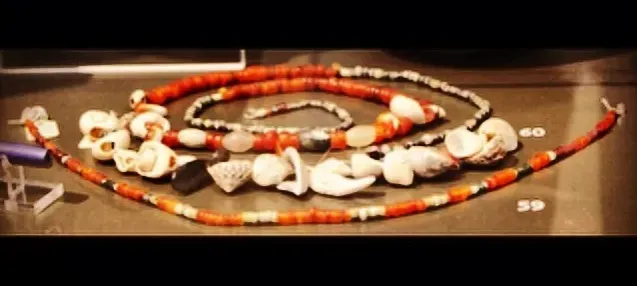
Trade and foreign contact. Objects in Predynastic graves suggest widespread trade with regions beyond Egypt, including Mesopotamia (ancient Iraq), Syria-Palestine, and Nubia (ancient Sudan)

"Trade and foreign contact. Objects in Predynastic graves suggest widespread trade with regions beyond Egypt, including Mesopotamia (ancient Iraq), Syria-Palestine, and Nubia (ancient Sudan)" by akhenatenator / Wikimedia Commons 

The land between the Tigris and Euphrates rivers, known as Mesopotamia, was home to some of the world's first city-states. These city-states, including Ur, Uruk, and Babylon, depended on trade networks to exchange goods and ideas. Trade helped Mesopotamian cities grow in power and wealth from around 3500 BCE to 539 BCE.

Mesopotamia's geography influenced its economy. The region had fertile soil but lacked many natural resources, such as wood, stone, and metals. As a result, cities like Ur organized trade with distant regions. Merchants traveled by river and over land using donkey caravans, exchanging surplus grain and textiles for timber from Lebanon, copper from Anatolia, and precious stones from as far away as the Indus Valley. Archaeological evidence, like the discovery of lapis lazuli beads in royal Sumerian tombs, shows how far trade extended. Cuneiform tablets found at Mari and Ebla contain records of trade agreements and shipments, providing historians with valuable primary sources.

Trade was not just about goods. It also spread technologies and cultural practices. The invention of the sailboat and the wheel improved transportation, making long-distance trade more efficient. Through trade, Mesopotamians learned new techniques in metalworking and pottery, and they adopted ideas about law and religion from neighboring peoples. The social structure of Mesopotamian cities reflected the importance of trade: merchants became a powerful class, second only to priests and rulers. Artisans produced luxury items, while scribes recorded transactions using the cuneiform writing system.

Trade networks also affected daily life and the growth of cities. Marketplaces bustled with activity, and taxes on goods helped rulers build temples and city walls. Over time, the rise of empires like Akkad and Babylon unified many city-states and controlled trade routes, increasing their influence. However, trade was sometimes disrupted by war or changes in political power, forcing cities to adapt. Despite these challenges, the continuity of trade helped Mesopotamia remain a center of innovation for centuries.

In summary, the development of trade networks was essential to the rise and success of Mesopotamian city-states. These connections allowed them to overcome geographic limits, build wealth, and share ideas that shaped the ancient world. Trade in Mesopotamia connects to broader themes of economic growth, cultural exchange, and the impact of geography on human society.

Interesting Fact: Archaeologists have found Indus Valley seals in Mesopotamian cities, proving there was contact between these distant civilizations.

Comprehension quiz (8 questions)

1. What rivers bordered Mesopotamia?

Tigris and Euphrates
Nile and Indus
Danube and Rhine
Amazon and Congo

2. What key resource did Mesopotamia lack?

Fertile soil
Water
Metals
Clay

3. Which city became a major trade center?

Babylon
Athens
Rome
Thebes

4. How did trade impact daily life?

Built large armies
Helped build temples and walls
Stopped farming
Eliminated markets

5. Why did merchants gain power?

They controlled trade
They were priests
They farmed grains
They built ziggurats

6. What is a trade network?

A group of farmers
A system connecting traders
A type of temple
A style of pottery

7. Mesopotamian trade stopped after 539 BCE.

True
False

8. What does 'cuneiform' mean?

A kind of boat
A type of writing
A trade route
A stone tool
Who it's for

Perfect for the way you teach

Teachers
  • Build comprehension skills
  • Auto-graded quiz
  • Differentiated reading
Parents
  • Read together at home
  • Improve fluency
  • Quiet reading time
Homeschoolers
  • Reading curriculum support
  • Independent practice
  • Track Lexile growth
Topics

Reviews & Ratings

No reviews yet. Be the first to share your experience!

More reading you might love

19 more
Passage
Monarchy in the Ancient World - reading educational content
Grades 6–8

Monarchy in the Ancient World

ancient history · CA HSS 6.2.3+3

$1.50
Passage
Akhenaten the Heretic Pharaoh - reading educational content
Grades 5–8

Akhenaten the Heretic Pharaoh

ancient history · CA HSS 6.2.3+3

$1.50
Passage
Nubia's Gold and Trade Routes - reading educational content
Grades 5–8

Nubia's Gold and Trade Routes

ancient history · CA HSS 6.2.3+2

$1.50
Passage
Hatshepsut the Female Pharaoh - reading educational content
Grades 5–8

Hatshepsut the Female Pharaoh

ancient history · CA HSS 6.2.3+3

$1.50
Passage
Tutankhamun the Boy King - reading educational content
Grades 5–8

Tutankhamun the Boy King

ancient history · CA HSS 6.2.3+4

$1.50
Passage
Code of Hammurabi - reading educational content
Grades 5–8

Code of Hammurabi

ancient history · CA HSS 6.2.3+3

$1.50
Passage
Zoroastrianism in Ancient Persia - reading educational content
Grades 6–8

Zoroastrianism in Ancient Persia

ancient history · CA HSS 6.2.3+3

Free
Passage
Comparing Hinduism and Buddhism - reading educational content
Grades 5–8

Comparing Hinduism and Buddhism

ancient history · CA HSS 6.2.3+3

$1.50
Passage
West Africa in 300 CE - reading educational content
Grades 5–8

West Africa in 300 CE

ancient history · CA HSS 6.2.3+3

$1.50
Passage
Apollo 11 Moon Rocks - reading educational content
Grades 5–8

Apollo 11 Moon Rocks

world history · CA HSS 6.2.3+3

$1.50
Passage
Types of Plate Boundaries  - reading educational content
Grades 5–8

Types of Plate Boundaries

earth and space science · MS-ESS2-3+3

Free
Passage
How Are Igneous Rocks Formed? - reading educational content
Grades 5–8

How Are Igneous Rocks Formed?

earth and space science · MS-ESS2-3+3

$1.50
Passage
Intrusive Igneous Rocks: Formation and Features - reading educational content
Grades 5–8

Intrusive Igneous Rocks: Formation and Features

earth and space science · MS-ESS2-3+3

Free
Passage
Type of Mountain Ranges Formed at Convergent Plate Boundaries - reading educational content
Grades 5–8

Type of Mountain Ranges Formed at Convergent Plate Boundaries

earth and space science · MS-ESS2-3+3

Free
Passage
How the Cold War Began - reading educational content
Grades 5–8

How the Cold War Began

world history · CA.HSS.10.9+4

$1.50
Passage
Ancient City of Ur - reading educational content
Grades 5–8

Ancient City of Ur

ancient history · HSS 6.2.3+3

$1.50
Passage
Great Wall of China - reading educational content
Grades 5–8

Great Wall of China

ancient history · CA HSS 6.6+3

$1.50
Passage
Ashoka and the Mauryan Empire - reading educational content
Grades 5–8

Ashoka and the Mauryan Empire

ancient history · CA HSS 6.5+3

$1.50
Passage
Epic of Gilgamesh - reading educational content
Grades 5–8

Epic of Gilgamesh

ancient history · CA HSS 6.2+3

$1.50
Copyright © 2026 Workybooks. Made with ♥ in California.