This learning resource is available in interactive and printable formats. The interactive worksheet can be played online and assigned to students. The Printable PDF version can be downloaded and printed for completion by hand.
This NGSS-aligned science passage explains how sleet forms in the atmosphere. Sleet begins as snow high in the clouds, melts into rain in a warm air layer, and then refreezes into small ice pellets as it falls through a colder layer closer to the ground. The passage compares sleet to freezing rain and explains how their formation is different. It also discusses how sleet affects roads and safety during winter storms. With clear explanations and vocabulary support, this passage helps middle school students understand frozen precipitation and supports NGSS standards about weather and atmospheric processes.
CONTENT PREVIEW
Expand content preview
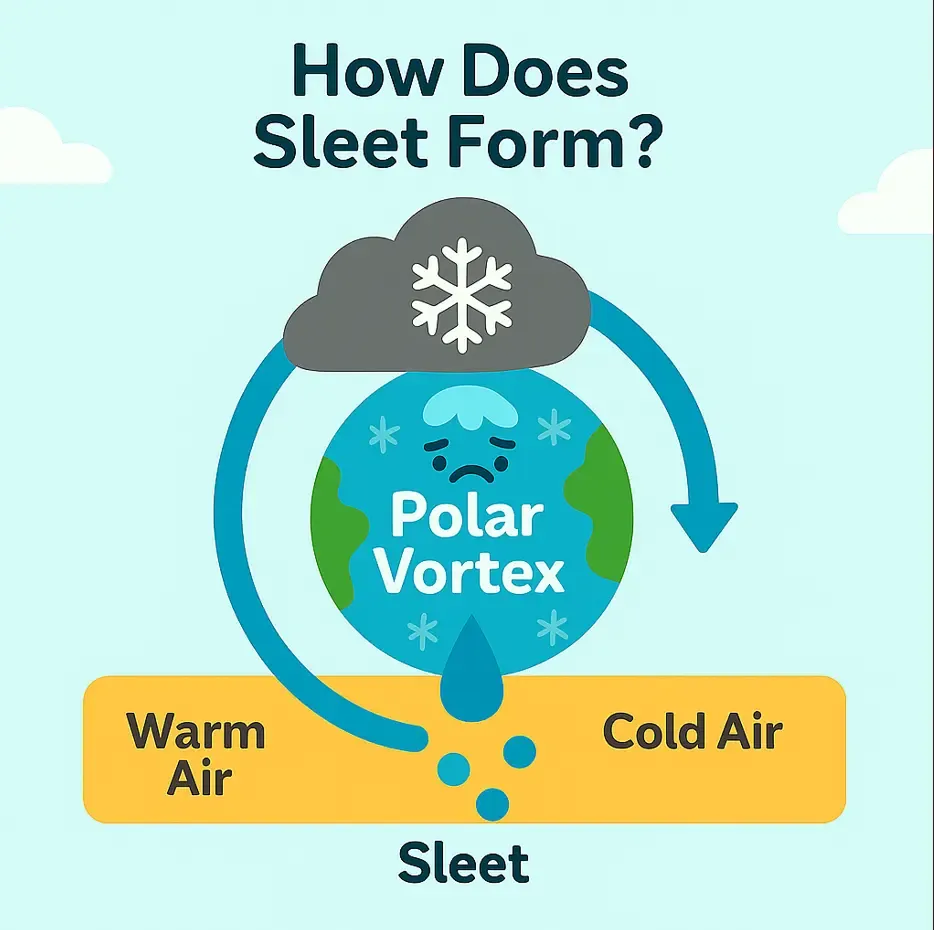
Sleet is a type of frozen precipitation that falls to the ground as small ice pellets. It forms under special conditions in the atmosphere when both warm and cold air layers are present at different heights.
Sleet begins high in the clouds as snow. As the snowflakes fall, they may pass through a layer of warmer air that melts them into raindrops. Then, as the raindrops continue to fall, they enter a colder layer of air closer to the ground. In this cold air, the raindrops refreeze before reaching the surface, turning into tiny balls of ice—this is sleet.
Sleet is different from freezing rain. While both start the same way, freezing rain stays as liquid until it hits the ground, where it freezes on contact. Sleet, however, freezes in the air and lands as solid ice pellets.
Sleet can make roads and sidewalks slippery and dangerous. It often happens during winter storms when temperatures are right at or just below freezing.
Fun Fact: Sleet pellets bounce when they hit the ground because they are already frozen solid before landing!
What is sleet?
Frozen snowflakesTiny ice pellets that fall from the skyWater that never freezesHail that forms in summer
How does sleet begin?
As rain from a warm cloudAs snow high in the cloudsAs wind blowing through iceAs fog near the ground
What causes snowflakes to melt into raindrops?
Passing through a cold layerPassing through a warm layerTouching the groundHitting the Sun
What happens after the raindrops fall into a cold layer of air?
They float back upThey evaporateThey refreeze into sleetThey turn into hail
How is sleet different from freezing rain?
Sleet freezes in the air, freezing rain freezes on the groundSleet is warmer than freezing rainSleet falls in summerFreezing rain is made of snow
When is sleet most likely to occur?
During summer daysOn warm, rainy morningsDuring winter storms with air near freezingOn hot, sunny afternoons
What is the main idea of the passage?
Sleet is dangerous because it causes floodsSleet is ice that forms when snow melts and refreezesSleet only happens at the North PoleRain and sleet are the same thing
Why do sleet pellets bounce when they land?
They are made of rubberThey are full of airThey are already frozen and solidThe ground is too soft
Perfect For:
👩🏫 Teachers
• Reading comprehension practice
• Auto-graded assessments
• Literacy skill development
👨👩👧👦 Parents
• Reading practice at home
• Comprehension improvement
• Educational reading time
🏠 Homeschoolers
• Reading curriculum support
• Independent reading practice
• Progress monitoring
Reading Features:
📖
Reading Passage
Engaging fiction or nonfiction text
❓
Comprehension Quiz
Auto-graded questions
📊
Instant Feedback
Immediate results and scoring
📄
Printable Version
Download for offline reading
🔊
Read Aloud
Voice-over with word highlighting
Reviews & Ratings
No reviews yet. Be the first to share your experience!
Related Content
The Intertropical Convergence Zone (ITCZ): Earth's Weather Belt
This science passage explains the Intertropical Convergence Zone (ITCZ), a key equatorial weather system. Covering NGSS ...
MS-ESS2-5MS-ESS2-4RI.6.7
What Is a Polar Vortex?
This NGSS-aligned science passage explains the polar vortex, a swirling mass of cold air that stays near Earth’s poles. ...
MS-ESS2-5
What Is the Antarctic Polar Vortex?
This NGSS-aligned science reading passage introduces middle school students to the Antarctic polar vortex—a swirling mas...
MS-ESS2-5
What Causes the Temperature to Decrease with Height in the Troposphere?
This NGSS-aligned middle school science passage explains why temperature decreases with height in the troposphere. Stude...
MS-ESS2-5
Raining Frogs
This engaging science passage aligned to NGSS standard MS-ESS2-5 explores the unusual but real weather phenomenon known ...
MS-ESS2-5
Hurricanes and Tropical Cyclones
This in-depth passage for grades 6-8 covers hurricanes and tropical cyclones, aligning with NGSS standards MS-ESS3-2 and...
MS-ESS3-2MS-ESS2-5
Tornadoes
This informational science passage for grades 6-8 explores the science of tornadoes, aligning with NGSS standards MS-ESS...
MS-ESS3-2MS-ESS2-5
Weather Factors
This comprehensive passage introduces middle school students to the main variables that determine weather: temperature, ...
MS-ESS2-5
Air Pressure
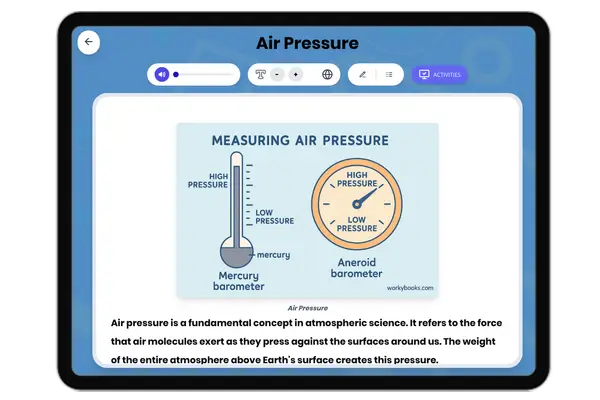
This middle school science passage explores the concept of air pressure, aligning with NGSS standard MS-ESS2-5. Students...
MS-ESS2-5
Wind
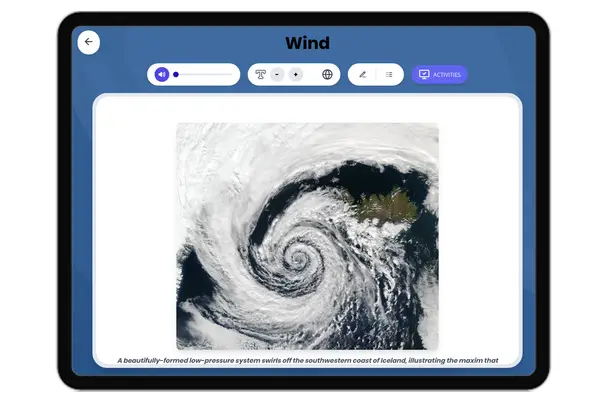
This comprehensive science passage introduces middle school students to the mechanisms of wind formation, focusing on ai...
MS-ESS2-5MS-ESS2-6
Clouds and Precipitation
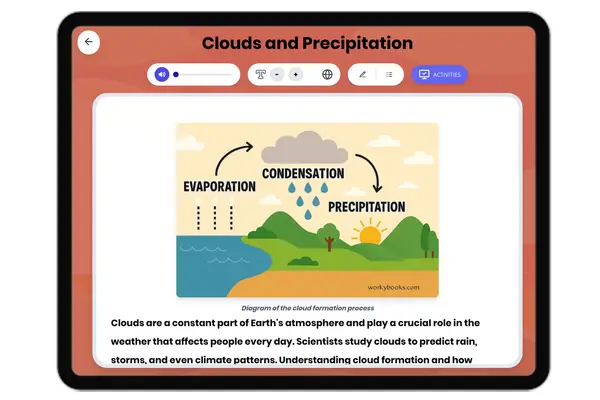
This comprehensive science passage for grades 6-8 explores the mechanisms of cloud formation and the various forms of pr...
MS-ESS2-5
Air Masses
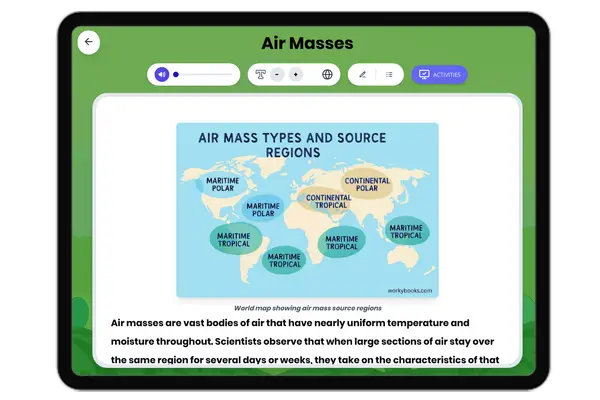
This passage provides a comprehensive explanation of air masses, their formation, classification, and their critical rol...
MS-ESS2-5
Weather Maps and Forecasting
This comprehensive middle school science passage explores how weather maps and forecasting work, directly aligning with ...
MS-ESS2-5MS-ESS3-2
Weather Fronts
This passage for grades 6-8 explores the science of weather fronts, aligned to NGSS standard MS-ESS2-5. Students will le...