What Is the Antarctic Polar Vortex? — Reading Comprehension
Rate this
Present
Present in classroom. No work saved
Assign
Classroom with student accounts, Track progress
Quick Play
No student accounts, assign with a link
Grades
3
4
5
6
7
Standards
MS-ESS2-5
PRINT+DIGITAL RESOURCE
This learning resource is available in interactive and printable formats. The interactive worksheet can be played online and assigned to students. The Printable PDF version can be downloaded and printed for completion by hand.
This NGSS-aligned science reading passage introduces middle school students to the Antarctic polar vortex—a swirling mass of cold air high above Antarctica in the stratosphere. The passage explains how this vortex strengthens during the Southern Hemisphere’s winter, isolating cold air and contributing to the formation of the ozone hole in spring. Students learn how wind patterns trap cold air and how a weakened vortex can affect weather in regions like Australia and South America. The passage also highlights how scientists use tools like satellites and weather balloons to study this system. It supports comprehension of NGSS standards for weather and climate.
CONTENT PREVIEW
Expand content preview
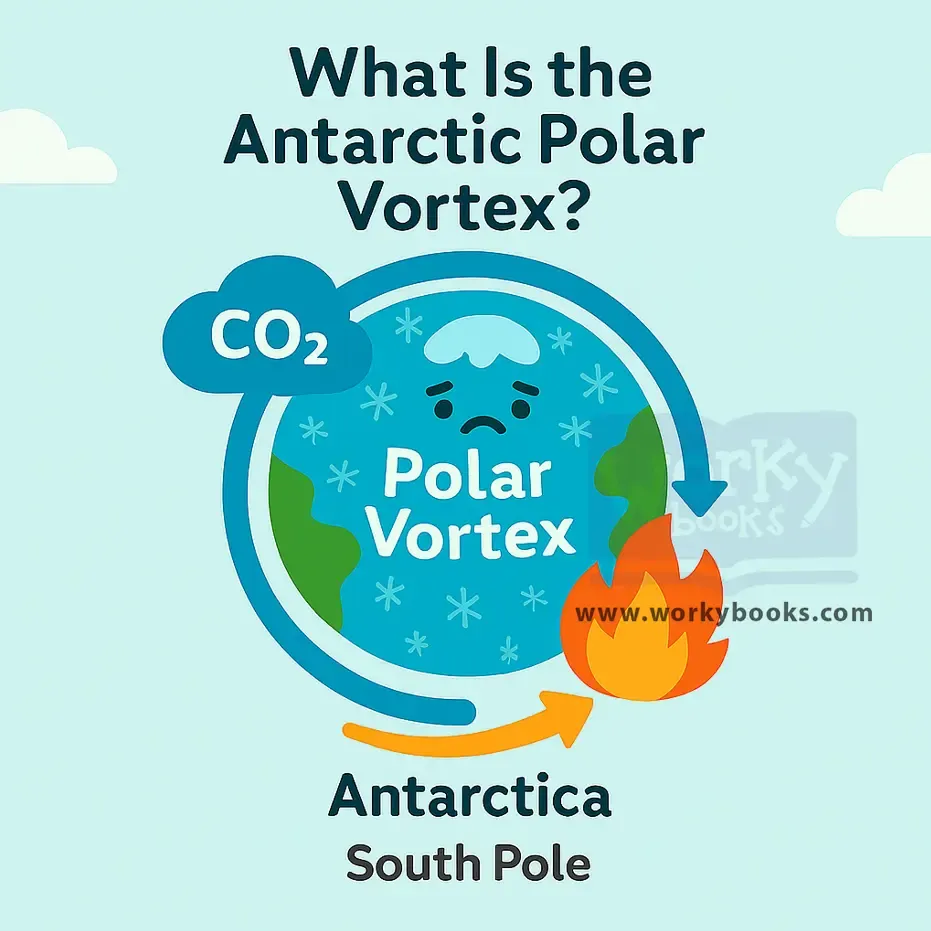
The Antarctic polar vortex is a large area of spinning cold air that forms over Antarctica, the continent at Earth’s South Pole. Like its northern cousin over the Arctic, this polar vortex forms high in the stratosphere, a layer of Earth’s atmosphere. It is strongest during the southern winter, when temperatures over Antarctica become extremely cold and winds around the vortex speed up.
The Antarctic polar vortex is made of strong, circular winds that trap cold air over the continent. These winds help isolate Antarctica’s cold air from the warmer air of other parts of the world. Because of this, Antarctica stays colder than the Arctic in winter.
One important effect of the Antarctic polar vortex is its role in creating the ozone hole. In the spring, chemicals in the atmosphere react in the cold, trapped air, breaking down the ozone layer, which protects Earth from harmful ultraviolet (UV) rays.
Sometimes, when the vortex weakens or shifts, it can affect weather in parts of the Southern Hemisphere, such as Australia or South America. Scientists use satellites and weather balloons to study the Antarctic polar vortex and learn how it affects global climate.
Fun Fact: The winds in the Antarctic polar vortex can blow at speeds over 100 miles per hour!
What is the Antarctic polar vortex?
A giant storm over the oceanSpinning cold air over the South PoleA frozen lake in AntarcticaA ring of volcanoes near the equator
When is the Antarctic polar vortex the strongest?
Summer in AntarcticaSpring in the Northern HemisphereSouthern winterFall in Australia
Where does the Antarctic polar vortex form?
In the oceanIn the stratosphere above AntarcticaIn the ArcticInside mountain ranges
What kind of wind pattern is found in the Antarctic polar vortex?
Why does Antarctica stay colder than the Arctic during winter?
It gets less sunlightIt is closer to the MoonIts vortex traps cold air more effectivelyIt has more penguins
What environmental issue is the Antarctic polar vortex linked to?
FloodingEarthquakesThe ozone holeDeforestation
What is the main idea of the passage?
Antarctica is warmer than we thoughtThe Antarctic vortex only affects penguinsThe Antarctic polar vortex is a powerful cold wind system that affects climate and ozoneAustralia controls the polar vortex
What can happen when the Antarctic vortex weakens?
It makes Antarctica meltIt affects weather in the Southern HemisphereIt causes earthquakes in AsiaIt stops ocean currents
Perfect For:
👩🏫 Teachers
• Reading comprehension practice
• Auto-graded assessments
• Literacy skill development
👨👩👧👦 Parents
• Reading practice at home
• Comprehension improvement
• Educational reading time
🏠 Homeschoolers
• Reading curriculum support
• Independent reading practice
• Progress monitoring
Reading Features:
📖
Reading Passage
Engaging fiction or nonfiction text
❓
Comprehension Quiz
Auto-graded questions
📊
Instant Feedback
Immediate results and scoring
📄
Printable Version
Download for offline reading
🔊
Read Aloud
Voice-over with word highlighting
Reviews & Ratings
No reviews yet. Be the first to share your experience!
Related Content
The Intertropical Convergence Zone (ITCZ): Earth's Weather Belt
This science passage explains the Intertropical Convergence Zone (ITCZ), a key equatorial weather system. Covering NGSS ...
MS-ESS2-5MS-ESS2-4RI.6.7
What Is a Polar Vortex?
This NGSS-aligned science passage explains the polar vortex, a swirling mass of cold air that stays near Earth’s poles. ...
MS-ESS2-5
How Does Sleet Form?
This NGSS-aligned science passage explains how sleet forms in the atmosphere. Sleet begins as snow high in the clouds, m...
MS-ESS2-5
What Causes the Temperature to Decrease with Height in the Troposphere?
This NGSS-aligned middle school science passage explains why temperature decreases with height in the troposphere. Stude...
MS-ESS2-5
Raining Frogs
This engaging science passage aligned to NGSS standard MS-ESS2-5 explores the unusual but real weather phenomenon known ...
MS-ESS2-5
Hurricanes and Tropical Cyclones
This in-depth passage for grades 6-8 covers hurricanes and tropical cyclones, aligning with NGSS standards MS-ESS3-2 and...
MS-ESS3-2MS-ESS2-5
Tornadoes
This informational science passage for grades 6-8 explores the science of tornadoes, aligning with NGSS standards MS-ESS...
MS-ESS3-2MS-ESS2-5
Weather Factors
This comprehensive passage introduces middle school students to the main variables that determine weather: temperature, ...
MS-ESS2-5
Air Pressure
This middle school science passage explores the concept of air pressure, aligning with NGSS standard MS-ESS2-5. Students...
MS-ESS2-5
Wind
This comprehensive science passage introduces middle school students to the mechanisms of wind formation, focusing on ai...
MS-ESS2-5MS-ESS2-6
Clouds and Precipitation
This comprehensive science passage for grades 6-8 explores the mechanisms of cloud formation and the various forms of pr...
MS-ESS2-5
Air Masses
This passage provides a comprehensive explanation of air masses, their formation, classification, and their critical rol...
MS-ESS2-5
Weather Maps and Forecasting
This comprehensive middle school science passage explores how weather maps and forecasting work, directly aligning with ...
MS-ESS2-5MS-ESS3-2
Weather Fronts
This passage for grades 6-8 explores the science of weather fronts, aligned to NGSS standard MS-ESS2-5. Students will le...