This learning resource is available in interactive and printable formats. The interactive worksheet can be played online and assigned to students. The Printable PDF version can be downloaded and printed for completion by hand.
This engaging science passage aligned to NGSS standard MS-ESS2-5 explores the unusual but real weather phenomenon known as 'raining frogs.' Students will learn how strong weather systems like waterspouts and tornadoes can lift frogs and drop them far from their original location. The passage introduces key scientific vocabulary and encourages curiosity about Earth's atmosphere, unusual events, and meteorology. It's perfect for middle school reading comprehension activities related to Earth and Space Science and supports understanding of how weather systems interact with living things.
CONTENT PREVIEW
Expand content preview
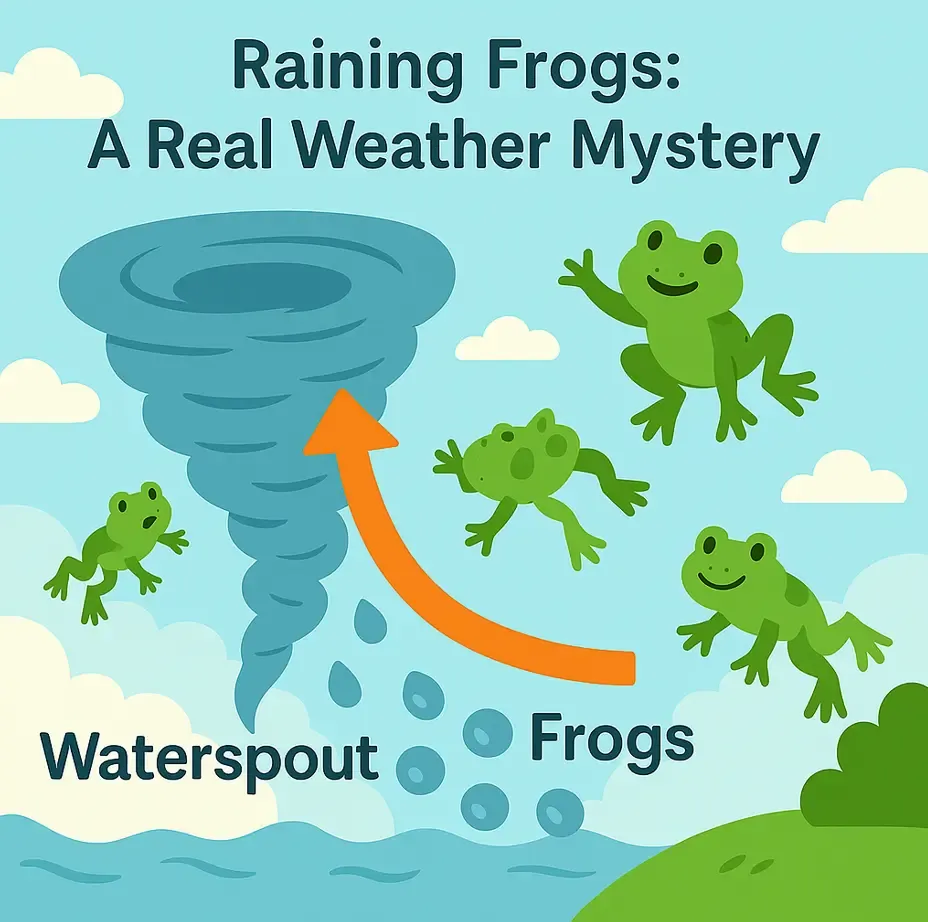
It may sound like something from a fairy tale, but raining frogs is a real and rare weather phenomenon. In some parts of the world, people have reported seeing frogs fall from the sky during storms. This strange event has puzzled scientists and surprised witnesses for centuries. Although it seems impossible, science offers a fascinating explanation.
Raining frogs usually happens during strong storms, tornadoes, or waterspouts. A waterspout is like a tornado that forms over water. As it spins, it can suck up small, lightweight animals like frogs, fish, or even insects from ponds or rivers. These creatures are carried high into the sky by the powerful winds. Eventually, when the storm weakens, the animals fall back down to Earth—sometimes far from where they were picked up. Because frogs are small and lightweight, they are more likely to be lifted and transported this way.
These events are very rare, but they’ve been recorded in several countries, including Australia, Serbia, Japan, and the United States. In most cases, the frogs are still alive when they land, though they may be stunned or injured. Scientists say that this natural occurrence shows how powerful and unpredictable weather systems can be.
While it may not happen often, raining frogs reminds us that the atmosphere is full of energy and motion. Weather isn’t just about rain or sunshine—it can involve strange and surprising events caused by air pressure, wind, and temperature changes. Events like this also help meteorologists understand how storms behave and how far they can move objects through the air.
Fun Fact: In 1873, it reportedly rained frogs in Kansas City, Missouri—people found hundreds of frogs hopping around the streets after a heavy storm!
What is “raining frogs”?
Frogs climbing trees during rainFrogs falling from the skyFrogs hiding during stormsFrogs turning into water drops
What weather event often causes frogs to rain from the sky?
HurricanesThunderstormsWaterspouts or tornadoesSnowstorms
Why are frogs likely to be picked up by storms?
They jump highThey are cold-bloodedThey live near oceansThey are small and lightweight
Where have raining frogs been reported?
Only in South AmericaOnly in desertsIn several countries around the worldOnly near the ocean
What is a waterspout?
A stream of water from a mountainA tornado that forms over waterA hole in a riverbedA rain cloud full of water
What happens to the frogs after the storm?
They meltThey often surviveThey grow wingsThey fall into the sea
What is the main idea of the passage?
Frogs are dangerous in stormsSome storms cause strange animal rainFrogs only live near tornadoesFrogs bring rain wherever they go
If a scientist saw frogs after a storm, what might they guess?
Frogs were hiding in the treesSomeone threw frogs into the airA waterspout carried themFrogs fell from a plane
Perfect For:
👩🏫 Teachers
• Reading comprehension practice
• Auto-graded assessments
• Literacy skill development
👨👩👧👦 Parents
• Reading practice at home
• Comprehension improvement
• Educational reading time
🏠 Homeschoolers
• Reading curriculum support
• Independent reading practice
• Progress monitoring
Reading Features:
📖
Reading Passage
Engaging fiction or nonfiction text
❓
Comprehension Quiz
Auto-graded questions
📊
Instant Feedback
Immediate results and scoring
📄
Printable Version
Download for offline reading
🔊
Read Aloud
Voice-over with word highlighting
Reviews & Ratings
No reviews yet. Be the first to share your experience!
Related Content
The Intertropical Convergence Zone (ITCZ): Earth's Weather Belt
This science passage explains the Intertropical Convergence Zone (ITCZ), a key equatorial weather system. Covering NGSS ...
MS-ESS2-5MS-ESS2-4RI.6.7
What Is a Polar Vortex?
This NGSS-aligned science passage explains the polar vortex, a swirling mass of cold air that stays near Earth’s poles. ...
MS-ESS2-5
What Is the Antarctic Polar Vortex?
This NGSS-aligned science reading passage introduces middle school students to the Antarctic polar vortex—a swirling mas...
MS-ESS2-5
How Does Sleet Form?
This NGSS-aligned science passage explains how sleet forms in the atmosphere. Sleet begins as snow high in the clouds, m...
MS-ESS2-5
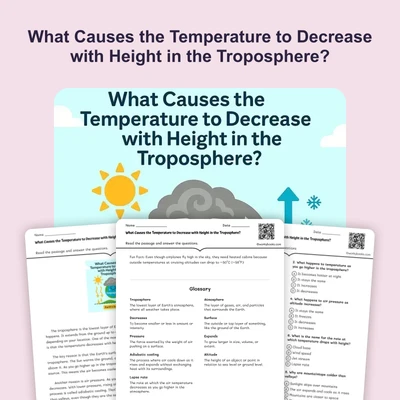
What Causes the Temperature to Decrease with Height in the Troposphere?
This NGSS-aligned middle school science passage explains why temperature decreases with height in the troposphere. Stude...
MS-ESS2-5
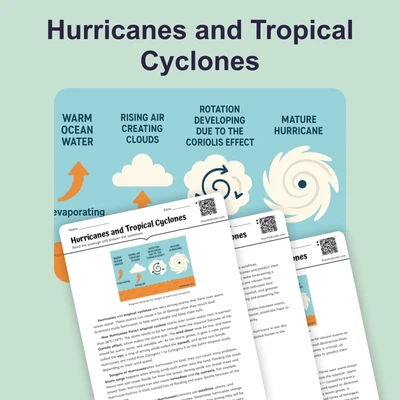
Hurricanes and Tropical Cyclones
This in-depth passage for grades 6-8 covers hurricanes and tropical cyclones, aligning with NGSS standards MS-ESS3-2 and...
MS-ESS3-2MS-ESS2-5
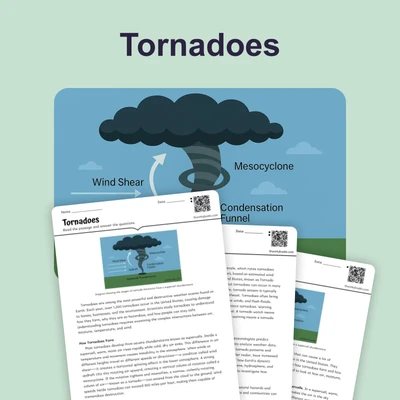
Tornadoes
This informational science passage for grades 6-8 explores the science of tornadoes, aligning with NGSS standards MS-ESS...
MS-ESS3-2MS-ESS2-5
Weather Factors
This comprehensive passage introduces middle school students to the main variables that determine weather: temperature, ...
MS-ESS2-5
Air Pressure
This middle school science passage explores the concept of air pressure, aligning with NGSS standard MS-ESS2-5. Students...
MS-ESS2-5
Wind
This comprehensive science passage introduces middle school students to the mechanisms of wind formation, focusing on ai...
MS-ESS2-5MS-ESS2-6
Clouds and Precipitation
This comprehensive science passage for grades 6-8 explores the mechanisms of cloud formation and the various forms of pr...
MS-ESS2-5
Air Masses
This passage provides a comprehensive explanation of air masses, their formation, classification, and their critical rol...
MS-ESS2-5
Weather Maps and Forecasting
This comprehensive middle school science passage explores how weather maps and forecasting work, directly aligning with ...
MS-ESS2-5MS-ESS3-2
Weather Fronts
This passage for grades 6-8 explores the science of weather fronts, aligned to NGSS standard MS-ESS2-5. Students will le...