How Light Reflects Off Objects
Interactive passage with audio narration, comprehension questions, and printable PDF.
By completing this purchase you agree to our Terms of Use and Privacy Policy. Your subscription renews automatically until you cancel. You can cancel anytime from your account settings. All sales are final and non-refundable. Digital content is available for download in your account immediately upon purchase.
What's included
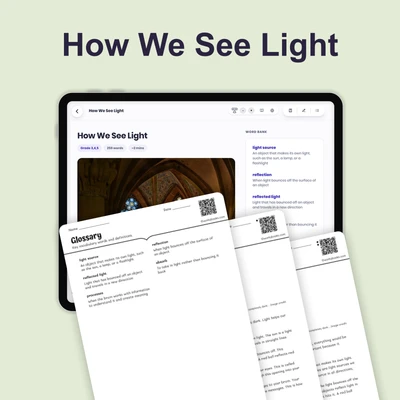
How Light Reflects Off Objects preview and details
About this printable How Light Reflects Off Objects science reading passage, NGSS-aligned (Grades 3-5)
Sample passage and quiz from How Light Reflects Off Objects
Reading passage and comprehension quiz preview
How Light Reflects Off Objects
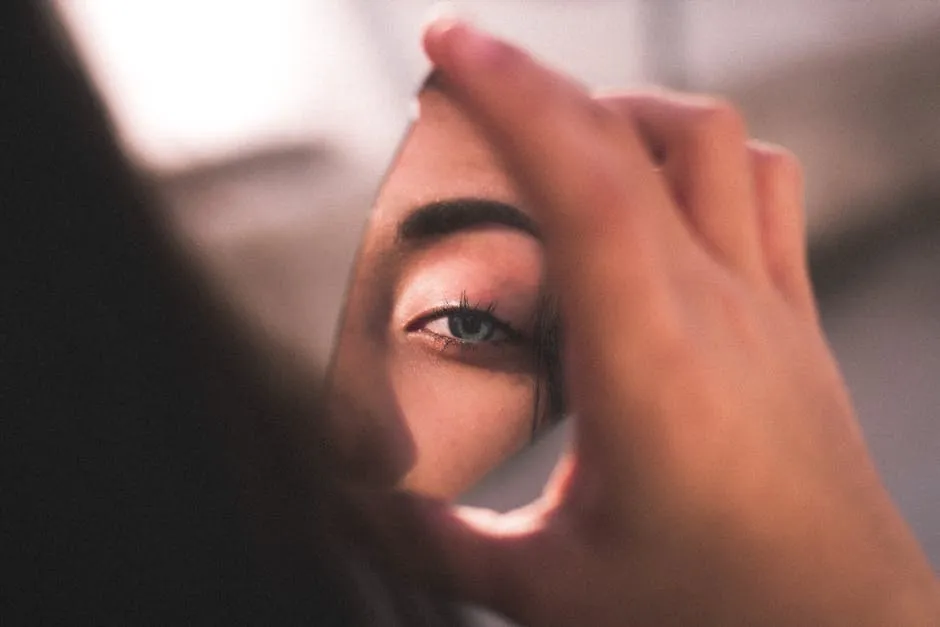
"A captivating image of a woman's eye reflected in a broken mirror piece with soft lighting." by Ismael Sánchez / Pexels.
Light is a form of energy that travels in straight lines. When light hits an object, something important happens—some of the light bounces off. This bouncing is called reflection. Reflection is why we can see objects around us.
Think about looking in a mirror. A mirror is a smooth, shiny surface that reflects almost all the light that hits it. When light from a lamp or the sun strikes the mirror, it bounces off in a predictable way. The reflected light then travels to your eyes, and you see your image in the mirror.
But mirrors are not the only things that reflect light. Every object you see reflects some light. A red ball reflects red light into your eyes. A blue book reflects blue light. Even rough surfaces like tree bark or carpet reflect light, though not as clearly as a mirror does.
Without reflection, we could not see anything except light sources like the sun or a lightbulb. The reason you can see your desk, your friend, or this paper is because light bounces off these objects and enters your eyes. Different objects reflect different amounts of light. Shiny objects like metal spoons reflect a lot of light. Dull objects like rocks reflect less light but still enough for us to see them.
Understanding reflection helps explain how our eyes work and why we see the world around us.
Comprehension quiz (8 questions)
1. What happens when light hits an object?
2. What is reflection?
3. Why can we see a mirror image?
4. Why can we see objects around us?
5. Which object reflects the most light?
6. What would happen without light reflection?
7. All objects reflect some amount of light.
8. What does the word 'reflection' mean?
Perfect for the way you teach
- Build comprehension skills
- Auto-graded quiz
- Differentiated reading
- Read together at home
- Improve fluency
- Quiet reading time
- Reading curriculum support
- Independent practice
- Track Lexile growth