Life in a Native California Village
Interactive passage with audio narration, comprehension questions, and printable PDF.
By completing this purchase you agree to our Terms of Use and Privacy Policy. Your subscription renews automatically until you cancel. You can cancel anytime from your account settings. All sales are final and non-refundable. Digital content is available for download in your account immediately upon purchase.
What's included
Life in a Native California Village preview and details
About this printable Life in a Native California Village reading passage (Grades 3-5)
Sample passage and quiz from Life in a Native California Village
Reading passage and comprehension quiz preview
Life in a Native California Village
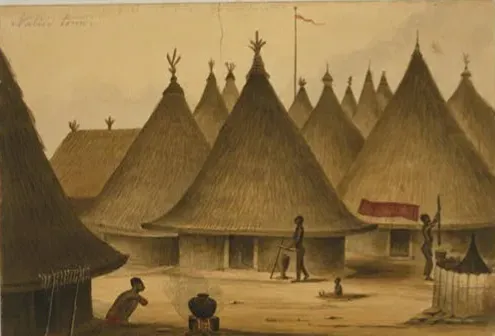
"Native village" by American Colonization Society / Library of Congress.
Native Californians built villages near rivers, lakes, and forests. These places had fresh water, plants, and animals for food. Each village was home to many families who worked together. The people used the land’s gifts to live, eat, and build their homes.
Each morning, children helped their parents. Boys learned to fish and hunt with their fathers. Girls learned from their mothers how to gather nuts, roots, and berries. Families made baskets to carry food and water. Some baskets were so strong they could hold hot soup.
Homes were made from wood, grass, and bark. Some villages had round houses for families and larger houses for meetings. People worked together to build and fix these homes. They also made tools from stone and bone. These tools helped them hunt, cook, and make clothes.
Food was very important. Many villages gathered acorns from oak trees. They crushed the acorns to make flour. Then, they cooked the flour to make mush, a favorite food. People also fished in rivers and hunted deer, rabbits, and birds. Wild plants and berries were picked in the right seasons. When the time was right, the whole village would harvest together.
Leaders helped keep peace in the village. Elders told stories to teach lessons. These stories were shared at night by a warm fire. Everyone listened and learned about their traditions. Dances and songs brought people together. They celebrated the sun, rain, and good harvests with music and bright clothing.
Native Californians respected nature. They only took what they needed. If a family caught too many fish, they shared with others. This helped the whole community stay strong and healthy. Helping each other was a way of life.
Life in a Native California village was full of teamwork, respect, and joy. The people solved problems together. They used their skills to survive and celebrate. These villages showed the power of unity and the beauty of living close to nature.
Interesting Fact: The Chumash people made special shell beads that were used like money in their villages!
Comprehension quiz (8 questions)
1. Where did Native Californians build villages?
2. What did families use to carry food?
3. What food was made from acorns?
4. Why did people share extra fish?
5. How did children learn village skills?
6. What did leaders do in the village?
7. People celebrated with dances and songs. True or false?
8. What is a "community"?
Common Core standards for Life in a Native California Village
Explain events, procedures, ideas, or concepts in a historical, scientific, or technical text, including what happened and why, based on specific information in the text.
Determine the meaning of general academic and domain-specific words or phrases in a text relevant to a grade 4 topic or subject area.
Write informative/explanatory texts to examine a topic and convey ideas and information clearly.
Perfect for the way you teach
- Build comprehension skills
- Auto-graded quiz
- Differentiated reading
- Read together at home
- Improve fluency
- Quiet reading time
- Reading curriculum support
- Independent practice
- Track Lexile growth