Mayflower Compact
Interactive passage with audio narration, comprehension questions, and printable PDF.
By completing this purchase you agree to our Terms of Use and Privacy Policy. Your subscription renews automatically until you cancel. You can cancel anytime from your account settings. All sales are final and non-refundable. Digital content is available for download in your account immediately upon purchase.
What's included
Part of this bundle

Mayflower Compact preview and details
About this printable Mayflower Compact reading passage (Grades 3-5)
Sample passage and quiz from Mayflower Compact
Reading passage and comprehension quiz preview
Mayflower Compact
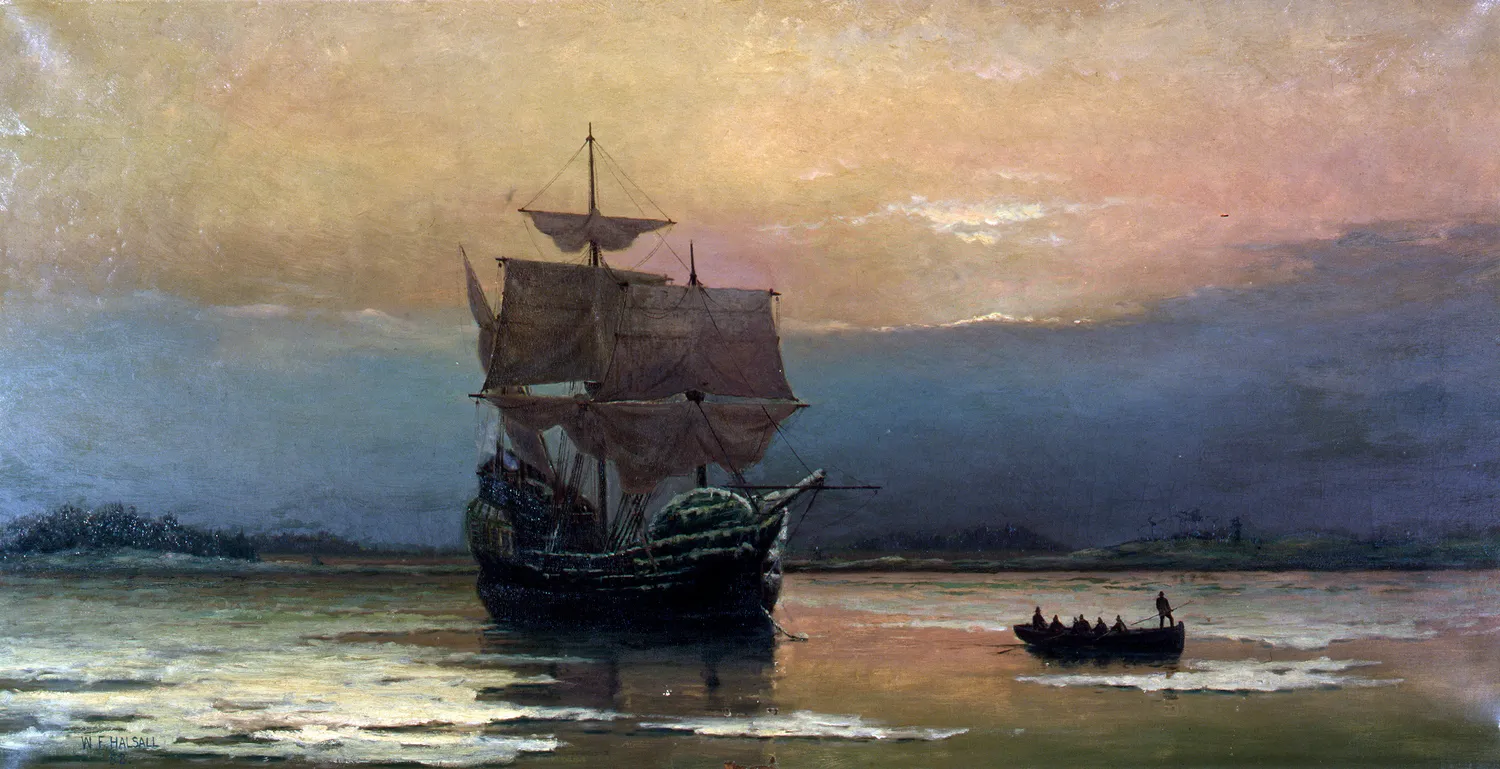
Source: Wikimedia Commons - William Halsall
The Mayflower Pilgrims were a group of English men, women, and children who sailed to America in 1620. They wanted to start a new life where they could practice their religion freely. In England, the Pilgrims faced strict rules that did not allow them to worship as they wished. This made life difficult and dangerous for them.
To escape these troubles, the Pilgrims decided to leave their home. They gathered 102 people and prepared for a long voyage across the Atlantic Ocean. They traveled on a ship called the Mayflower. The journey was not easy. The ship was crowded and the weather was often stormy. Many passengers became sick. Food and fresh water ran low. Still, the Pilgrims were determined to reach their new home.
After 66 days at sea, the Mayflower finally reached land. Instead of arriving in Virginia, as they had planned, the ship landed far north at a place they called Plymouth. The Pilgrims had to find a way to survive in this unfamiliar land. It was winter and very cold. They built small homes and worked together to find food. Many Pilgrims became ill, and almost half of them died during the first winter.
Even with these hardships, the Pilgrims did not give up. They made friends with the Wampanoag people, who helped them learn to grow corn and find food. With this help, the Pilgrims were able to survive. To show thanks, they held a feast with the Wampanoag. This event is remembered as the first Thanksgiving.
The Mayflower Pilgrims showed great bravery and unity. Their story is important because it shows how people can work together to overcome challenges. The colony they started, Plymouth, became one of the first successful English settlements in America. The Pilgrims’ search for freedom and their spirit of cooperation helped shape the future of the United States.
Interesting Fact: The Mayflower’s voyage took 66 days, and the ship was only about 100 feet long—about the size of a basketball court!
Comprehension quiz (8 questions)
1. What year did the Mayflower sail?
2. Where did the Pilgrims land?
3. How many days did the voyage take?
4. Why did the Pilgrims leave England?
5. Who helped the Pilgrims survive?
6. What did the Pilgrims do to thank the Wampanoag?
7. The Pilgrims sailed on the Mayflower. True or false?
8. What does 'cooperation' mean?
Common Core standards for Mayflower Compact
Refer to details and examples in a text when explaining what the text says explicitly and when drawing inferences from the text.
Perfect for the way you teach
- Build comprehension skills
- Auto-graded quiz
- Differentiated reading
- Read together at home
- Improve fluency
- Quiet reading time
- Reading curriculum support
- Independent practice
- Track Lexile growth