Samuel Slater Factory System
Interactive passage with audio narration, comprehension questions, and printable PDF.
By completing this purchase you agree to our Terms of Use and Privacy Policy. Your subscription renews automatically until you cancel. You can cancel anytime from your account settings. All sales are final and non-refundable. Digital content is available for download in your account immediately upon purchase.
What's included
Part of this bundle

Samuel Slater Factory System preview and details
About this printable Samuel Slater Factory System reading passage (Grades 3-5)
Sample passage and quiz from Samuel Slater Factory System
Reading passage and comprehension quiz preview
Samuel Slater Factory System
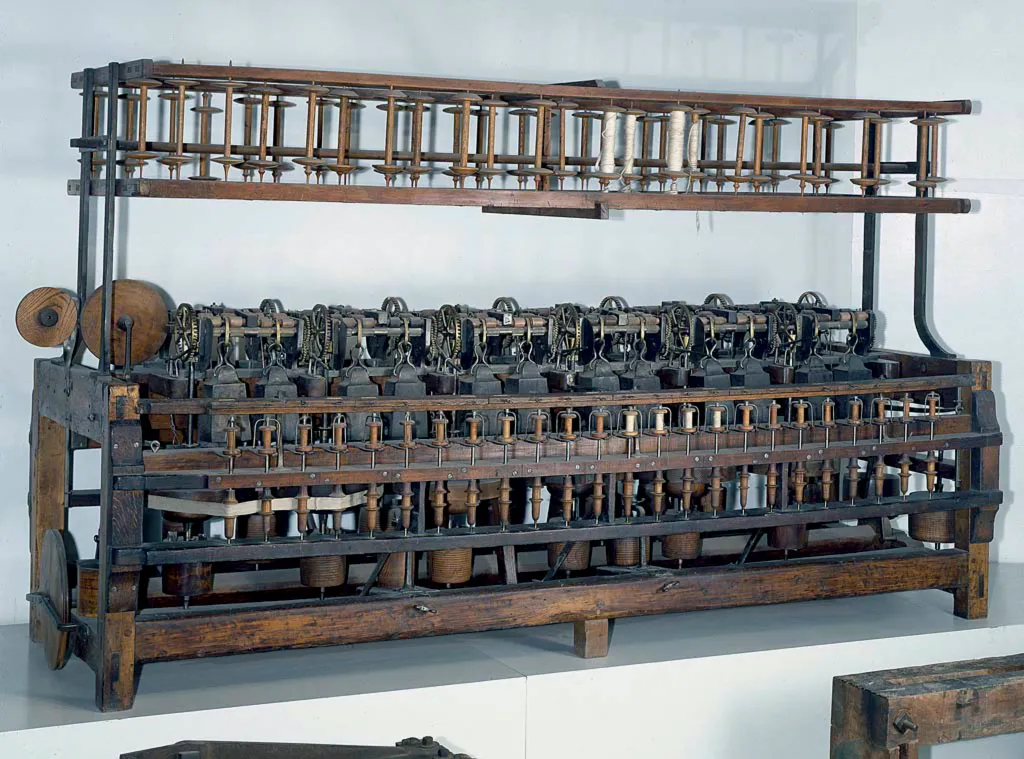
This 48-spindle spinning machine, the oldest piece of cotton machinery in America, was built by Samuel Slater, and first operated by him on December 20, 1790, at Pawtucket, Rhode Island. Wikimedia Commons
Samuel Slater was a skilled worker from England. In the late 1700s, he learned how to build machines that made cloth in British factories. These factories were called textile mills. Britain wanted to keep its factory secrets safe, so it made it illegal for workers to share their knowledge with other countries.
Samuel Slater wanted a new life. He left England in 1789 and came to the United States. He brought only his memory of how to build the machines. In America, there were no big factories for making cloth. Most people made things at home or in small shops. Slater knew he could help change this.
In 1790, Slater partnered with Moses Brown in Rhode Island. Together, they built the first successful American textile mill. The mill used water power to run machines that spun cotton into thread. This new factory system allowed many workers to make cloth quickly and in large amounts. It was very different from the old way of working by hand.
The factory system changed how people worked and lived. Workers, including children, worked long hours in the mills. Towns grew around the factories, and people moved from farms to work in the new jobs. This was the start of the Industrial Revolution in America.
Some people called Samuel Slater the "Father of American Industry." He showed Americans how to use machines and build factories. However, the British saw him as a traitor because he took their factory secrets. Despite this, Slater's work helped the United States grow stronger by making its own goods.
Slater's idea spread quickly. Other businessmen built more mills in New England. The American factory system grew, bringing new inventions and more jobs. It changed the country's economy and helped America become a leader in industry.
Today, we remember Samuel Slater for his bravery and skills. He took a big risk to bring important knowledge to America. His work helped shape the nation’s future.
Interesting Fact: Samuel Slater’s first mill is still standing in Rhode Island today. It is now a museum where people can learn about the start of American industry.
Comprehension quiz (8 questions)
1. Who was Samuel Slater?
2. Where did Slater build the first mill?
3. What powered the machines in Slater’s mill?
4. Why did people move to work in mills?
5. How did the factory system change America?
6. Why was Slater called a traitor?
7. Samuel Slater’s first mill is now a museum. True or false?
8. What is a textile mill?
Common Core standards for Samuel Slater Factory System
Explain events, procedures, ideas, or concepts in a historical, scientific, or technical text, including what happened and why, based on specific information in the text.
Determine the meaning of general academic and domain-specific words or phrases in a text relevant to a grade 4 topic or subject area.
Interpret information presented visually, orally, or quantitatively (e.g., in charts, graphs, diagrams, time lines, animations, or interactive elements on Web pages) and explain how the information contributes to an understanding of the text in which it appears.
Write informative/explanatory texts to examine a topic and convey ideas and information clearly.
Perfect for the way you teach
- Build comprehension skills
- Auto-graded quiz
- Differentiated reading
- Read together at home
- Improve fluency
- Quiet reading time
- Reading curriculum support
- Independent practice
- Track Lexile growth