Spies, Secret Codes, and Benedict Arnold — Reading Comprehension
Rate this
Premium Resource
Present
Present in classroom. No work saved
Assign
Classroom with student accounts, Track progress
Quick Play
No student accounts, assign with a link
Grades
3
4
5
Standards
D2.HIS.2-5.3-5
RI.4.1
RI.4.3
PRINT+DIGITAL RESOURCE
This learning resource is available in interactive and printable formats. The interactive worksheet can be played online and assigned to students. The Printable PDF version can be downloaded and printed for completion by hand.
This engaging history reading passage explores the fascinating world of spies, secret codes, and the infamous Benedict Arnold during the American Revolution. Students will learn about how secret messages helped the Patriots, the role of bravery and problem-solving, and the dramatic events that led Benedict Arnold to become one of history’s most famous traitors. The passage is written in age-appropriate language, includes a glossary of key vocabulary words, and features a Spanish translation for bilingual support. With a related image, timeline, reading comprehension quiz, and writing activities, this learning resource aligns with the C3 Framework and Common Core standards. The passage also features read aloud audio for accessibility, making it ideal for classrooms and home learning alike.
CONTENT PREVIEW
Expand content preview
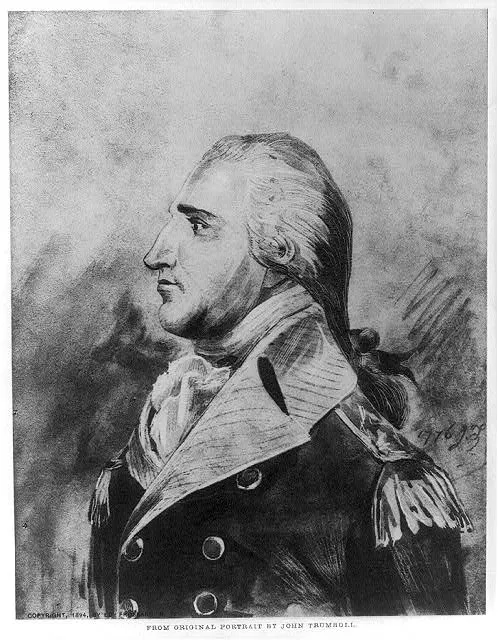
Benedict Arnold, 1741-1801. Source: Library of Congress - Library of Congress
Benedict Arnold was once a great hero of the American Revolution. He helped the American colonies fight for their freedom from Britain. Arnold led soldiers bravely in many important battles. He was known for his courage and skill on the battlefield.
As the war went on, Arnold became unhappy. He felt that he did not get enough credit for his victories. Others got promotions and praise while he was often ignored. He also lost money from his own business and was treated unfairly by some leaders.
Because of these problems, Arnold started to lose trust in his country. In 1780, he made a secret plan with the British. He wanted to help them capture a key American fort called West Point. Arnold wanted money and a high rank from the British in return for his help. He began to act as a spy for the enemy.
Arnold sent secret messages to British officers. He used invisible ink and hidden codes to keep his plans safe. One British officer, Major John André, worked closely with Arnold. They agreed that Arnold would hand over West Point to the British, which would have hurt the American army badly.
However, the plan failed. American soldiers caught Major André and found the secret papers. When Arnold heard the news, he quickly escaped to a British ship. He left behind his wife, his soldiers, and the country he once loved.
After his escape, Arnold fought for the British army. The Americans saw him as a traitor. A traitor is someone who betrays their own country. Arnold’s name soon became a symbol of betrayal and espionage—the act of spying.
Even today, more than 240 years later, calling someone a “Benedict Arnold” means they have been disloyal or have betrayed trust. His story teaches the importance of loyalty and honesty in times of conflict.
Interesting Fact: After the war, Benedict Arnold lived in England, but he was never fully trusted by the British either.
Who was Benedict Arnold?
An American generalA British kingA French soldierA Spanish explorer
What is West Point?
A riverA fortA shipA city
Who helped Arnold with the secret plan?
Major John AndréGeorge WashingtonKing GeorgePaul Revere
Why did Arnold become a spy?
He wanted more creditHe loved BritainHe disliked fightingHe wanted to be famous
What happened when the plan failed?
Arnold was caughtArnold escapedThe fort was lostAndré left America
Why is Arnold called a traitor?
He helped the enemyHe won battlesHe built a fortHe became a king
Arnold lived in France after the war. True or false?
TrueFalse
What does espionage mean?
SpyingBuilding fortsSinging songsRiding horses
Perfect For:
👩🏫 Teachers
• Reading comprehension practice
• Auto-graded assessments
• Literacy skill development
👨👩👧👦 Parents
• Reading practice at home
• Comprehension improvement
• Educational reading time
🏠 Homeschoolers
• Reading curriculum support
• Independent reading practice
• Progress monitoring
Reading Features:
📖
Reading Passage
Engaging fiction or nonfiction text
❓
Comprehension Quiz
Auto-graded questions
📊
Instant Feedback
Immediate results and scoring
📄
Printable Version
Download for offline reading
🔊
Read Aloud
Voice-over with word highlighting
Reviews & Ratings
No reviews yet. Be the first to share your experience!
Related Content
Snorkeling & Scuba Diving
RI.2.2RI.2.6RI.2.10RF.2.4.A
Polar Bears and Climate
This informational text on polar bears is a great way to practice reading comprehension. Students will read the passage ...
RI.4.1W.4.72-LS4-1RF.4.4
Climate and Water Cycle
W.4.2.ARI.4.4RI.4.1
Earthquakes and Infrastructure
Get this worksheet about the effects of earthquakes on infrastructure. The worksheet includes an informational passage t...
W.4.7RI.4.1ESS3B
The Rubik's Cube
RI.2.2RI.2.6RI.2.10RF.2.4.A
Understanding Climate Action Context Clues
Understanding Climate Action" worksheet, aligned with CCS L.4.4.A and NGSS. This resource introduces key concepts such a...
L.4.4.ARI.4.1RI.4.4
Earthquake and buildings
Download this worksheet on the impact of earthquakes on buildings. The informational text included in this worksheet is ...
RI.4.1ESS3BW.4.7RF.4.4
How Do Scientists Study Past Climates?
Students will analyze how tools like ice cores and tree rings provide scientific evidence about Earth’s historical clima...
RI.4.1RI.4.2RI.4.3.4.RI.4.74-ESS2-2
Earth Day and Types of Pollution
Earth Day is coming! Get ready to learn about pollution and test your knowledge. Click for a free reading passage and qu...
RI.4.1RI.4.2ESS3.CESS3.A
Earth Day and Green Initiatives
Celebrate Earth Day with this fun and educational activity! Students will begin by reading a short passage that explains...
RI.4.1RI.4.2ESS3.CESS3.A
Sunspots and Solar Flares
This quiz is designed to test your understanding of the fascinating phenomena of sunspots and solar flares, as described...
RI.4.1RI.4.4RI.5.1ESS1.A
How might climate change affect animals?
This passage explains to children how climate change impacts animal life. It uses specific examples like polar bears los...
RI.3.1RI.4.14.ESS2.D4-ESS3
What can happen to sea levels because of climate change?
This passage explains to children how climate change leads to rising sea levels. It describes two main causes: melting i...
RI.3.1RI.4.14.ESS2.D
Reduce Your Carbon Footprint: Simple Tips for Home
This passage focuses on reducing carbon footprints at home by conserving electricity. It suggests practical actions like...
RI.3.1RI.4.14.ESS2.D4-ESS3
How using less plastic helps the environment?
This passage explains to children how reducing plastic use helps the environment. It outlines the life cycle of plastic,...
RI.3.1RI.4.14.ESS2.D4-ESS3
How Kids Can Help Fight Climate Change?
This passage introduces the concept of 'reduce, reuse, recycle' as a way for children to help fight climate change. It e...
RI.3.1RI.4.14.ESS2.D4-ESS3
How is Climate Different from Weather?
This passage distinguishes climate from weather for young readers. It defines climate as the usual weather patterns over...
RI.3.1RI.4.14.ESS2.D
Can you give an example of a renewable energy source?
This passage focuses on solar energy as an example of renewable energy for children. It explains how solar panels captur...
RI.3.1RI.4.14.4-ESS3
What is recycling, and why is it important?
This passage introduces the concept of recycling to children. It explains recycling as the process of turning used mater...