This engaging U.S. history reading passage introduces students to the Lewis and Clark Expedition, a vital event in the story of America's westward expansion. Aligned to HSS 5.8.2 and RI.4.1, the passage describes how Meriwether Lewis, William Clark, and their Corps of Discovery explored the newly acquired Louisiana Purchase from 1804-1806. Students will learn about the goals of the expedition, the challenges faced, and the important encounters with Native American tribes. The passage also highlights scientific discoveries and the lasting impact of the journey. Included are activities such as quizzes, writing prompts, graphic organizers, and a timeline. Spanish translation and read aloud audio support diverse learners. This resource builds historical knowledge and literacy skills for elementary students studying early U.S. history.
Written by Workybooks TeamPublished by Workybooks
Preview
Sample passage and quiz content
CONTENT PREVIEW
Expand content preview
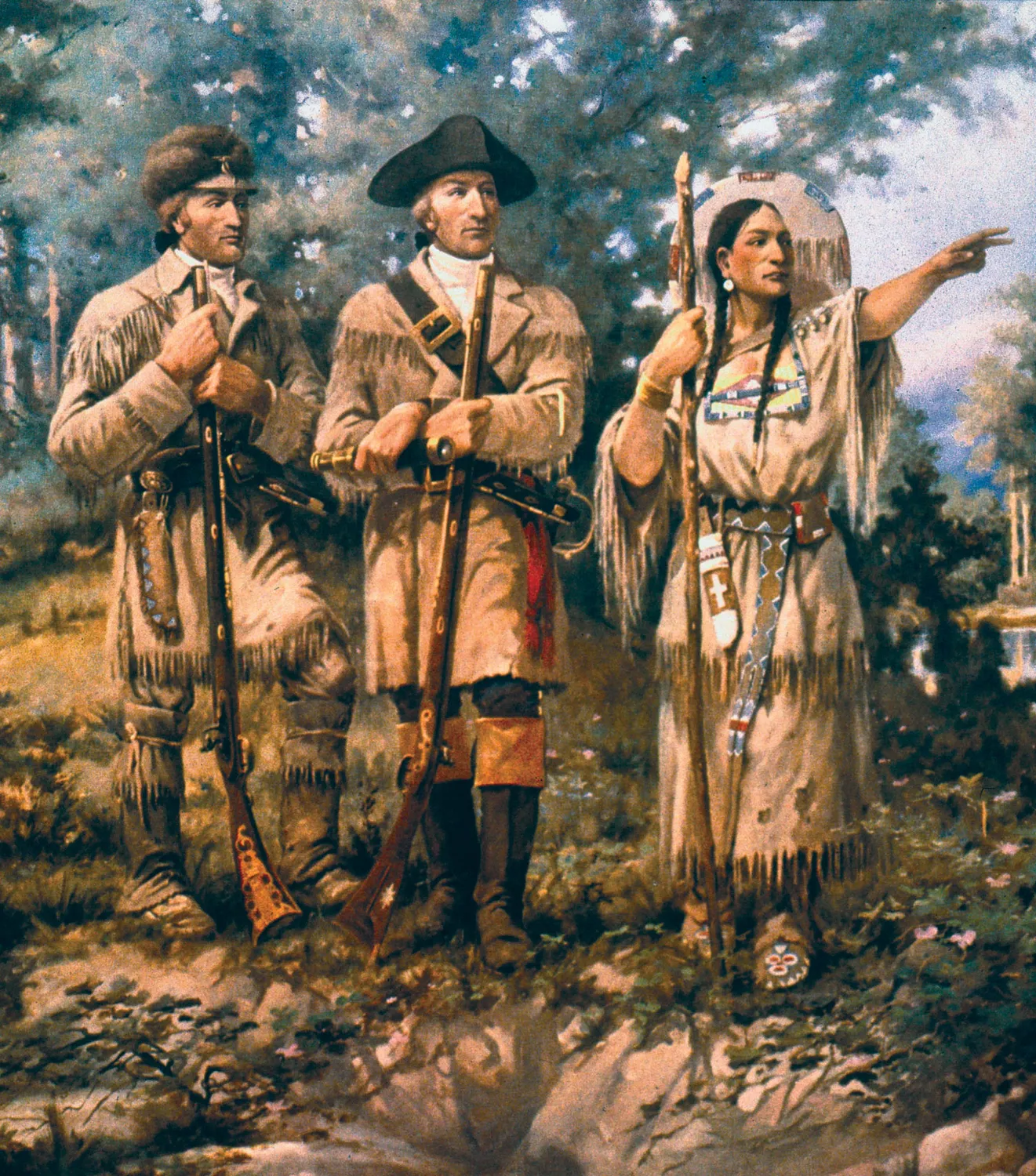
"Detail Lewis & Clark at Three Forks" by Edgar Samuel Paxson / Wikimedia Commons (Public domain).
The Lewis and Clark Expedition was an important journey in American history. In 1803, the United States bought a huge area of land called the Louisiana Purchase. President Thomas Jefferson wanted to learn more about this new land. He asked Meriwether Lewis and William Clark to lead an expedition west.
In May 1804, Lewis, Clark, and their team set out from St. Louis, Missouri. Their group was called the Corps of Discovery. There were 33 people, including soldiers, boatmen, and one African American named York. Their goal was to find a water route to the Pacific Ocean, map the land, and make scientific discoveries. They also wanted to build good relationships with Native American tribes.
The journey was hard. The group traveled by boat up the Missouri River. They faced strong currents, wild animals, and rough weather. They had to carry heavy supplies and keep careful records of what they saw. Lewis and Clark drew maps and wrote about new plants and animals.
Along the way, the Corps met many Native American tribes. Sacagawea, a Shoshone woman, joined the group as a guide and interpreter. She helped them talk to tribes and find food. Her help was very important, especially when they crossed the Rocky Mountains. The group traded with Native peoples and learned from their knowledge of the land.
After a long and dangerous trip, Lewis and Clark reached the Pacific Ocean in November 1805. They built a fort and spent the winter there. In spring 1806, they returned to St. Louis. The whole trip took over two years and covered about 8,000 miles.
The Lewis and Clark Expedition brought back important maps, drawings, and notes. They described more than 100 new animals and plants. Their journey helped open the West for future settlers. It showed that working together and learning from others could help people solve big problems.
Interesting Fact: The Corps of Discovery lost only one member during the whole expedition, even though the journey was very dangerous.
Who were the leaders of the expedition?
Lewis and ClarkJefferson and YorkSacagawea and YorkMeriwether and Sacagawea
What was the Corps of Discovery?
The team on the expeditionA Native tribeA group of soldiersA kind of boat
Where did the expedition begin?
St. Louis, MissouriNew York CityWashington, D.C.San Francisco
Why did President Jefferson send Lewis and Clark?
To learn about new landTo fight a warTo build a cityTo meet the president
How did Sacagawea help the group?
She guided the groupShe built the boatsShe wrote the mapsShe cooked all the food
What was one result of the expedition?
New maps were madeThey found silverThey started a warThey built a new city
The journey took over two years. (True or False)
TrueFalse
What does 'expedition' mean?
A long journey with a purposeA kind of foodA mountainA boat
Curriculum
Common Core standards covered
RI.4.1
Refer to details and examples in a text when explaining what the text says explicitly and when drawing inferences from the text.
RI.4.3
Explain events, procedures, ideas, or concepts in a historical, scientific, or technical text, including what happened and why, based on specific information in the text.
W.4.2
Write informative/explanatory texts to examine a topic and convey ideas and information clearly.
Who it's for
Perfect for the way you teach
Teachers
Build comprehension skills
Auto-graded quiz
Differentiated reading
Parents
Read together at home
Improve fluency
Quiet reading time
Homeschoolers
Reading curriculum support
Independent practice
Track Lexile growth
Topics
Lewis and ClarkLouisiana PurchaseCorps of DiscoveryexplorationUS historyscientific discoveryNative Americans
Reviews & Ratings
No reviews yet. Be the first to share your experience!
More reading you might love
19 more
Snorkeling & Scuba Diving
RI.2.2RI.2.6RI.2.10RF.2.4.A
Climate and Water Cycle
W.4.2.ARI.4.4RI.4.1
The Rubik's Cube
RI.2.2RI.2.6RI.2.10RF.2.4.A
Earthquakes and Infrastructure
Get this worksheet about the effects of earthquakes on infrastructure. The worksheet includes an informational passage t...
W.4.7RI.4.1ESS3B
Polar Bears and Climate
This informational text on polar bears is a great way to practice reading comprehension. Students will read the passage ...
RI.4.1W.4.72-LS4-1RF.4.4
Understanding Climate Action Context Clues
Understanding Climate Action" worksheet, aligned with CCS L.4.4.A and NGSS. This resource introduces key concepts such a...
L.4.4.ARI.4.1RI.4.4
Earthquake and buildings
Download this worksheet on the impact of earthquakes on buildings. The informational text included in this worksheet is ...
RI.4.1ESS3BW.4.7RF.4.4
How Do Scientists Study Past Climates?
Students will analyze how tools like ice cores and tree rings provide scientific evidence about Earth’s historical clima...
RI.4.1RI.4.2RI.4.3.4.RI.4.74-ESS2-2
Earth Day and Types of Pollution
Earth Day is coming! Get ready to learn about pollution and test your knowledge. Click for a free reading passage and qu...
RI.4.1RI.4.2ESS3.CESS3.A
Earth Day and Green Initiatives
Celebrate Earth Day with this fun and educational activity! Students will begin by reading a short passage that explains...
RI.4.1RI.4.2ESS3.CESS3.A
Sunspots and Solar Flares
This quiz is designed to test your understanding of the fascinating phenomena of sunspots and solar flares, as described...
RI.4.1RI.4.4RI.5.1ESS1.A
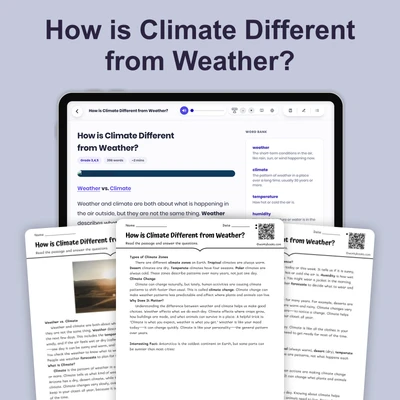
How is Climate Different from Weather?
This passage distinguishes climate from weather for young readers. It defines climate as the usual weather patterns over...
RI.3.1RI.4.14.ESS2.D
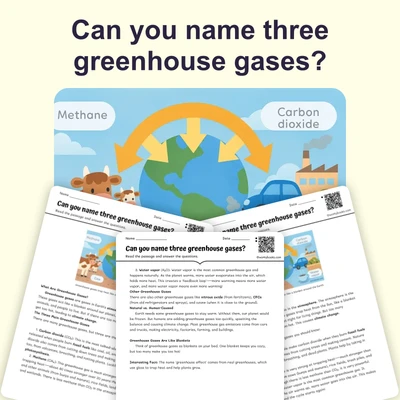
Can you name three greenhouse gases?
This passage introduces children to three common greenhouse gases: carbon dioxide (CO2), methane, and water vapor. It ex...
RI.3.1RI.4.14.ESS2.D
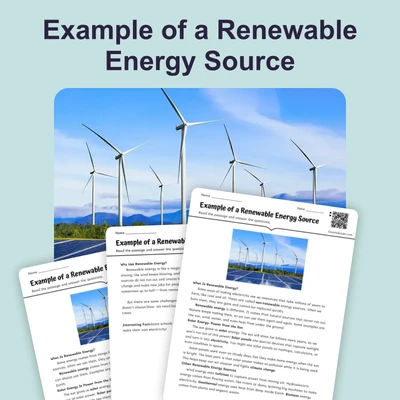
Can you give an example of a renewable energy source?
This passage focuses on solar energy as an example of renewable energy for children. It explains how solar panels captur...
RI.3.1RI.4.14.4-ESS3
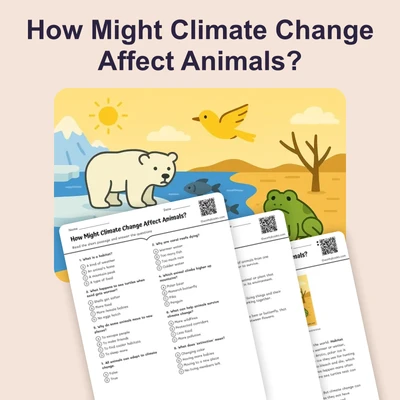
How might climate change affect animals?
This passage explains to children how climate change impacts animal life. It uses specific examples like polar bears los...
RI.3.1RI.4.14.ESS2.D4-ESS3
What can happen to sea levels because of climate change?
This passage explains to children how climate change leads to rising sea levels. It describes two main causes: melting i...
RI.3.1RI.4.14.ESS2.D
How might climate change affect our food supply?
This passage educates children about the potential impacts of climate change on food production. It explains how changin...
RI.3.1RI.4.14.ESS2.D4-ESS3
How can planting trees help fight climate change?
This passage explains to children how planting trees can help combat climate change. It describes trees as 'nature's air...
RI.3.1RI.4.14.ESS2.D4-ESS3
Reduce Your Carbon Footprint: Simple Tips for Home
This passage focuses on reducing carbon footprints at home by conserving electricity. It suggests practical actions like...