The Refrigerated Rail Car
Interactive passage with audio narration, comprehension questions, and printable PDF.
By completing this purchase you agree to our Terms of Use and Privacy Policy. Your subscription renews automatically until you cancel. You can cancel anytime from your account settings. All sales are final and non-refundable. Digital content is available for download in your account immediately upon purchase.
What's included
Part of this bundle

The Refrigerated Rail Car preview and details
About this printable The Refrigerated Rail Car reading passage (Grades 3-5)
Sample passage and quiz from The Refrigerated Rail Car
Reading passage and comprehension quiz preview
Refrigerated Rail Car
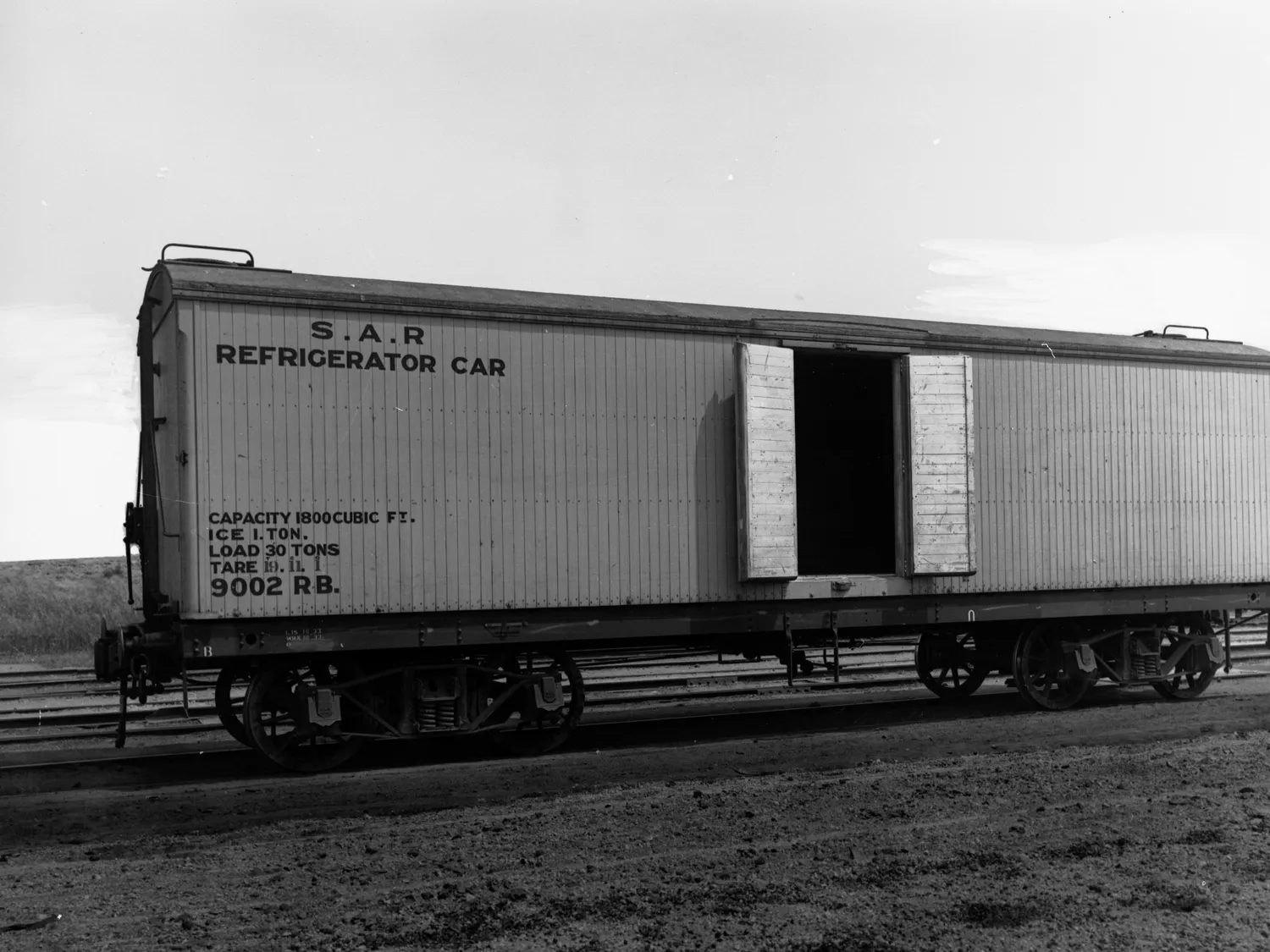
"Refrigerator Car Mile End(GN07013)" by State Government Photographer.
Source: Wikimedia Commons (CC0).
The refrigerated rail car changed American farming forever. Before this invention, farmers in California could not send fresh fruits and vegetables to distant cities. The long train rides let food spoil before it reached stores. This meant people in the East could not enjoy crops like oranges, grapes, or lettuce from the West.
In the late 1800s, engineers built the first refrigerated rail cars. These train cars had thick walls and used large blocks of ice to keep food cold. Workers loaded the ice into special sections at each end of the car. As the train moved, cold air spread through the car and kept the fruits and vegetables fresh.
This new technology was a huge step for transportation. Now, farmers could send their crops across the country. Railroads connected California farms to markets in big cities like Chicago and New York. People in the East could finally enjoy fresh produce from far away. This helped farmers earn more money and made healthy foods available to more families.
Shipping food was not easy. The ice in the cars melted over time, so workers had to stop at "ice stations" to refill the ice. These stops were carefully planned along the railroad. The job of keeping food cold was important, and many workers took pride in making sure nothing spoiled.
The refrigerated rail car changed the agricultural trade. California became famous for its fruits and vegetables. Soon, the state was called "the nation’s garden." Other states began to use refrigerated cars too. The whole country could now trade food quickly and safely.
This invention also helped towns grow along the railroad lines. People built ice plants, warehouses, and packing houses near the tracks. Many new jobs appeared, and local economies grew stronger. All this happened because of the simple idea to keep train cars cold with ice.
The refrigerated rail car is an example of how new ideas can solve big problems. It brought farmers, workers, and families together. It made fresh food available to millions of people.
Interesting Fact: The first successful refrigerated rail car was invented by Gustavus Swift, a Chicago meat packer, in 1878.
Comprehension quiz (8 questions)
1. Who invented the first refrigerated rail car?
2. What did refrigerated rail cars use to stay cold?
3. Which state became known as 'the nation’s garden'?
4. Why did farmers need refrigerated rail cars?
5. What was a problem before this invention?
6. How did ice stations help the rail cars?
7. Refrigerated rail cars made fresh food available everywhere. True or false?
8. What does 'produce' mean in the passage?
Common Core standards for The Refrigerated Rail Car
Explain events, procedures, ideas, or concepts in a historical, scientific, or technical text, including what happened and why, based on specific information in the text.
Determine the meaning of general academic and domain-specific words or phrases in a text relevant to a grade 4 topic or subject area.
Write informative/explanatory texts to examine a topic and convey ideas and information clearly.
Perfect for the way you teach
- Build comprehension skills
- Auto-graded quiz
- Differentiated reading
- Read together at home
- Improve fluency
- Quiet reading time
- Reading curriculum support
- Independent practice
- Track Lexile growth