The Science of Pumpkin Pie — Reading Comprehension
Rate this
Premium Resource
Present
Present in classroom. No work saved
Assign
Classroom with student accounts, Track progress
Quick Play
No student accounts, assign with a link
Grades
3
4
5
Standards
RI.4.3
RI.4.4
W.4.2
PRINT+DIGITAL RESOURCE
This learning resource is available in interactive and printable formats. The interactive worksheet can be played online and assigned to students. The Printable PDF version can be downloaded and printed for completion by hand.
Discover the fascinating history and science behind pumpkin pie, a favorite Thanksgiving dessert. This engaging non-fiction reading passage explores how pumpkin pie became a holiday tradition, the ingredients and science behind baking, and how cultural events like Thanksgiving bring families together. Students will build vocabulary, practice reading comprehension, and learn about the significance of food in American history. The passage is designed to align with standards RI.4.3, RI.4.4, and W.4.2, supporting informational text analysis and writing skills. Included are a glossary, Spanish translation, multiple-choice quiz, writing prompts, and a graphic organizer activity. This resource is perfect for social studies or ELA lessons and includes a read aloud audio and Spanish translation to reach diverse learners. Keywords: pumpkin pie, Thanksgiving, cultural events, history, food science, traditions, reading passage.
CONTENT PREVIEW
Expand content preview
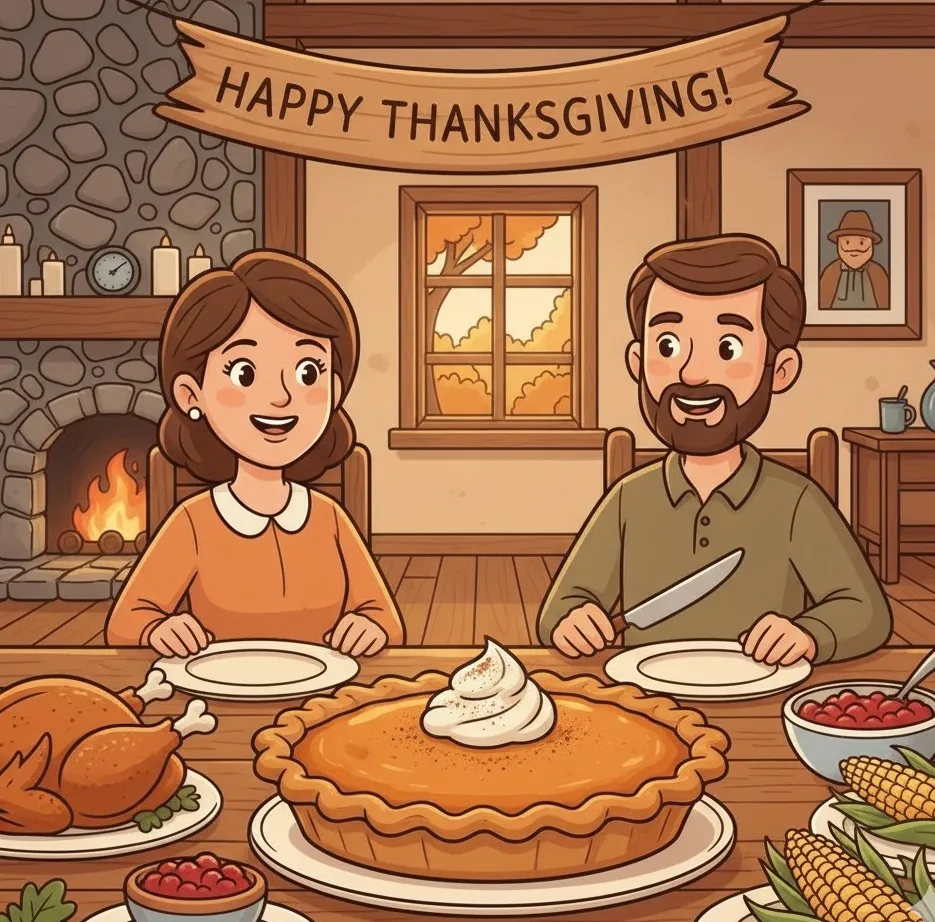
Each year in November, many American families celebrate Thanksgiving with a special meal. One favorite dish is pumpkin pie. Have you ever wondered why pumpkin pie is so popular at Thanksgiving? The answer is a mix of history, tradition, and even science!
Pumpkin pie has a long history in the United States. The first Thanksgiving took place in 1621. Early settlers, called Pilgrims, shared a feast with the Wampanoag people. They did not have pumpkin pie exactly like we do today. But they did have pumpkins and other squash. Sometimes, they mixed pumpkin with honey and baked it in hot ashes. Over time, people began adding spices, sugar, and a crust to make the pie we know now.
Making pumpkin pie is also a science! The main ingredient is cooked pumpkin. It is mixed with eggs, milk, sugar, and spices like cinnamon, nutmeg, and ginger. When you bake the pie, the heat causes the eggs to thicken the filling. This is called coagulation. The crust turns golden and crispy from the oven heat. Every step in the recipe uses science to create the smooth, sweet pie we love.
Thanksgiving is more than just food. It is a time for gratitude. People gather with family and friends to share a meal and give thanks. Pumpkin pie often sits in the center of the table. Sharing pie is a way to celebrate togetherness and remember the past. Different families may use their own recipes or add special ingredients to make their pie unique. Some people even make pumpkin pie with sweet potatoes or other squashes, showing how traditions can change over time.
Today, pumpkin pie is a symbol of Thanksgiving and American culture. It reminds us of both history and the science found in the kitchen. When you enjoy a slice of pumpkin pie, you are tasting the result of many years of tradition and discovery.
Interesting Fact: The largest pumpkin pie ever made weighed over 3,600 pounds and was baked in Ohio in 2010!
When is pumpkin pie often eaten?
ThanksgivingHalloweenEasterNew Year's Day
Who shared the first Thanksgiving feast?
Pilgrims and WampanoagPilgrims and SpanishWampanoag and FrenchOnly Pilgrims
What makes the pie filling thicken?
Eggs and heatMilk and waterSugar and saltFlour and yeast
Why do families use different recipes?
To make pies uniqueTo save moneyTo win a contestBecause of allergies
How does pumpkin pie show togetherness?
It is shared at mealsIt is hard to makeIt is eaten aloneIt has many spices
What does pumpkin pie symbolize?
Thanksgiving and American cultureWinter onlyOnly scienceJust dessert
Pumpkin pie was at the first Thanksgiving.
TrueFalse
What does coagulation mean?
Thickening or becoming solidAdding sugarCooling downCutting ingredients
Perfect For:
👩🏫 Teachers
• Reading comprehension practice
• Auto-graded assessments
• Literacy skill development
👨👩👧👦 Parents
• Reading practice at home
• Comprehension improvement
• Educational reading time
🏠 Homeschoolers
• Reading curriculum support
• Independent reading practice
• Progress monitoring
Reading Features:
📖
Reading Passage
Engaging fiction or nonfiction text
❓
Comprehension Quiz
Auto-graded questions
📊
Instant Feedback
Immediate results and scoring
📄
Printable Version
Download for offline reading
🔊
Read Aloud
Voice-over with word highlighting
Reviews & Ratings
No reviews yet. Be the first to share your experience!
Related Content
Informational Text —Healthy Teeth and Gums
RI.4.10RI.4.3RF.4.4RF.4.4.A
Natural Disasters and Urban flooding
This reading comprehension worksheet focuses on the topic of natural disasters, specifically urban flooding. Following t...
RI.4.44-ESS3ESS3.B4-ESS3-1
The Formation of Fossils
L.4.2.DL.4.6RI.4.4
Climate and Water Cycle
W.4.2.ARI.4.4RI.4.1
Ocean Acidification
Download this reading comprehension worksheet about ocean acidification. The worksheet includes an informational text ab...
RI.4.4
Informational Text —The History of Toothpaste
RI.4.4RI.4.4
Informational Text —Migratory Birds
Engage young minds with this worksheet that delves into the wonders of migratory birds. Learn about their extraordinary ...
RI.4.10RI.4.3RF.4.4RF.4.4.A
Informational Text —All About Dentists
Students read an informational text explaining what dentists do and how they are trained. Aligned to RI.4.3-2
RI.4.10RI.4.3RF.4.4RF.4.4.A
Understanding Climate Action Context Clues
Understanding Climate Action" worksheet, aligned with CCS L.4.4.A and NGSS. This resource introduces key concepts such a...
L.4.4.ARI.4.1RI.4.4
Pollination: A Crucial Ecosystem Service
Explore the vital role of pollination beyond plant reproduction, as it sustains ecosystems by ensuring food security, pr...
RI.4.2RI.4.3RI.4.4RI.5.1
The States of Matter: Solid
Discover the differences between solids, liquids and gases by exploring how their particles are arranged and move. This ...
RI.4.2RI.4.3RI.4.4RI.5.1
What is a Simple Machine
Discover the power of simple machines! This informational text explores how basic tools like levers, pulleys and incline...
RI.4.2RI.4.3RI.4.4RI.5.1
The Role of Pollinators in Nature
Learn about the fascinating world of pollinators and discover their crucial role in the reproductive process of flowerin...
RI.4.2RI.4.3RI.4.4RI.5.1
Seed Dispersal: How Plants Travel
Plants may seem stationary, but their seeds have amazing ways to travel! Explore the fascinating world of seed dispersal...
RI.4.2RI.4.3RI.4.4RI.5.1
Sunspots and Solar Flares
This quiz is designed to test your understanding of the fascinating phenomena of sunspots and solar flares, as described...
RI.4.1RI.4.4RI.5.1ESS1.A
Exploring Space: Rockets and Spacecraft
Space exploration has been one of humanity's greatest achievements, made possible by rockets and spacecraft. Rockets act...
RI.4.4RI.4.2
What is Milky Way
This engaging passage introduces Grade 4-5 students to the Milky Way, our home galaxy. Students will learn that the Milk...
5-ESS1-15-ESS1-2RI.3.1RI.3.4
Andromeda Galaxy
This engaging science passage introduces Grade 4-5 students to the Andromeda Galaxy, our closest large galactic neighbor...
5-ESS1-15-ESS1-2RI.3.1RI.3.4
The Water Cycle
The water cycle describes how water continuously moves through our planet via evaporation, condensation, precipitation, ...
RI.4.4RI.4.2
The Nitrogen Cycle
The nitrogen cycle describes how nitrogen moves through the air, soil, and living organisms. It involves processes like ...