Uncle Tom's Cabin: Influencing Public Opinion — Reading Comprehension
Grades
6
7
8
Standards
D2.HIS.2.3-5
D2.HIS.3.3-5
RI.4.3
RI.4.4
W.4.2
PRINT+DIGITAL RESOURCE
This learning resource is available in interactive and printable formats. The interactive worksheet can be played online and assigned to students. The Printable PDF version can be downloaded and printed for completion by hand.
This engaging history reading passage explores how Uncle Tom's Cabin by Harriet Beecher Stowe influenced public opinion on slavery in the United States. Aligned with C3 Framework and Common Core standards, the text analyzes causes and consequences, incorporates multiple perspectives, and addresses the complexities of the anti-slavery movement. Students encounter a primary source quote, disciplinary vocabulary, and opportunities for critical thinking. Activities include a timeline, reading comprehension quiz, vocabulary, Spanish translation, and writing prompts that encourage students to analyze causation and significance. A graphic organizer supports comparison of Northern and Southern viewpoints. This U.S. history reading passage is ideal for classroom use with read aloud audio and Spanish translation, supporting diverse learners while deepening understanding of a pivotal moment in American history.
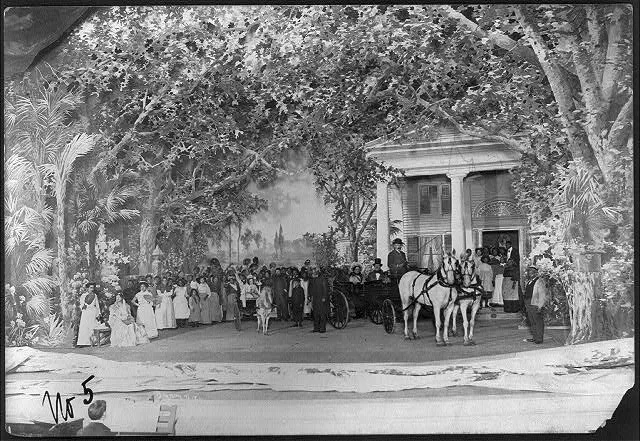
[Scene from stage production of "Uncle Tom's Cabin", 1901]: crowd scene in front of plantation house; Uncle Tom standing between girl in pony cart and couple in carriage. Source: Library of Congress
Uncle Tom's Cabin was published in 1852 and quickly became one of the most influential books in American history. Written by Harriet Beecher Stowe, the novel focused on the experiences of enslaved people in the United States. At the time, the country was deeply divided over the issue of slavery, and debates about its morality and legality were growing more intense. Stowe's book offered a new perspective by bringing the harsh realities of slavery into the homes of ordinary Americans.
The main motivation behind Uncle Tom's Cabin was Stowe's belief that slavery was an inhumane and unjust system. She wanted readers to see enslaved people as individuals with feelings, families, and hopes. Through her storytelling, Stowe used emotional appeals to challenge readers' beliefs and inspire empathy. For example, in one scene, the character Eliza escapes across a frozen river with her child to avoid being separated by a slave trader. This dramatic event highlighted the suffering caused by the institution of slavery.
However, Uncle Tom's Cabin was not just a work of fiction. Stowe included real stories and testimonies from people who had experienced slavery. In a letter she wrote in 1851, Stowe explained her purpose: "I feel now that the time is come when even a woman or a child who can speak a word for freedom and humanity is bound to speak." This quote shows her sense of responsibility to use her voice for social change. It also reflects how literature can be used as a tool for advocacy.
The book had a powerful effect on Northern readers. Many who had previously ignored or tolerated slavery began to view it as a moral crisis. Abolitionists—people who wanted to end slavery—used the novel to support their cause. They organized readings and discussions, helping to spread Stowe's message. On the other hand, many Southerners were deeply offended by the book. They argued that Stowe exaggerated conditions and misrepresented the South. Some even published their own novels in response, trying to show a more positive view of slavery, which reveals the deep conflict in American society.
Despite criticism and controversy, Uncle Tom's Cabin sold over 300,000 copies in its first year in the United States alone. The book was also translated into many languages and read around the world. Its success showed the growing influence of public opinion in shaping political decisions. Some historians believe the novel helped build support for the abolition movement and increased tensions leading up to the Civil War. President Abraham Lincoln is reported to have greeted Stowe by saying, "So you are the little woman who wrote the book that started this great war." Although this story may be exaggerated, it highlights the perceived impact of Stowe's work.
Analyzing Uncle Tom's Cabin requires understanding multiple perspectives. For many in the North, the book was a wake-up call to the cruelty of slavery. For many in the South, it was seen as an unfair attack. The novel's influence came not just from its content, but from the public debates it inspired. Readers and critics alike were forced to confront their own beliefs and the future of the nation.
Uncle Tom's Cabin demonstrates how literature can shape history by influencing public opinion. It did not end slavery by itself, but it played a crucial role in changing how people thought and talked about the issue. The book's legacy reminds us that stories and ideas can be powerful forces for change.
Interesting Fact: When Uncle Tom's Cabin was published, it became the best-selling novel of the 19th century worldwide, second only to the Bible.
Who wrote Uncle Tom's Cabin?
Harriet Beecher StoweFrederick DouglassAbraham LincolnSojourner Truth