What Causes the Sea Level to Rise? — Reading Comprehension
Rate this
Premium Resource
Present
Present in classroom. No work saved
Assign
Classroom with student accounts, Track progress
Quick Play
No student accounts, assign with a link
Grades
3
4
5
6
7
8
PRINT+DIGITAL RESOURCE
This learning resource is available in interactive and printable formats. The interactive worksheet can be played online and assigned to students. The Printable PDF version can be downloaded and printed for completion by hand.
This NGSS-aligned middle school passage explains the major causes of sea level rise, including melting glaciers and thermal expansion of warming oceans. Students will learn how climate change is increasing ocean levels and how human activity, such as damaging coastal ecosystems, can make the problem worse. The passage also introduces key vocabulary like permafrost, storm surge, and ice sheets. It supports Earth and Human Activity standards while helping students connect scientific causes to real-world impacts in coastal cities. Ideal for building climate literacy and critical thinking in science classes.
CONTENT PREVIEW
Expand content preview
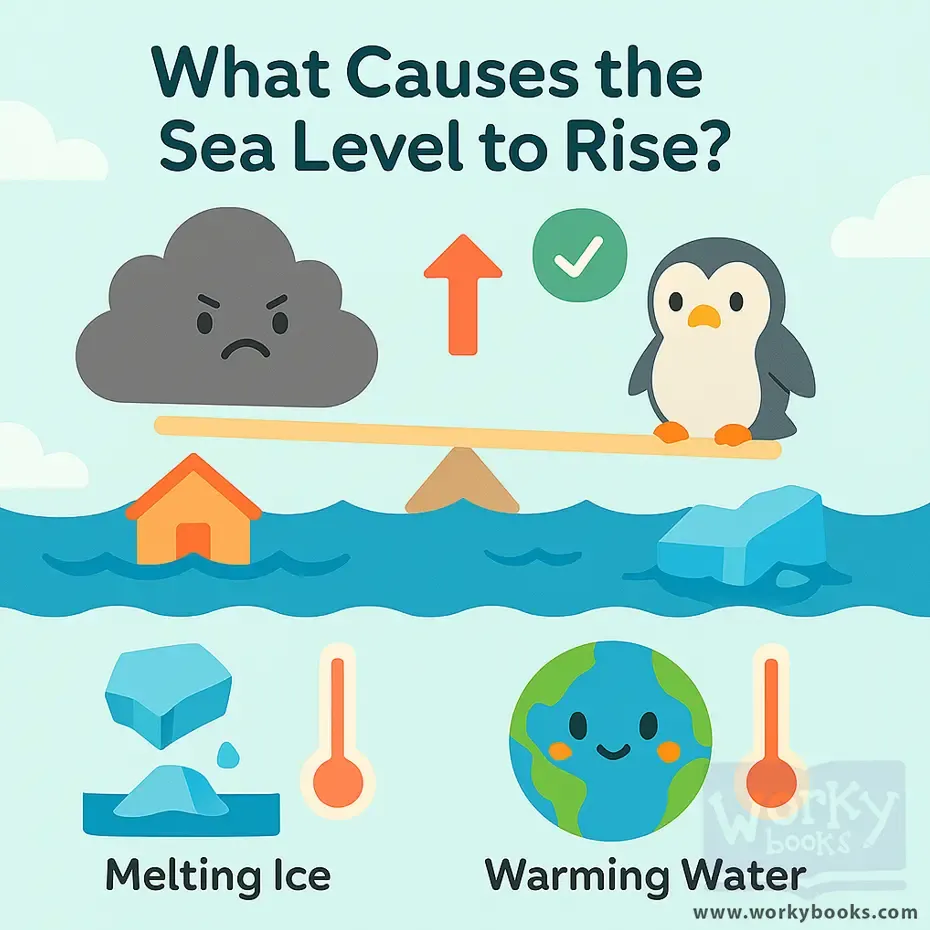
Sea level rise is one of the biggest problems linked to climate change. It means that the average height of the ocean is increasing over time. But what is actually causing the sea level to go up?
There are two major reasons: melting ice and warming water. First, as the Earth gets warmer, glaciers and ice sheets in places like Greenland and Antarctica begin to melt. These huge chunks of ice are made of frozen freshwater. When they melt, they add more water to the ocean, making the sea level rise.
The second cause is thermal expansion. This means that as water heats up, it takes up more space. When ocean water warms, it expands—just like air in a balloon. Even if no extra water is added, warmer water alone can raise the sea level.
Other factors can also add to rising seas. These include melting ice caps, the loss of frozen ground called permafrost, and changes in how water moves through rivers and groundwater. Human actions like cutting down coastal forests and draining wetlands can make the problem worse because they remove natural barriers that help absorb or slow down water.
Sea level rise affects millions of people living in coastal areas. It can lead to stronger storm surges, more flooding, and the loss of land. Understanding the causes of sea level rise helps us find ways to protect communities and reduce the risks in the future.
Fun Fact: Just 1 inch of sea level rise can make high tides and storms much more dangerous for low-lying cities like Miami and New Orleans!
What are the two main causes of sea level rise?
Ocean salt and moonlightRainstorms and wavesMelting ice and warming waterEarthquakes and volcanoes
What happens during thermal expansion?
Ice turns into waterWater turns into iceWarm water takes up more spaceCold air shrinks
What adds more water to the oceans?
Frozen lakesMelting glaciers and ice sheetsSunlight on sandOcean winds
What is permafrost?
A type of treeFrozen soil that is meltingA coastal cityA rainstorm
Why do human actions make sea level rise worse?
They add more cloudsThey reduce natural water barriersThey clean riversThey freeze water
What areas are most at risk from sea level rise?
Mountain topsDesertsCoastal citiesForests
What is the main idea of the passage?
The oceans are getting colderSea level rise is caused by warming and meltingStorms are the only problemWater is disappearing
If the ocean continues to warm, what will likely happen?
Sea level will go downGlaciers will growSea level will rise moreIce will freeze faster
Perfect For:
👩🏫 Teachers
• Reading comprehension practice
• Auto-graded assessments
• Literacy skill development
👨👩👧👦 Parents
• Reading practice at home
• Comprehension improvement
• Educational reading time
🏠 Homeschoolers
• Reading curriculum support
• Independent reading practice
• Progress monitoring
Reading Features:
📖
Reading Passage
Engaging fiction or nonfiction text
❓
Comprehension Quiz
Auto-graded questions
📊
Instant Feedback
Immediate results and scoring
📄
Printable Version
Download for offline reading
🔊
Read Aloud
Voice-over with word highlighting
Reviews & Ratings
No reviews yet. Be the first to share your experience!
Related Content
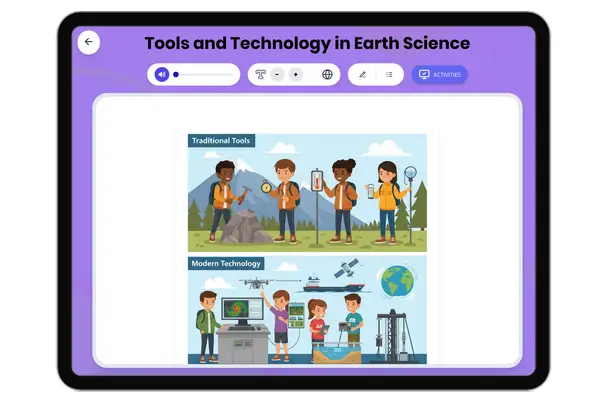
Tools and Technology in Earth Science
This middle school science reading passage explores the wide range of tools and technologies used in Earth science, from...
MS-ESS2-2MS-ESS3-2MS-ETS1-1MS-PS4-3
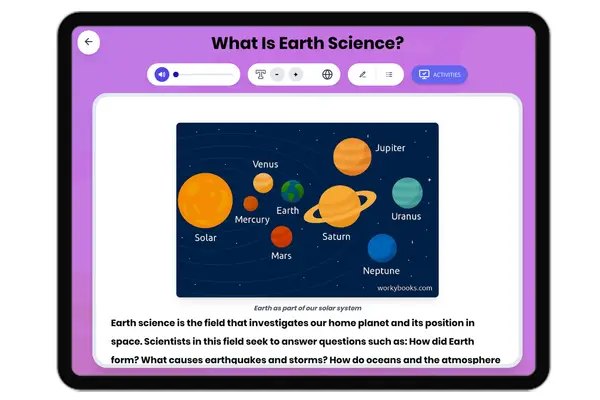
What Is Earth Science?
This engaging middle school science passage introduces students to the field of Earth science, aligning with NGSS standa...
MS-ESS1MS-ESS2MS-ESS3SEP
Interpreting visual information on Layers of the Earth
This informational text on the layers of the earth is a great way to practice using images during reading. Students will...
RI.1.7RI.10RF.1.4.ARF.1.4
What Is Space Weather and How Does It Affect the Earth?
This NGSS-aligned science passage for middle school explains what space weather is and how it affects Earth. Students le...
MS-ESS2-2
What Do Humans Need? Informational text
This worksheet contains an informational text on what humans need to survive. Following the passage is a short comprehen...
RL.3.1
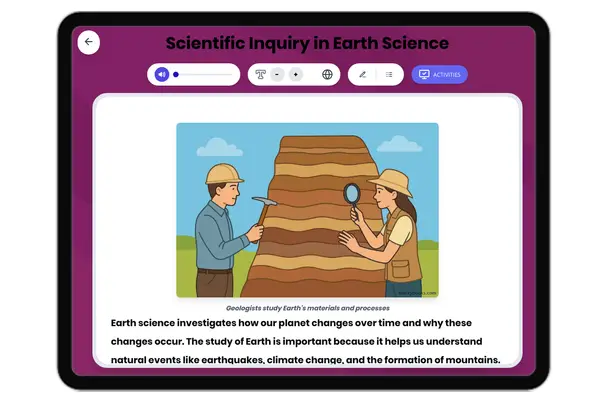
Scientific Inquiry in Earth Science
This passage explores scientific inquiry in Earth science for grades 6-8, aligned with NGSS standards MS-ESS1-4, MS-ESS2...
MS-ESS1-4MS-ESS2-1MS-ESS3-5SEP
What's The Main Idea?
These short science texts are a great way to practice main idea. Students will read the paragraphs and then choose the m...
RI.2.6
Reading for Main Details—Birds
This informational text on birds is a great way to practice main idea. Students will read the passage, then give the mai...
RI.2.6RI.2.8
Koi Fish—What’s the Main Idea?
This informational text on koi fish is a great introduction to teaching main idea. Students will be asked, in multiple c...
RI.3.2RF.3.4RI.3.1
Spider—Main Idea
This informational text on spiders is a great introduction to teaching main idea. Students will be asked, in multiple ch...
RI.3.2RF.3.4RI.3.1RI.2.6
Reading for Main Details—Beavers Teeth
This informational text on beavers is a great way to practice main idea. Students will read the passage, then give the m...
RI.2.6RI.2.10
Reading for Main Details—Veternarians
Practie summarizing paragraphs with this fun informational text on veternarians! Students will give the main idea of eac...
RI.2.2RI.2.10
Main Idea and Supporting Details in Informational Text
RI.3.1RI.3.2RI.3.8
Earth: Our Home in Space
This engaging Grade 4-5 science passage, aligned to NGSS, introduces students to Earth's special place in the solar syst...
The Diameter of Earth
This science reading passage explains the diameter of Earth, describing it as about 12,742 kilometers or 7,918 miles acr...
5-PS2-1
Main Idea and Details Graphic Organizer
This graphic organizer on main idea includes space to write the main idea and three supporting details.
RI.1.2RI.2.2RI.3.2RI.4.2
Bats and Butterflies—Informational Text
This informational text on bats and butterflies is a great way to practice spotting similarities between texts. Students...
RI.K.3
Main Idea and Suporting Details Graphic Organizer
This graphic organizer on main idea includes space to write the main idea and three supporting details.
RI.1.2RI.2.2RI.3.2RI.4.2
My Planet Earth
In this passage, students explore Earth as their home planet. They learn that Earth is made of land, water, and air, and...
FL.SS.2.G.1.1SS.2.G.1.3
Penguins— Main Purpose
This informational text on penguins with comprehension questions is a great way to practice reading fluency and main ide...