This learning resource is available in interactive and printable formats. The interactive worksheet can be played online and assigned to students. The Printable PDF version can be downloaded and printed for completion by hand.
This reading passage introduces students to the role of a climatologist, a scientist who studies long-term climate patterns. The text explains how climatologists collect data from natural sources like ice cores and tree rings, and use computer models to understand and predict climate change. It compares their work to meteorologists and shows how their research supports decision-making in farming, city planning, and climate policy. The passage aligns with Earth and Human Activity standards and helps students understand the importance of climate science and how it connects to global change.
CONTENT PREVIEW
Expand content preview
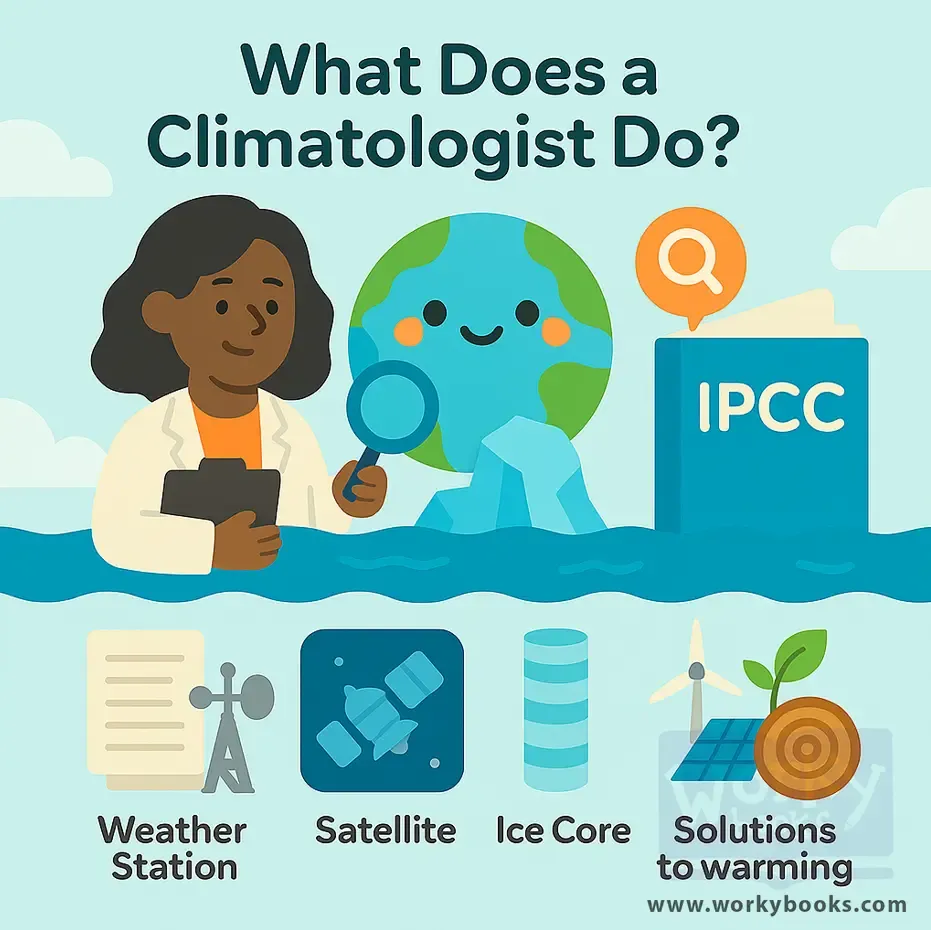
A climatologist is a scientist who studies climate, which is the long-term pattern of weather in a region. Unlike meteorologists, who focus on short-term weather forecasts like rain or snow, climatologists look at long-term trends in temperature, rainfall, wind, and other weather elements over many years—even centuries.
Climatologists collect data from many sources, including weather stations, satellites, ice cores, tree rings, and ocean records. They use this data to understand how Earth’s climate has changed in the past and how it might change in the future. Their work is important for studying climate change, global warming, and extreme weather events.
Some climatologists use computer models to simulate Earth’s future climate under different conditions. For example, they might predict how much the Earth could warm if greenhouse gas emissions continue to rise. Others study how climate affects people, plants, and animals in different parts of the world.
Climatologists help governments, farmers, builders, and emergency planners make smart choices. Their research can help protect cities from floods, manage water supplies, or plan where to grow crops. They also play a big role in writing scientific reports, such as those by the IPCC (Intergovernmental Panel on Climate Change).
Climatologists work in universities, research centers, government agencies, and environmental organizations. Some even travel to remote places like Antarctica to gather climate data firsthand.
Fun Fact: Climatologists can study past climates from thousands of years ago by examining ice layers in glaciers—each layer holds clues about ancient air and temperature!
What does a climatologist study?
The ocean floorDay-to-day weatherLong-term climate patternsEarthquakes and volcanoes
What tool might a climatologist use to study future climate?
TelescopeWeather balloonComputer modelMicroscope
What is the difference between a climatologist and a meteorologist?
Meteorologists study the oceansClimatologists work with animalsMeteorologists focus on short-term weather, climatologists on long-term trendsClimatologists make weather forecasts for TV
Where might climatologists find data from the past?
Comic booksIce cores and tree ringsSolar panelsNews articles
Which organization uses climatologists’ work in its reports?
World Health OrganizationNASAUnited NationsIPCC
Why is the work of climatologists important?
They can stop stormsThey help predict fashion trendsThey help people prepare for climate changes and risksThey grow food
What is the main idea of this passage?
Climatologists study ancient citiesClimatologists fix computersClimatologists study climate patterns to understand changeClimatologists report the daily weather
If a farmer wants to know how changing rainfall might affect crops, who can help?
A geologistA meteorologistA climatologistA paleontologist
Perfect For:
👩🏫 Teachers
• Reading comprehension practice
• Auto-graded assessments
• Literacy skill development
👨👩👧👦 Parents
• Reading practice at home
• Comprehension improvement
• Educational reading time
🏠 Homeschoolers
• Reading curriculum support
• Independent reading practice
• Progress monitoring
Reading Features:
📖
Reading Passage
Engaging fiction or nonfiction text
❓
Comprehension Quiz
Auto-graded questions
📊
Instant Feedback
Immediate results and scoring
📄
Printable Version
Download for offline reading
🔊
Read Aloud
Voice-over with word highlighting
Reviews & Ratings
No reviews yet. Be the first to share your experience!
Related Content
Tools and Technology in Earth Science
This middle school science reading passage explores the wide range of tools and technologies used in Earth science, from...
MS-ESS2-2MS-ESS3-2MS-ETS1-1MS-PS4-3
What Is Earth Science?
This engaging middle school science passage introduces students to the field of Earth science, aligning with NGSS standa...
MS-ESS1MS-ESS2MS-ESS3SEP
Interpreting visual information on Layers of the Earth
This informational text on the layers of the earth is a great way to practice using images during reading. Students will...
RI.1.7RI.10RF.1.4.ARF.1.4
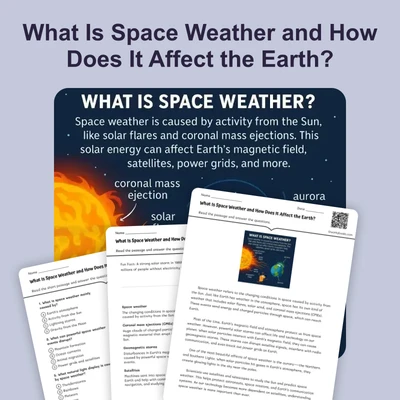
What Is Space Weather and How Does It Affect the Earth?
This NGSS-aligned science passage for middle school explains what space weather is and how it affects Earth. Students le...
MS-ESS2-2
What Do Humans Need? Informational text
This worksheet contains an informational text on what humans need to survive. Following the passage is a short comprehen...
RL.3.1
Scientific Inquiry in Earth Science
This passage explores scientific inquiry in Earth science for grades 6-8, aligned with NGSS standards MS-ESS1-4, MS-ESS2...
MS-ESS1-4MS-ESS2-1MS-ESS3-5SEP
What's The Main Idea?
These short science texts are a great way to practice main idea. Students will read the paragraphs and then choose the m...
RI.2.6
Reading for Main Details—Birds
This informational text on birds is a great way to practice main idea. Students will read the passage, then give the mai...
RI.2.6RI.2.8
Koi Fish—What’s the Main Idea?
This informational text on koi fish is a great introduction to teaching main idea. Students will be asked, in multiple c...
RI.3.2RF.3.4RI.3.1
Spider—Main Idea
This informational text on spiders is a great introduction to teaching main idea. Students will be asked, in multiple ch...
RI.3.2RF.3.4RI.3.1RI.2.6
Reading for Main Details—Beavers Teeth
This informational text on beavers is a great way to practice main idea. Students will read the passage, then give the m...
RI.2.6RI.2.10
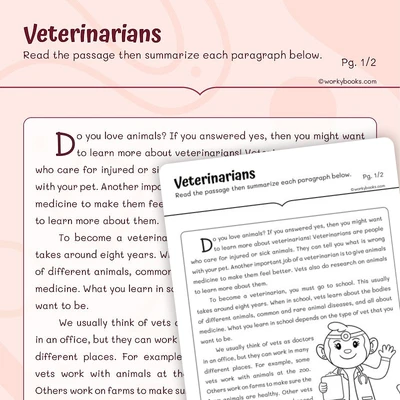
Reading for Main Details—Veternarians
Practie summarizing paragraphs with this fun informational text on veternarians! Students will give the main idea of eac...
RI.2.2RI.2.10
Main Idea and Supporting Details in Informational Text
RI.3.1RI.3.2RI.3.8
Earth: Our Home in Space
This engaging Grade 4-5 science passage, aligned to NGSS, introduces students to Earth's special place in the solar syst...
The Diameter of Earth
This science reading passage explains the diameter of Earth, describing it as about 12,742 kilometers or 7,918 miles acr...
5-PS2-1
Main Idea and Details Graphic Organizer
This graphic organizer on main idea includes space to write the main idea and three supporting details.
RI.1.2RI.2.2RI.3.2RI.4.2
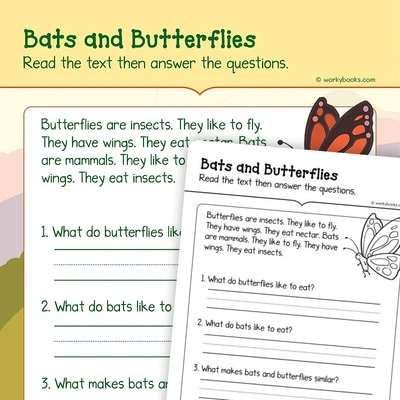
Bats and Butterflies—Informational Text
This informational text on bats and butterflies is a great way to practice spotting similarities between texts. Students...
RI.K.3
Main Idea and Suporting Details Graphic Organizer
This graphic organizer on main idea includes space to write the main idea and three supporting details.
RI.1.2RI.2.2RI.3.2RI.4.2
My Planet Earth
In this passage, students explore Earth as their home planet. They learn that Earth is made of land, water, and air, and...
FL.SS.2.G.1.1SS.2.G.1.3
Penguins— Main Purpose
This informational text on penguins with comprehension questions is a great way to practice reading fluency and main ide...