This learning resource is available in interactive and printable formats. The interactive worksheet can be played online and assigned to students. The Printable PDF version can be downloaded and printed for completion by hand.
This NGSS-aligned middle school science passage introduces students to biomass energy, a renewable energy source made from plant and animal materials. The passage explains how biomass stores solar energy through photosynthesis and how it is used to generate electricity and fuel. Students will learn about the processes involved, including burning biomass to create steam for turbines and converting crops into biofuels. The reading highlights the benefits, such as reducing waste and greenhouse gas emissions, as well as challenges like pollution and deforestation. Aligned with NGSS standard MS-ESS3-1, the passage promotes science literacy, real-world applications, and environmental awareness.
CONTENT PREVIEW
Expand content preview
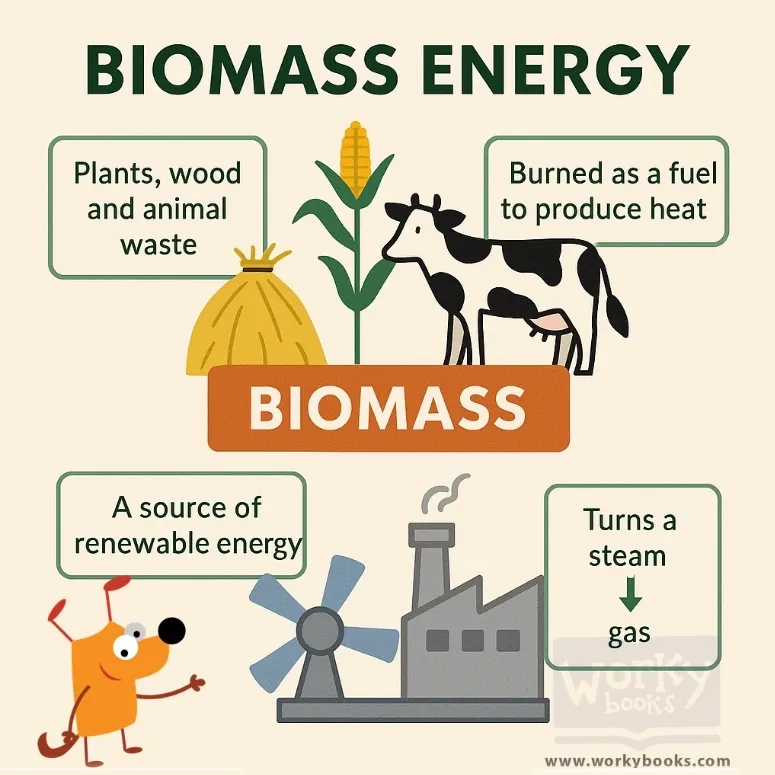
Biomass energy is a type of renewable energy that comes from things that were once alive. This includes plants, wood, and even animal waste. People have used biomass for thousands of years—like burning wood for heat or cooking. Today, we also use biomass to make electricity and fuel.
Biomass contains stored energy from the sun. When plants grow, they absorb sunlight and turn it into energy through a process called photosynthesis. When we burn these plants or use their natural materials, that energy is released as heat. This heat can boil water to make steam, which turns a turbine connected to a generator to create electricity.
Another way we use biomass is by turning plant materials like corn or sugarcane into biofuels. These can be used to power cars and trucks. Unlike gasoline, which comes from fossil fuels, biofuels come from things we can grow again and again.
Biomass energy is helpful because it reduces waste. For example, farmers can use leftover crops or manure to produce energy instead of throwing it away. It also helps reduce the need for fossil fuels and lowers greenhouse gas emissions, which are harmful to the environment.
However, there are challenges. If too many trees are cut down for fuel, it can harm forests and wildlife. Also, burning some types of biomass can still release pollution into the air. That’s why it’s important to manage biomass energy carefully and find clean ways to use it.
Biomass energy is one more way we can use natural resources to meet our energy needs while protecting the Earth for future generations.
Fun Fact: Some cities turn trash into electricity using special biomass power plants!
What is biomass energy made from?
Wind and sunlightLiving or once-living thingsRocks and mineralsWater and steam
What process do plants use to store energy?
DigestionDecompositionPhotosynthesisEvaporation
What is a biofuel?
A type of coalFuel made from cropsEnergy from windA gas used in cooking
How is electricity made using biomass?
By burning gasolineWith solar panelsBy boiling water to make steamWith batteries
What is one benefit of biomass energy?
It never produces heatIt reduces wasteIt runs out quicklyIt uses a lot of oil
What is one challenge of using biomass?
It’s not renewableIt only works in spaceIt can harm forestsIt creates sunlight
What is the main idea of the passage?
Fossil fuels are better than plantsBiomass energy is a clean and useful resourceTrash cannot be used againPlants do not store energy
A farm has leftover corn stalks and manure. What could they do with it based on the passage?
Throw it awayMake plasticBurn it for energySend it to space
Perfect For:
👩🏫 Teachers
• Reading comprehension practice
• Auto-graded assessments
• Literacy skill development
👨👩👧👦 Parents
• Reading practice at home
• Comprehension improvement
• Educational reading time
🏠 Homeschoolers
• Reading curriculum support
• Independent reading practice
• Progress monitoring
Reading Features:
📖
Reading Passage
Engaging fiction or nonfiction text
❓
Comprehension Quiz
Auto-graded questions
📊
Instant Feedback
Immediate results and scoring
📄
Printable Version
Download for offline reading
🔊
Read Aloud
Voice-over with word highlighting
Reviews & Ratings
No reviews yet. Be the first to share your experience!
Related Content
Tools and Technology in Earth Science
This middle school science reading passage explores the wide range of tools and technologies used in Earth science, from...
MS-ESS2-2MS-ESS3-2MS-ETS1-1MS-PS4-3
What Is Earth Science?
This engaging middle school science passage introduces students to the field of Earth science, aligning with NGSS standa...
MS-ESS1MS-ESS2MS-ESS3SEP
Interpreting visual information on Layers of the Earth
This informational text on the layers of the earth is a great way to practice using images during reading. Students will...
RI.1.7RI.10RF.1.4.ARF.1.4
What Is Space Weather and How Does It Affect the Earth?
This NGSS-aligned science passage for middle school explains what space weather is and how it affects Earth. Students le...
MS-ESS2-2
What Do Humans Need? Informational text
This worksheet contains an informational text on what humans need to survive. Following the passage is a short comprehen...
RL.3.1
Scientific Inquiry in Earth Science
This passage explores scientific inquiry in Earth science for grades 6-8, aligned with NGSS standards MS-ESS1-4, MS-ESS2...
MS-ESS1-4MS-ESS2-1MS-ESS3-5SEP
What's The Main Idea?
These short science texts are a great way to practice main idea. Students will read the paragraphs and then choose the m...
RI.2.6
Reading for Main Details—Birds
This informational text on birds is a great way to practice main idea. Students will read the passage, then give the mai...
RI.2.6RI.2.8
Koi Fish—What’s the Main Idea?
This informational text on koi fish is a great introduction to teaching main idea. Students will be asked, in multiple c...
RI.3.2RF.3.4RI.3.1
Spider—Main Idea
This informational text on spiders is a great introduction to teaching main idea. Students will be asked, in multiple ch...
RI.3.2RF.3.4RI.3.1RI.2.6
Reading for Main Details—Beavers Teeth
This informational text on beavers is a great way to practice main idea. Students will read the passage, then give the m...
RI.2.6RI.2.10
Reading for Main Details—Veternarians
Practie summarizing paragraphs with this fun informational text on veternarians! Students will give the main idea of eac...
RI.2.2RI.2.10
Main Idea and Supporting Details in Informational Text
RI.3.1RI.3.2RI.3.8
Earth: Our Home in Space
This engaging Grade 4-5 science passage, aligned to NGSS, introduces students to Earth's special place in the solar syst...
The Diameter of Earth
This science reading passage explains the diameter of Earth, describing it as about 12,742 kilometers or 7,918 miles acr...
5-PS2-1
Main Idea and Details Graphic Organizer
This graphic organizer on main idea includes space to write the main idea and three supporting details.
RI.1.2RI.2.2RI.3.2RI.4.2
Bats and Butterflies—Informational Text
This informational text on bats and butterflies is a great way to practice spotting similarities between texts. Students...
RI.K.3
Main Idea and Suporting Details Graphic Organizer
This graphic organizer on main idea includes space to write the main idea and three supporting details.
RI.1.2RI.2.2RI.3.2RI.4.2
My Planet Earth
In this passage, students explore Earth as their home planet. They learn that Earth is made of land, water, and air, and...
FL.SS.2.G.1.1SS.2.G.1.3
Penguins— Main Purpose
This informational text on penguins with comprehension questions is a great way to practice reading fluency and main ide...