This learning resource is available in interactive and printable formats. The interactive worksheet can be played online and assigned to students. The Printable PDF version can be downloaded and printed for completion by hand.
This reading passage introduces middle school students to geothermal energy, a type of renewable energy that comes from the heat inside the Earth. The passage explains how steam from underground is used to turn turbines and generate electricity. It also describes geothermal heating systems used to warm homes. Students will learn how this clean and reliable energy source works, its benefits such as low emissions and consistent availability, and its challenges like limited locations and high setup costs. The passage supports NGSS standard MS-ESS3-1 and promotes environmental science literacy. Real-world examples and key vocabulary help students connect scientific ideas to sustainable solutions.
CONTENT PREVIEW
Expand content preview
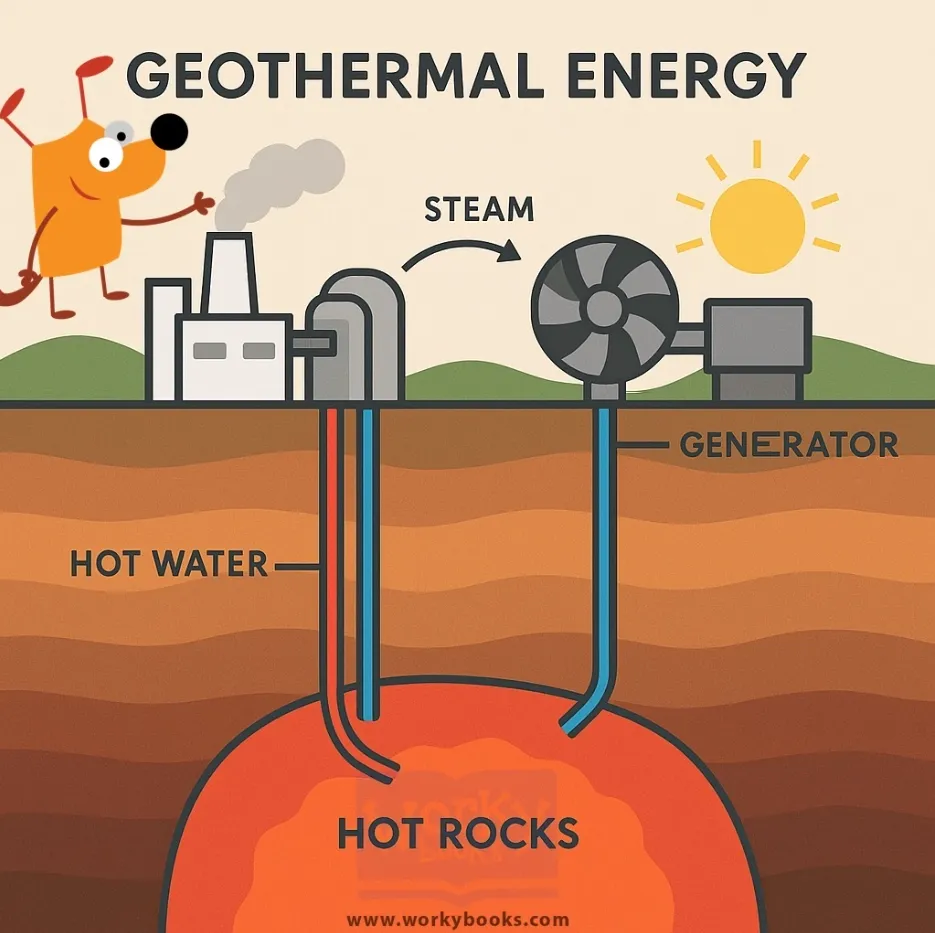
Geothermal energy is heat that comes from deep inside the Earth. The word "geothermal" comes from two Greek words: geo, meaning Earth, and therme, meaning heat. This form of renewable energy is used to produce electricity and to heat buildings. It is clean, reliable, and always available, no matter the weather.
Beneath the Earth’s surface, the rocks and water are very hot. I
n some places, this heat is close enough to the surface that we can use it. Power plants drill deep wells to bring up hot water or steam from underground. This steam turns a turbine, which is connected to a generator. As the turbine spins, the generator makes electricity.
Geothermal energy is very efficient and produces little to no greenhouse gases. It is already used in countries like Iceland, where volcanic activity makes underground heat easy to reach. In the United States, places like California and Nevada also use geothermal energy to power homes and businesses.
One way geothermal energy is used is in geothermal heating systems. These systems send water through pipes underground, where the Earth stays at a steady temperature. The heated water is then used to warm homes during cold months.
Geothermal energy has many benefits, but it also has some challenges. It can only be used in places where underground heat is close to the surface, and drilling deep wells can be expensive. Still, scientists and engineers are finding new ways to make it more affordable and widely available.
Geothermal energy shows how Earth’s natural heat can be used to help people live more sustainably. It’s another example of how renewable resources can help protect our planet.
Fun Fact: Some hot springs and geysers, like Old Faithful in Yellowstone National Park, are natural examples of geothermal energy in action!
What does “geothermal” mean?
Earth airGround waterEarth heatRock steam
Where does geothermal energy come from?
The oceanInside the EarthThe sunThe sky
What turns the turbine in a geothermal plant?
Cold airElectricitySteamSunlight
What is a generator used for?
To cool waterTo store heatTo create electricityTo dig holes
What is one advantage of geothermal energy?
It uses gasolineIt creates smokeIt works in rain or shineIt is made from coal
What is one challenge of using geothermal energy?
It only works with solar panelsIt is not renewableIt can only be used in certain areasIt makes a lot of pollution
What is the main idea of the passage?
Volcanoes are dangerousGeothermal energy is clean and usefulSteam is bad for machinesHot springs are fun to visit
A town near a volcano wants clean energy. What should they consider using?
Coal powerWind turbinesGeothermal energyNatural gas
Perfect For:
👩🏫 Teachers
• Reading comprehension practice
• Auto-graded assessments
• Literacy skill development
👨👩👧👦 Parents
• Reading practice at home
• Comprehension improvement
• Educational reading time
🏠 Homeschoolers
• Reading curriculum support
• Independent reading practice
• Progress monitoring
Reading Features:
📖
Reading Passage
Engaging fiction or nonfiction text
❓
Comprehension Quiz
Auto-graded questions
📊
Instant Feedback
Immediate results and scoring
📄
Printable Version
Download for offline reading
🔊
Read Aloud
Voice-over with word highlighting
Reviews & Ratings
No reviews yet. Be the first to share your experience!
Related Content
Tools and Technology in Earth Science
This middle school science reading passage explores the wide range of tools and technologies used in Earth science, from...
MS-ESS2-2MS-ESS3-2MS-ETS1-1MS-PS4-3
What Is Earth Science?
This engaging middle school science passage introduces students to the field of Earth science, aligning with NGSS standa...
MS-ESS1MS-ESS2MS-ESS3SEP
Interpreting visual information on Layers of the Earth
This informational text on the layers of the earth is a great way to practice using images during reading. Students will...
RI.1.7RI.10RF.1.4.ARF.1.4
What Is Space Weather and How Does It Affect the Earth?
This NGSS-aligned science passage for middle school explains what space weather is and how it affects Earth. Students le...
MS-ESS2-2
What Do Humans Need? Informational text
This worksheet contains an informational text on what humans need to survive. Following the passage is a short comprehen...
RL.3.1
Scientific Inquiry in Earth Science
This passage explores scientific inquiry in Earth science for grades 6-8, aligned with NGSS standards MS-ESS1-4, MS-ESS2...
MS-ESS1-4MS-ESS2-1MS-ESS3-5SEP
What's The Main Idea?
These short science texts are a great way to practice main idea. Students will read the paragraphs and then choose the m...
RI.2.6
Reading for Main Details—Birds
This informational text on birds is a great way to practice main idea. Students will read the passage, then give the mai...
RI.2.6RI.2.8
Koi Fish—What’s the Main Idea?
This informational text on koi fish is a great introduction to teaching main idea. Students will be asked, in multiple c...
RI.3.2RF.3.4RI.3.1
Spider—Main Idea
This informational text on spiders is a great introduction to teaching main idea. Students will be asked, in multiple ch...
RI.3.2RF.3.4RI.3.1RI.2.6
Reading for Main Details—Beavers Teeth
This informational text on beavers is a great way to practice main idea. Students will read the passage, then give the m...
RI.2.6RI.2.10
Reading for Main Details—Veternarians
Practie summarizing paragraphs with this fun informational text on veternarians! Students will give the main idea of eac...
RI.2.2RI.2.10
Main Idea and Supporting Details in Informational Text
RI.3.1RI.3.2RI.3.8
Earth: Our Home in Space
This engaging Grade 4-5 science passage, aligned to NGSS, introduces students to Earth's special place in the solar syst...
The Diameter of Earth
This science reading passage explains the diameter of Earth, describing it as about 12,742 kilometers or 7,918 miles acr...
5-PS2-1
Main Idea and Details Graphic Organizer
This graphic organizer on main idea includes space to write the main idea and three supporting details.
RI.1.2RI.2.2RI.3.2RI.4.2
Bats and Butterflies—Informational Text
This informational text on bats and butterflies is a great way to practice spotting similarities between texts. Students...
RI.K.3
Main Idea and Suporting Details Graphic Organizer
This graphic organizer on main idea includes space to write the main idea and three supporting details.
RI.1.2RI.2.2RI.3.2RI.4.2
My Planet Earth
In this passage, students explore Earth as their home planet. They learn that Earth is made of land, water, and air, and...
FL.SS.2.G.1.1SS.2.G.1.3
Penguins— Main Purpose
This informational text on penguins with comprehension questions is a great way to practice reading fluency and main ide...