Why Were the Colonists Angry
Interactive passage with audio narration, comprehension questions, and printable PDF.
By completing this purchase you agree to our Terms of Use and Privacy Policy. Your subscription renews automatically until you cancel. You can cancel anytime from your account settings. All sales are final and non-refundable. Digital content is available for download in your account immediately upon purchase.
What's included
Part of this bundle

Why Were the Colonists Angry preview and details
About this printable Why Were the Colonists Angry reading passage (Grades 3-5)
Sample passage and quiz from Why Were the Colonists Angry
Reading passage and comprehension quiz preview
Why Were the Colonists Angry
The American colonies were once proud to be part of the British Empire. British laws protected the colonists, and trade with Britain helped towns grow. But after the French and Indian War ended in 1763, the relationship between Britain and the colonies began to change.
Britain was in debt from fighting wars. To raise money, the British Parliament created new taxes for the colonies. The Stamp Act of 1765 required colonists to buy stamps for newspapers, legal papers, and even playing cards. This was the first time Britain taxed colonists directly. Many colonists thought the tax was unfair because they had no voice in Parliament. They called this "taxation without representation."
Angry colonists began to protest. Merchants refused to buy British goods. Groups like the Sons of Liberty organized demonstrations. Some colonists even destroyed stamps and intimidated tax collectors. These acts of protest showed that colonists were willing to stand up for their rights.
Britain responded with even more rules, including the Townshend Acts, which taxed goods like tea and glass. The colonists grew more frustrated. In 1770, tensions exploded in Boston when British soldiers fired on a crowd, killing five colonists. This event became known as the Boston Massacre.
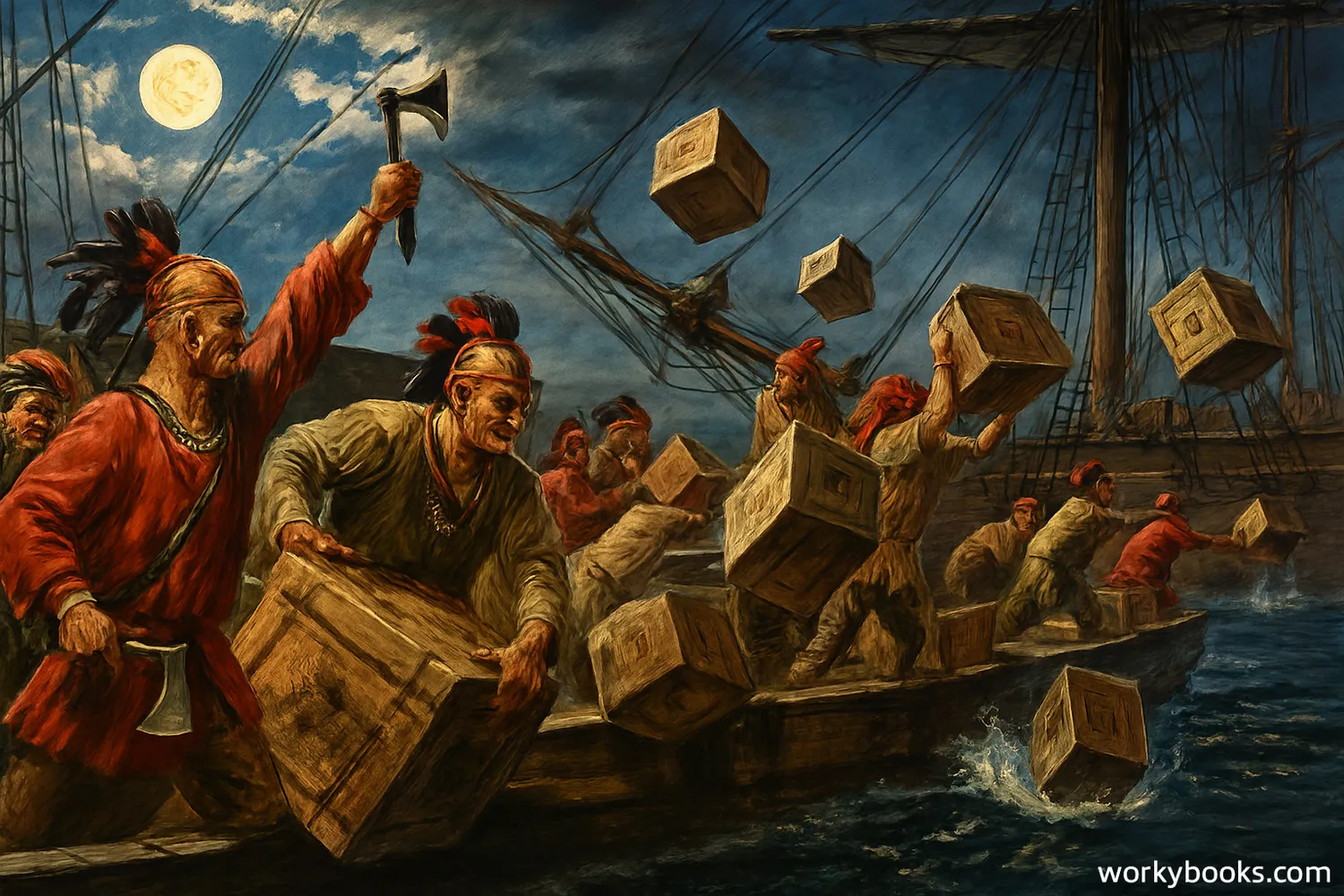
In 1773, Parliament passed the Tea Act, giving one British company a monopoly on tea sales. Colonists saw this as another unfair rule. A group of colonists disguised as Native Americans boarded British ships and dumped the tea into Boston Harbor. This protest was called the Boston Tea Party.
Britain punished Boston with harsh laws called the Intolerable Acts. The colonists were now more united than ever. They started to meet and plan ways to resist British control. These growing tensions led the colonies to question their loyalty to Britain. Soon, the call for independence would ring across America.
Interesting Fact: Some colonists wrote secret letters to each other, called "committees of correspondence," to share news and organize protests across the colonies.
Comprehension quiz (8 questions)
1. What did the Stamp Act tax?
2. Who organized protests against British taxes?
3. What happened in the Boston Massacre?
4. Why did Britain need more money?
5. What was the effect of the Tea Act?
6. What was one way colonists protested?
7. The Intolerable Acts were easy for Boston. True or false?
8. What does 'taxation without representation' mean?
Common Core standards for Why Were the Colonists Angry
Refer to details and examples in a text when explaining what the text says explicitly and when drawing inferences from the text.
Perfect for the way you teach
- Build comprehension skills
- Auto-graded quiz
- Differentiated reading
- Read together at home
- Improve fluency
- Quiet reading time
- Reading curriculum support
- Independent practice
- Track Lexile growth