Women and Children in the Revolutionary War — Reading Comprehension
Rate this|
1
Premium Resource
Present
Present in classroom. No work saved
Assign
Classroom with student accounts, Track progress
Quick Play
No student accounts, assign with a link
Grades
3
4
5
Standards
HSS 5.5.4
RI.4.1
PRINT+DIGITAL RESOURCE
This learning resource is available in interactive and printable formats. The interactive worksheet can be played online and assigned to students. The Printable PDF version can be downloaded and printed for completion by hand.
This engaging history reading passage explores the vital roles women and children played during the American Revolutionary War. While many men fought as soldiers, women managed farms and businesses, made clothing and supplies for the army, and even acted as spies or joined in battles. Children also helped by working at home and supporting the war effort. This passage highlights key events and figures from the home front, showing how these brave individuals kept America running when times were hard. The passage aligns with HSS 5.5.4 and RI.4.1 standards, supporting foundational social studies and literacy skills. Activities include a reading comprehension quiz, writing prompts, Spanish translation, glossary, timeline, and graphic organizers. This resource also provides a read aloud audio option, making it accessible to all learners. Perfect for exploring themes of bravery, unity, and problem-solving in U.S. history.
CONTENT PREVIEW
Expand content preview
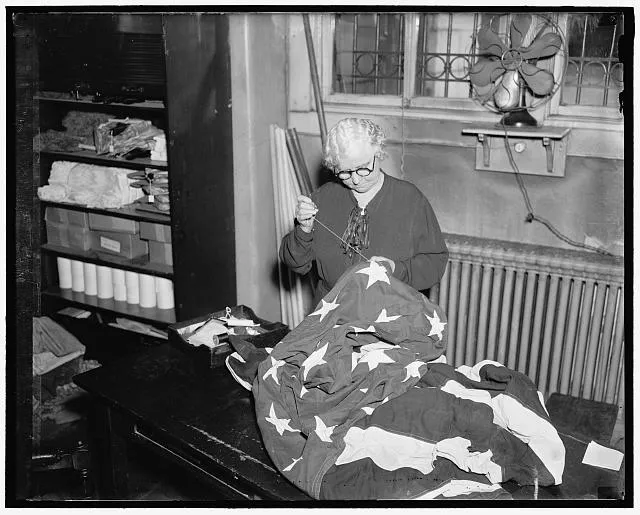
"Betsy Ross of the Capitol." Washington, D.C. Mrs. Georgeieanna Higgins. Official title is Seamstress to the United States Senate, but for years has been called the "Betsy Ross of the Capitol." She is responsible for keeping the flag that flies over the Senate wing of the Capitol in proper flapping order. This is no mean job since the flag flies night and day when the Senate is in session, which means a terrific beating from the elements, an average of 12 Flags is used each session Source: Library of Congress - Harris & Ewing
The American Revolutionary War was a time of great change for the people of the colonies. While men left home to fight as soldiers, women and children were left to handle many important jobs. Their hard work and sacrifice helped keep America strong during this difficult time.
Women often ran the family farm or business when the men went to war. They planted crops, cared for animals, and made sure the family survived. This was hard work, but it was necessary. Without their efforts, many families would not have had enough food to eat.
Women also made supplies for the soldiers. They spun thread, wove cloth, and sewed uniforms. Some melted down metal to make bullets and fixed broken equipment. These tasks helped keep the army supplied. In many towns, groups of women worked together. They formed sewing circles to make clothes and blankets for the soldiers. Their teamwork kept soldiers warm and ready to fight.
Children had important roles, too. Many children worked on the farm or in the home. They helped plant and harvest crops, carried water, and took care of younger brothers and sisters. Some even helped their mothers make supplies for the army. Older children sometimes delivered secret messages to help the American cause. Their courage was important to the success of the war.
Some women became spies for the Patriots. They listened to British plans and carried news to the American army. Others, like Molly Pitcher, even fought in battles. Molly Pitcher brought water to soldiers at the Battle of Monmouth. When her husband was hurt, she took his place loading the cannon. Her bravery showed that women could be heroes, too.
Life on the home front was not easy. Families often went months without hearing from loved ones. Food was sometimes scarce. But the hard work and contributions of women and children helped the colonies survive. Their efforts kept farms running and soldiers supplied. Without them, the war might have been lost.
The sacrifices of women and children during the Revolutionary War helped shape the nation. Their courage and teamwork made a difference. Today, we remember their important roles in America’s fight for freedom.
Interesting Fact: Some women disguised themselves as men so they could secretly join the army and fight for freedom.
What did women do on farms?
Planted crops and cared for animalsFought only in battlesTraveled with soldiersBuilt new cities
Who was Molly Pitcher?
A woman who helped in battleA famous British generalA leader of childrenA store owner
What did children sometimes do to help?
Delivered secret messagesLed armiesTraveled to EnglandMade metal swords
Why did women form sewing circles?
To make clothes for soldiersTo learn how to cookTo read booksTo play games
How did women act as spies?
Listened to British plansFought with swordsBecame teachersBuilt houses
What did the hard work of women and children lead to?
Helped America win freedomStopped all battlesKept families apartEnded the war quickly
Women always wore uniforms in battle.
TrueFalse
What does 'home front' mean?
Where people work and live during warA type of military campA famous battleA kind of building
Perfect For:
👩🏫 Teachers
• Reading comprehension practice
• Auto-graded assessments
• Literacy skill development
👨👩👧👦 Parents
• Reading practice at home
• Comprehension improvement
• Educational reading time
🏠 Homeschoolers
• Reading curriculum support
• Independent reading practice
• Progress monitoring
Reading Features:
📖
Reading Passage
Engaging fiction or nonfiction text
❓
Comprehension Quiz
Auto-graded questions
📊
Instant Feedback
Immediate results and scoring
📄
Printable Version
Download for offline reading
🔊
Read Aloud
Voice-over with word highlighting
Reviews & Ratings
No reviews yet. Be the first to share your experience!
Related Content
African Americans in the Revolutionary War
This engaging U.S. history reading passage explores the vital role of African Americans during the American Revolution. ...
HSS 5.5.4RI.4.4
Snorkeling & Scuba Diving
RI.2.2RI.2.6RI.2.10RF.2.4.A
Polar Bears and Climate
This informational text on polar bears is a great way to practice reading comprehension. Students will read the passage ...
RI.4.1W.4.72-LS4-1RF.4.4
Climate and Water Cycle
W.4.2.ARI.4.4RI.4.1
Earthquakes and Infrastructure
Get this worksheet about the effects of earthquakes on infrastructure. The worksheet includes an informational passage t...
W.4.7RI.4.1ESS3B
The Rubik's Cube
RI.2.2RI.2.6RI.2.10RF.2.4.A
Understanding Climate Action Context Clues
Understanding Climate Action" worksheet, aligned with CCS L.4.4.A and NGSS. This resource introduces key concepts such a...
L.4.4.ARI.4.1RI.4.4
Earthquake and buildings
Download this worksheet on the impact of earthquakes on buildings. The informational text included in this worksheet is ...
RI.4.1ESS3BW.4.7RF.4.4
How Do Scientists Study Past Climates?
Students will analyze how tools like ice cores and tree rings provide scientific evidence about Earth’s historical clima...
RI.4.1RI.4.2RI.4.3.4.RI.4.74-ESS2-2
Earth Day and Types of Pollution
Earth Day is coming! Get ready to learn about pollution and test your knowledge. Click for a free reading passage and qu...
RI.4.1RI.4.2ESS3.CESS3.A
Earth Day and Green Initiatives
Celebrate Earth Day with this fun and educational activity! Students will begin by reading a short passage that explains...
RI.4.1RI.4.2ESS3.CESS3.A
Sunspots and Solar Flares
This quiz is designed to test your understanding of the fascinating phenomena of sunspots and solar flares, as described...
RI.4.1RI.4.4RI.5.1ESS1.A
How might climate change affect animals?
This passage explains to children how climate change impacts animal life. It uses specific examples like polar bears los...
RI.3.1RI.4.14.ESS2.D4-ESS3
What can happen to sea levels because of climate change?
This passage explains to children how climate change leads to rising sea levels. It describes two main causes: melting i...
RI.3.1RI.4.14.ESS2.D
Reduce Your Carbon Footprint: Simple Tips for Home
This passage focuses on reducing carbon footprints at home by conserving electricity. It suggests practical actions like...
RI.3.1RI.4.14.ESS2.D4-ESS3
How using less plastic helps the environment?
This passage explains to children how reducing plastic use helps the environment. It outlines the life cycle of plastic,...
RI.3.1RI.4.14.ESS2.D4-ESS3
How Kids Can Help Fight Climate Change?
This passage introduces the concept of 'reduce, reuse, recycle' as a way for children to help fight climate change. It e...
RI.3.1RI.4.14.ESS2.D4-ESS3
How is Climate Different from Weather?
This passage distinguishes climate from weather for young readers. It defines climate as the usual weather patterns over...
RI.3.1RI.4.14.ESS2.D
Can you give an example of a renewable energy source?
This passage focuses on solar energy as an example of renewable energy for children. It explains how solar panels captur...