Environmental impact of hydraulic mining. — Reading Comprehension
Rate this
Premium Resource
Present
Present in classroom. No work saved
Assign
Classroom with student accounts, Track progress
Quick Play
No student accounts, assign with a link
Grades
3
4
5
Standards
D2.HIS.2.3-5
D2.HIS.4.3-5
RI.4.3
RI.4.4
W.4.2
PRINT+DIGITAL RESOURCE
This learning resource is available in interactive and printable formats. The interactive worksheet can be played online and assigned to students. The Printable PDF version can be downloaded and printed for completion by hand.
This reading passage explores the environmental impact of hydraulic mining during the California Gold Rush era, an important part of U.S. Westward Expansion history. Students will read about how miners used powerful water jets to wash away hillsides in search of gold, the effects on rivers and towns, and how communities responded to these challenges. The passage emphasizes cause and effect, bravery, unity, and problem-solving, aligning with C3 and Common Core standards. Activities include recall and comprehension questions, a writing activity, a glossary, a timeline, and a graphic organizer to help students understand key historical concepts. Additional features include a Spanish translation and read aloud audio, making this a versatile resource for supporting literacy and history learning. Students will build foundational understanding of environmental change, Gold Rush technology, and the lasting effects of human actions on the land.
CONTENT PREVIEW
Expand content preview
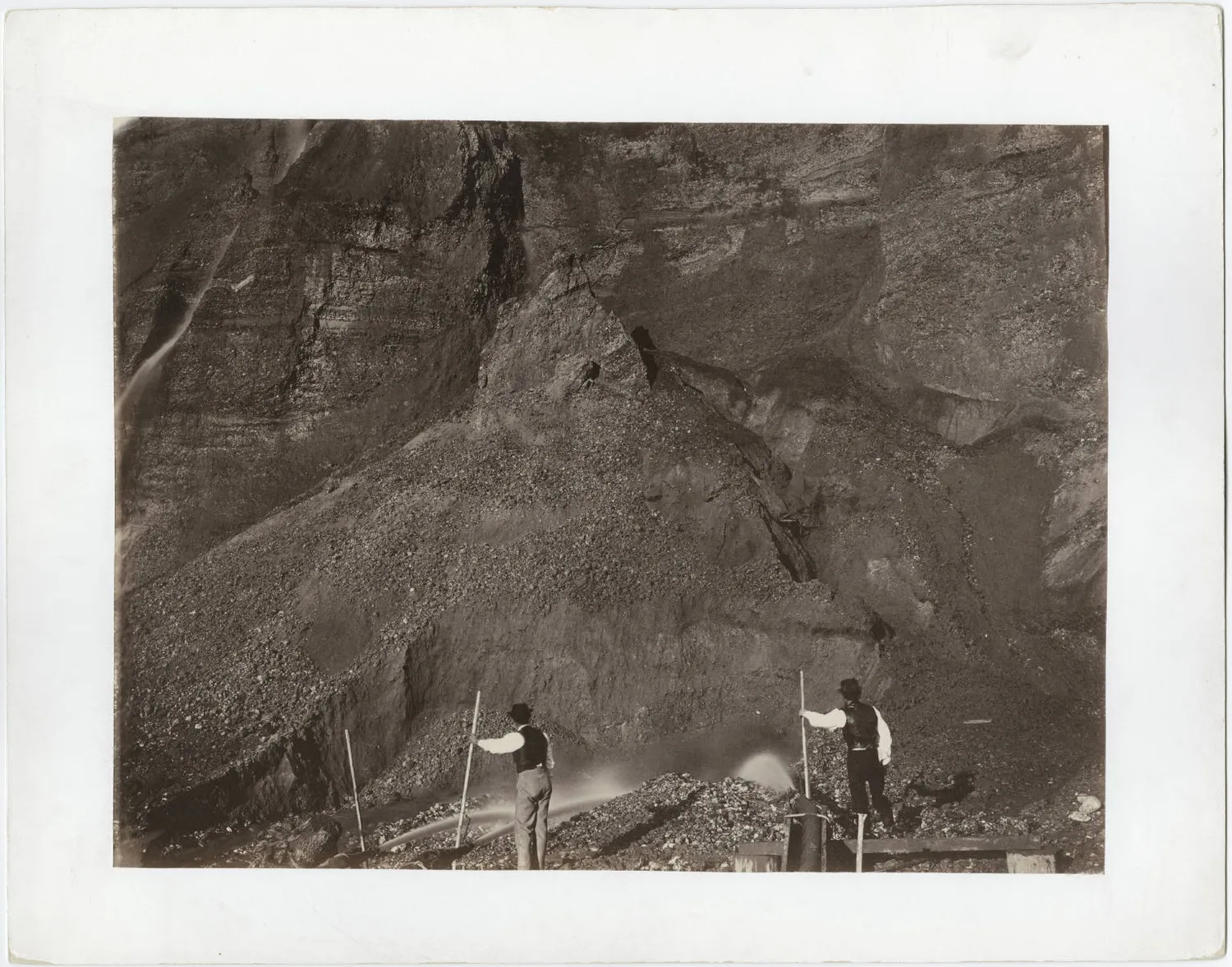
"Hydraulic gold mining California by Andrew J Russell" by Andrew J. Russell / Wikimedia Commons (Public domain).
Hydraulic mining was a powerful technique used during the California Gold Rush. In the mid-1800s, thousands of people traveled west to find gold. Miners wanted a faster way to get gold from the hills. They invented a method using water cannons called "monitors." These machines sprayed strong streams of water at hillsides. The rushing water broke apart dirt and rocks to uncover gold hidden inside.
At first, hydraulic mining seemed like a miracle. It helped miners find gold quickly. But soon, people saw the negative side. The water washed huge amounts of soil, sand, and gravel into nearby rivers. This was called erosion. The rivers filled up with thick, muddy sediment. As a result, the water overflowed and flooded the land downstream. Farms were buried under mud, and many animals lost their homes.
Farmers and townspeople noticed the environmental damage caused by mining. Farmland was ruined and could not grow crops. Fish and other river creatures died. People began to argue about what was more important: finding gold or protecting the land. This problem led to court cases. In 1884, a major court decision stopped most hydraulic mining in California. The judge said it caused too much harm to the land and to people living downstream.
California became the first state to ban a mining technique for environmental reasons. This was a big step in protecting nature in the United States. It showed people that natural resources must be used carefully and that the land needs to be protected for future generations. Today, the story of hydraulic mining reminds us how human actions can change the environment, and why it is important to make good choices for the earth.
Interesting Fact: After the ban, many rivers in California slowly recovered, but some areas are still shaped by the damage caused by hydraulic mining more than 100 years ago.
What was hydraulic mining used for?
To find gold quicklyTo build farmsTo plant treesTo catch fish
What was sprayed at hillsides?
Water cannonsFire hosesSand bagsWind machines
In which state was hydraulic mining banned?
CaliforniaTexasNew YorkFlorida
Why did farmers dislike hydraulic mining?
It ruined farmlandIt brought more rainIt helped crops growIt created more rivers
What happened to rivers after mining?
Filled with sedimentDried upBecame cleanerFlowed faster
What did the judge decide in 1884?
To stop most hydraulic miningTo allow more miningTo plant more treesTo build more farms
Hydraulic mining caused environmental damage. True or false?
TrueFalse
What does erosion mean?
Wearing away of soilPlanting new cropsBuilding housesCatching gold
Perfect For:
👩🏫 Teachers
• Reading comprehension practice
• Auto-graded assessments
• Literacy skill development
👨👩👧👦 Parents
• Reading practice at home
• Comprehension improvement
• Educational reading time
🏠 Homeschoolers
• Reading curriculum support
• Independent reading practice
• Progress monitoring
Reading Features:
📖
Reading Passage
Engaging fiction or nonfiction text
❓
Comprehension Quiz
Auto-graded questions
📊
Instant Feedback
Immediate results and scoring
📄
Printable Version
Download for offline reading
🔊
Read Aloud
Voice-over with word highlighting
Reviews & Ratings
No reviews yet. Be the first to share your experience!
Related Content
Informational Text —Healthy Teeth and Gums
RI.4.10RI.4.3RF.4.4RF.4.4.A
Informational Text —Migratory Birds
Engage young minds with this worksheet that delves into the wonders of migratory birds. Learn about their extraordinary ...
RI.4.10RI.4.3RF.4.4RF.4.4.A
Natural Disasters and Urban flooding
This reading comprehension worksheet focuses on the topic of natural disasters, specifically urban flooding. Following t...
RI.4.44-ESS3ESS3.B4-ESS3-1
The Formation of Fossils
L.4.2.DL.4.6RI.4.4
Climate and Water Cycle
W.4.2.ARI.4.4RI.4.1
Ocean Acidification
Download this reading comprehension worksheet about ocean acidification. The worksheet includes an informational text ab...
RI.4.4
Understanding Climate Action Context Clues
Understanding Climate Action" worksheet, aligned with CCS L.4.4.A and NGSS. This resource introduces key concepts such a...
L.4.4.ARI.4.1RI.4.4
Informational Text —The History of Toothpaste
RI.4.4RI.4.4
Informational Text —All About Dentists
Students read an informational text explaining what dentists do and how they are trained. Aligned to RI.4.3-2
RI.4.10RI.4.3RF.4.4RF.4.4.A
The Role of Pollinators in Nature
Learn about the fascinating world of pollinators and discover their crucial role in the reproductive process of flowerin...
RI.4.2RI.4.3RI.4.4RI.5.1
Pollination: A Crucial Ecosystem Service
Explore the vital role of pollination beyond plant reproduction, as it sustains ecosystems by ensuring food security, pr...
RI.4.2RI.4.3RI.4.4RI.5.1
Seed Dispersal: How Plants Travel
Plants may seem stationary, but their seeds have amazing ways to travel! Explore the fascinating world of seed dispersal...
RI.4.2RI.4.3RI.4.4RI.5.1
The States of Matter: Solid
Discover the differences between solids, liquids and gases by exploring how their particles are arranged and move. This ...
RI.4.2RI.4.3RI.4.4RI.5.1
What is a Simple Machine
Discover the power of simple machines! This informational text explores how basic tools like levers, pulleys and incline...
RI.4.2RI.4.3RI.4.4RI.5.1
The Life Cycle of a Salmon
Salmon have a remarkable life cycle that takes them from rivers to the ocean and back again. They hatch as alevin, grow ...
RI.3.1RI.4.4RI.4.2
Journey of a Sea Turtle
Sea turtles lay their eggs on beaches, and their hatchlings begin a dangerous journey to the ocean. After growing in the...
RI.3.1RI.4.4RI.4.2
Heroes for Freedom: Harriet Tubman
Harriet Tubman, born into slavery, became a hero who risked her life to lead others to freedom through the Underground R...
RI.3.1RI.4.4RI.4.2RI.5.2
Heroes for Freedom: Fannie Lou Hamer
Fannie Lou Hamer overcame racial segregation and poverty to become a powerful voice for civil rights. Her fight for voti...
RI.3.1RI.4.4RI.4.2RI.5.2
Sports: Lionel Messi
Lionel Messi, known for his unparalleled dribbling and passing, has broken records, won multiple FIFA Ballon d'Or awards...
RI.3.1RI.4.4RI.4.2RI.5.2
Natural Disaster: Droughts
Droughts are long periods with insufficient water, leading to crop failures and water shortages. Conserving water and pl...