Farms, Factories, and Growing Cities
Interactive passage with audio narration, comprehension questions, and printable PDF.
By completing this purchase you agree to our Terms of Use and Privacy Policy. Your subscription renews automatically until you cancel. You can cancel anytime from your account settings. All sales are final and non-refundable. Digital content is available for download in your account immediately upon purchase.
What's included
Part of this bundle

Farms, Factories, and Growing Cities preview and details
About this printable Farms, Factories, and Growing Cities reading passage (Grades 3-5)
Sample passage and quiz from Farms, Factories, and Growing Cities
Reading passage and comprehension quiz preview
California Industrial Growth
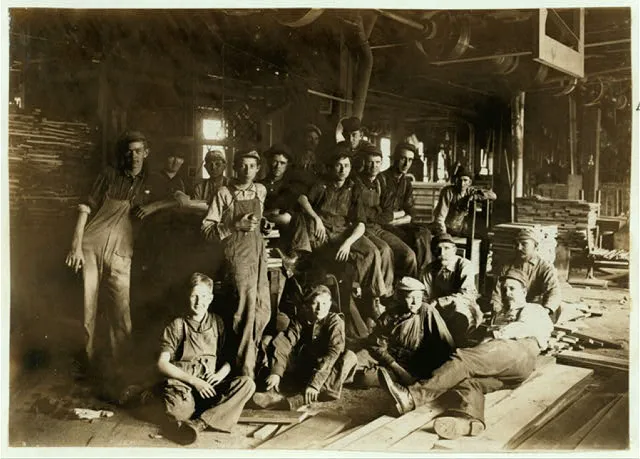
Source: Library of Congress - Hine, Lewis Wickes, 1874-1940
During the late 1800s and early 1900s, California changed from a land of gold mines to a center of industry. At first, most people in California worked in mining or farming. But new discoveries and inventions soon changed the state.
One of the biggest changes came with the discovery of oil. In 1892, oil was found near Los Angeles. Soon, oil wells popped up across Southern California. Oil was very important because it powered cars, trains, and factories. The oil industry brought many new jobs. Towns grew quickly near the oil fields. The city of Los Angeles became a major center for industry because of its oil.
Another change was the spread of manufacturing. Factories began to make goods like food, clothing, and cars. The workers in these factories helped California grow. The state built more shipping ports, such as the Port of Los Angeles and the Port of San Francisco. These ports made it easier to send goods to other states and countries. Ships carried California products all over the world. This made business stronger and brought more people to California.
As time went on, California became home to new industries. In the 1940s, airplane building, called aerospace, became important. Factories made planes for World War II. After the war, companies kept building planes, rockets, and satellites. Later, in places like Silicon Valley, people started technology companies. These companies made computers and new inventions that changed the world.
California’s growth happened because of many people working together. People from different countries came to work in oil fields, factories, and ports. Their hard work helped California become one of the richest and most important states in the United States.
The growth of industry brought new opportunities but also new challenges. Many people moved to cities to find better jobs. Cities grew quickly, and people built new homes, roads, and schools. California’s cities became famous for their size and energy.
Today, California is known for its strong industries, from oil and manufacturing to aerospace and technology. The state’s history shows how new ideas and hard work can change a place over time.
Interesting Fact: In 1923, the Signal Hill oil field in Southern California produced more oil in one year than any other field in the world!
Comprehension quiz (8 questions)
1. When was oil found near Los Angeles?
2. What did manufacturing bring to California?
3. Which city became a center for industry?
4. Why were shipping ports important?
5. How did people from different countries help California?
6. What effect did oil discovery have?
7. California is famous for its industries. True or false?
8. What does 'aerospace' mean?
Common Core standards for Farms, Factories, and Growing Cities
Explain events, procedures, ideas, or concepts in a historical, scientific, or technical text, including what happened and why, based on specific information in the text.
Determine the meaning of general academic and domain-specific words or phrases in a text relevant to a grade 4 topic or subject area.
Write informative/explanatory texts to examine a topic and convey ideas and information clearly.
Perfect for the way you teach
- Build comprehension skills
- Auto-graded quiz
- Differentiated reading
- Read together at home
- Improve fluency
- Quiet reading time
- Reading curriculum support
- Independent practice
- Track Lexile growth