How Animals Get Energy from Food
Interactive passage with audio narration, comprehension questions, and printable PDF.
By completing this purchase you agree to our Terms of Use and Privacy Policy. Your subscription renews automatically until you cancel. You can cancel anytime from your account settings. All sales are final and non-refundable. Digital content is available for download in your account immediately upon purchase.
What's included
How Animals Get Energy from Food preview and details
About this printable How Animals Get Energy from Food science reading passage, NGSS-aligned (Grades 4-6)
Sample passage and quiz from How Animals Get Energy from Food
Reading passage and comprehension quiz preview
Why Animals Need Energy
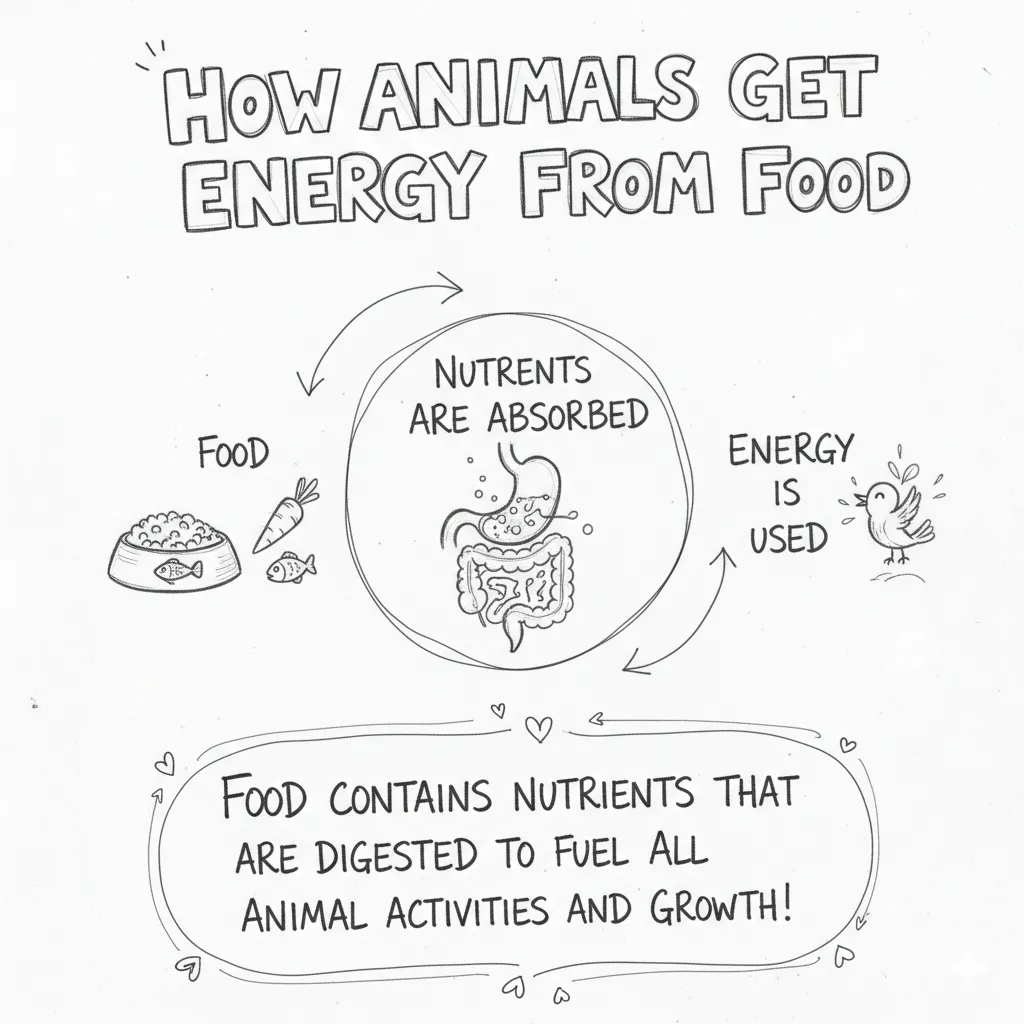
Animals need energy to live, and they get this energy by eating food. Energy is the ability to do work or cause change in the body. Unlike plants, which can make their own food using sunlight, animals must eat other living things to survive. When animals eat, their bodies break down the food and release the energy stored inside it. This energy powers everything an animal does throughout its life.
Animals use the energy from food in four main ways. First, they use energy for growth. Growth means getting bigger and building new cells to replace old ones. A young rabbit needs energy from food to grow into an adult rabbit. Even adult animals need energy to replace worn-out cells in their skin, blood, and organs. Second, animals use energy for movement. Every time a bird flaps its wings, a fish swims, or you run across the playground, muscles are using energy from food. Movement includes all the ways animals change position or location.
Third, animals use energy for repair, which means fixing damage to the body. When you scrape your knee, your body uses energy to heal the wound and grow new skin. Your body also uses energy to fight off germs that might make you sick. Repair is the process of fixing or healing parts of the body that are damaged or worn out. Fourth, animals use energy to maintain their body temperature. Many animals, including humans, dogs, and birds, need to keep their bodies at a certain temperature to stay healthy. When it is cold outside, your body uses energy from food to keep you warm, just like a furnace burns fuel to heat a house.
All four uses of energy—growth, movement, repair, and maintaining temperature—happen at the same time. Right now, your body is using energy from your last meal to pump your heart, breathe, think, and keep you at the right temperature. Without a steady supply of food energy, animals cannot perform these essential life functions. That is why all animals, from the tiniest ant to the largest elephant, must eat regularly to survive and thrive.
Interesting Fact: A hummingbird's heart beats up to 1,200 times per minute, which requires so much energy that the bird must eat about half its body weight in nectar every single day!
Comprehension quiz (8 questions)
1. Where do animals get their energy?
2. What does growth mean for animals?
3. How many main ways do animals use energy?
4. Why does your body use energy when cold?
5. What happens when you scrape your knee?
6. Which uses energy: pumping heart or breathing?
7. Animals can make their own food like plants.
8. What does the word 'repair' mean?
Perfect for the way you teach
- Build comprehension skills
- Auto-graded quiz
- Differentiated reading
- Read together at home
- Improve fluency
- Quiet reading time
- Reading curriculum support
- Independent practice
- Track Lexile growth