How Different Animals Get Energy from Food
Interactive passage with audio narration, comprehension questions, and printable PDF.
By completing this purchase you agree to our Terms of Use and Privacy Policy. Your subscription renews automatically until you cancel. You can cancel anytime from your account settings. All sales are final and non-refundable. Digital content is available for download in your account immediately upon purchase.
What's included
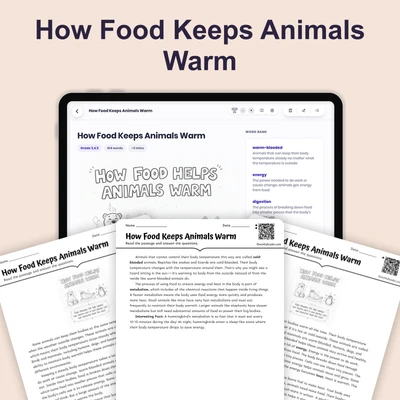
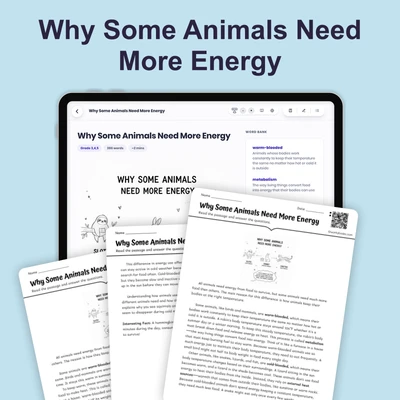
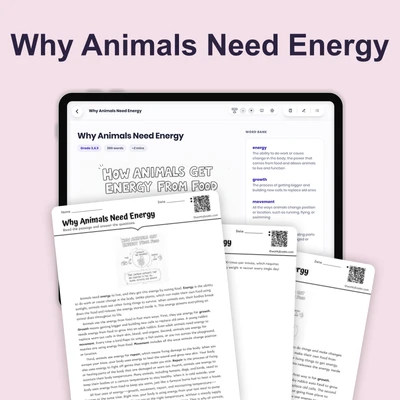
How Different Animals Get Energy from Food preview and details
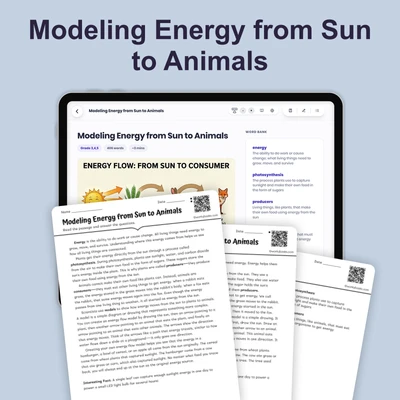
About this printable How Different Animals Get Energy from Food science reading passage, NGSS-aligned (Grades 4-6)
Sample passage and quiz from How Different Animals Get Energy from Food
Reading passage and comprehension quiz preview
How Different Animals Get Energy from Food
All animals need food to survive, but different animals eat different things. Scientists classify animals into groups based on what they eat. Animals that eat other living things are called consumers because they consume, or eat, their food. Understanding the types of consumers helps scientists learn how energy moves through an ecosystem.
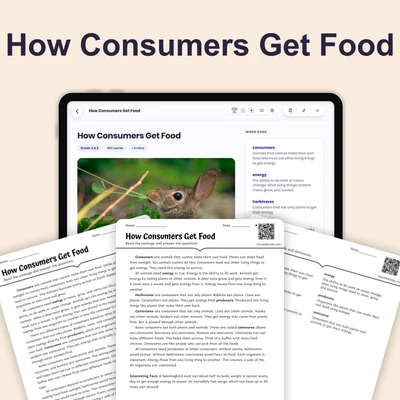
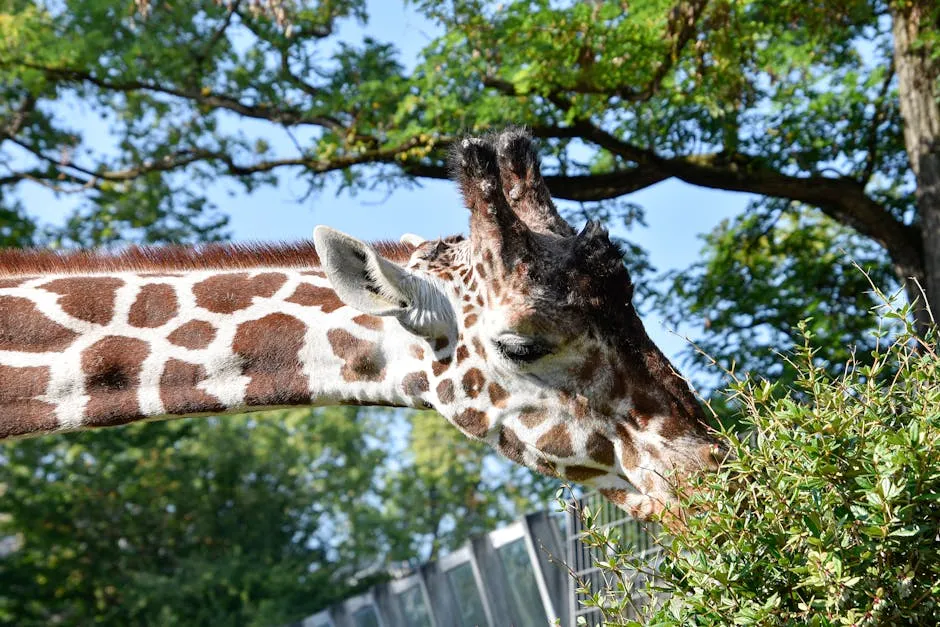
The first type of consumer is a herbivore. Herbivores are animals that eat only plants. A rabbit munching on grass and clover is a herbivore. So are deer that eat leaves and twigs, and caterpillars that chew on plant leaves. Herbivores have special teeth and digestive systems that help them break down tough plant material. They get all their energy directly from plants.
The second type of consumer is a carnivore. Carnivores are animals that eat other animals. A lion hunting zebras on the African savanna is a carnivore. Hawks that catch mice, spiders that trap insects in webs, and sharks that eat fish are all carnivores. These animals have sharp teeth or claws to help them catch and eat their prey. Carnivores get their energy from eating other animals.
The third type of consumer is an omnivore. Omnivores are animals that eat both plants and animals. Bears are excellent examples of omnivores because they eat berries, nuts, fish, and sometimes other animals. Humans are omnivores too—we eat vegetables, fruits, meat, and dairy products. Omnivores are flexible eaters that can survive in many different environments because they have more food choices.
Here's an important connection: no matter what type of consumer an animal is, the energy in its food originally came from the sun. Producers, like plants and algae, use sunlight to make their own food through a process called photosynthesis. Herbivores eat the producers and get that sun energy. When carnivores eat herbivores, they get the energy that was passed along. Even omnivores depend on this energy chain. Think of it like a relay race where energy passes from runner to runner—except the starting point is always the sun, and the first runner is always a plant.
Interesting Fact: The largest land herbivore is the African elephant, which can eat up to 300 pounds of plants in a single day! That's like eating 1,200 apples every day just to get enough energy.
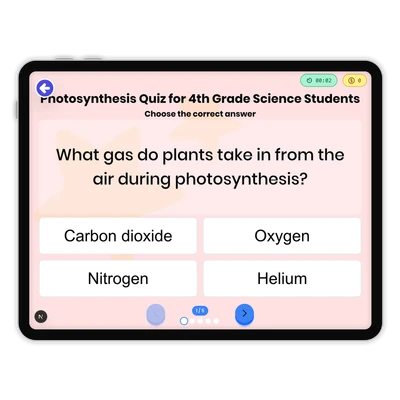
Comprehension quiz (8 questions)
1. What do herbivores eat?
2. Which animal is a carnivore?
3. What do omnivores eat?
4. Why can omnivores survive in many environments?
5. Where does all food energy come from?
6. How do producers make their own food?
7. All consumers get their energy from the sun.
8. What does the word 'consume' mean?
Perfect for the way you teach
- Build comprehension skills
- Auto-graded quiz
- Differentiated reading
- Read together at home
- Improve fluency
- Quiet reading time
- Reading curriculum support
- Independent practice
- Track Lexile growth